.gif)


HR teams today manage far more than hiring, payroll, and employee communication. They are also responsible for documentation, compliance, timesheets, onboarding, employee records, follow-ups, policy updates, and multiple deadlines that require constant attention.
As organizations grow, managing HR responsibilities manually becomes more difficult and time-consuming. AI HR Agents help by processing information, organizing records, and supporting workflows so HR teams can reduce repetitive work and focus on higher-value tasks.
This blog explores what AI HR Agents are, how they work, key use cases, and the benefits they bring to modern HR operations.
What is an AI HR Agent?
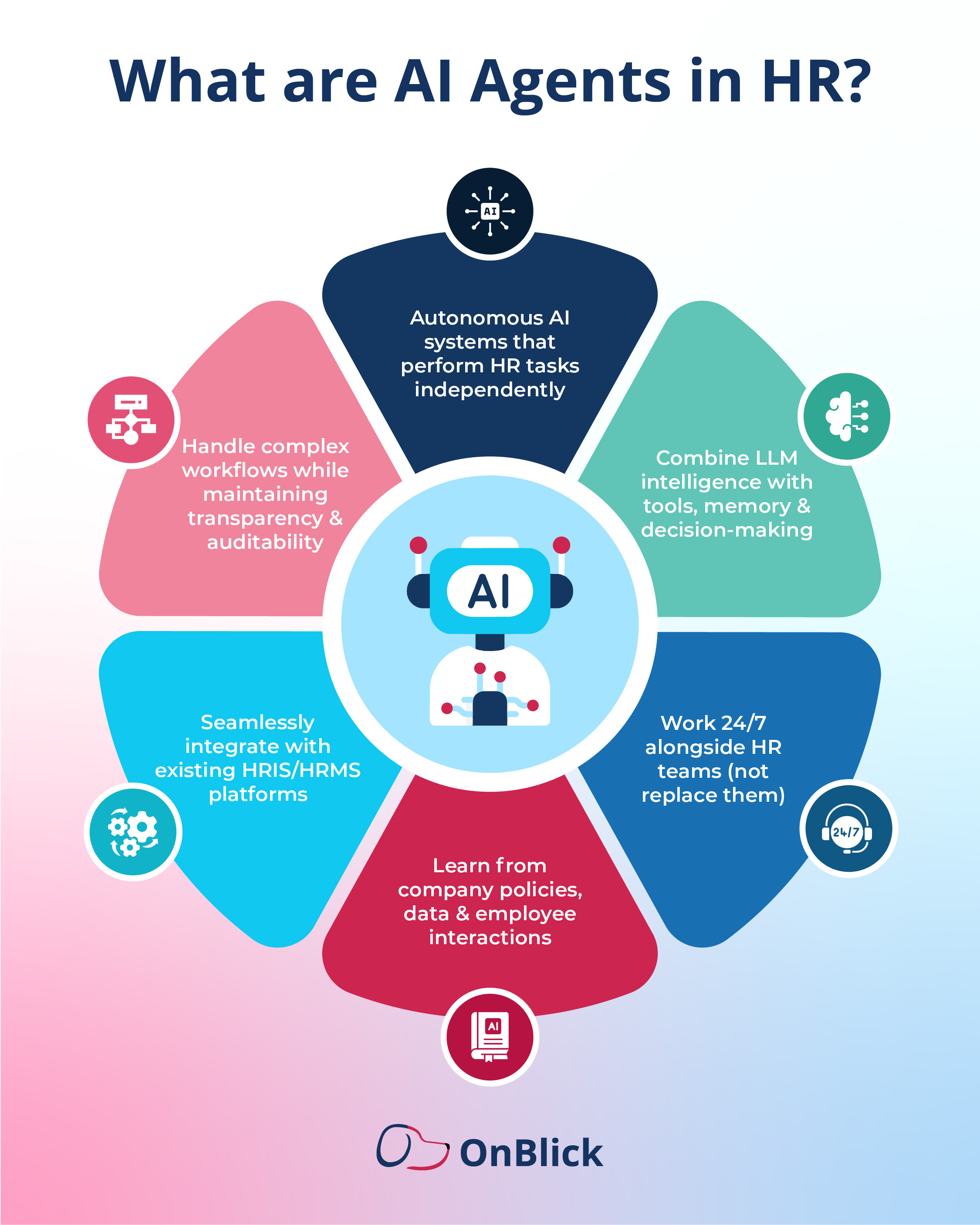
An AI HR Agent is an AI-powered system that helps HR teams process documents, organize employee information, monitor workflows, and trigger alerts or tasks when action is needed. It supports HR teams by reducing manual work, improving visibility, and helping them stay on top of records, deadlines, and compliance-related processes.
Unlike basic automation, which usually follows fixed rules, an AI HR Agent can work with different types of inputs such as documents, employee records, timesheets, forms, and workflow events. It helps convert scattered or unstructured information into organized records that HR teams can use.
AI HR Agent vs. AI HR Assistant vs. HR Chatbot
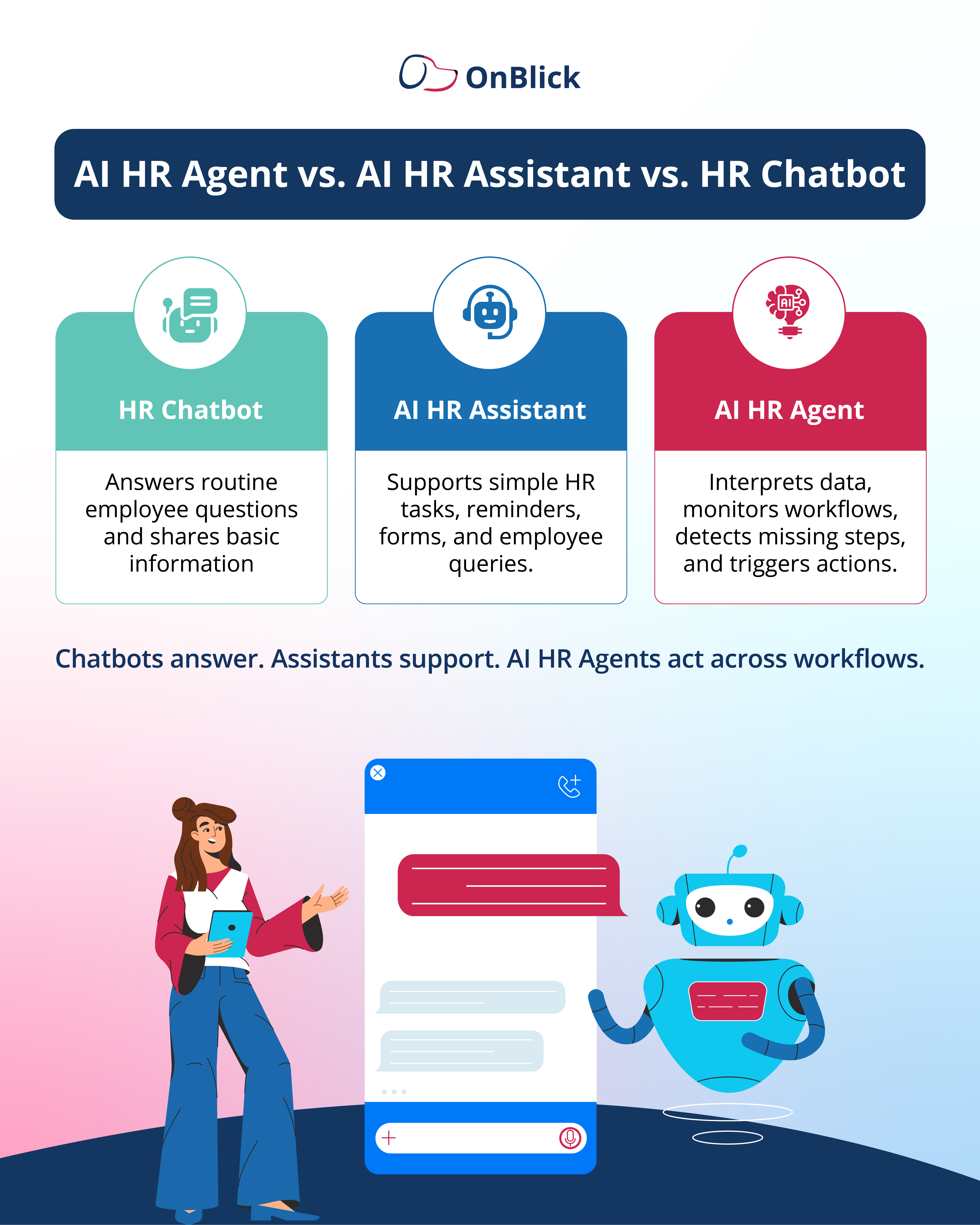
As AI becomes more common in HR, terms like HR chatbot, AI HR assistant, and AI HR Agent are often used together. However, they do not always mean the same thing.
- An HR chatbot usually answers routine employee questions, such as leave policy, holidays, benefits, or basic company procedures.
- An AI HR assistant may go a step further by helping with simple tasks, reminders, form-related support, or employee queries.
- An AI HR Agent provides broader workflow support. It can help interpret information, process documents, identify missing steps, monitor deadlines, and trigger actions when something needs attention.
In simple terms, chatbots mainly answer questions, AI HR assistants support basic tasks, and AI HR Agents help connect information with action across HR workflows.
Why Are AI HR Agents Becoming Important?
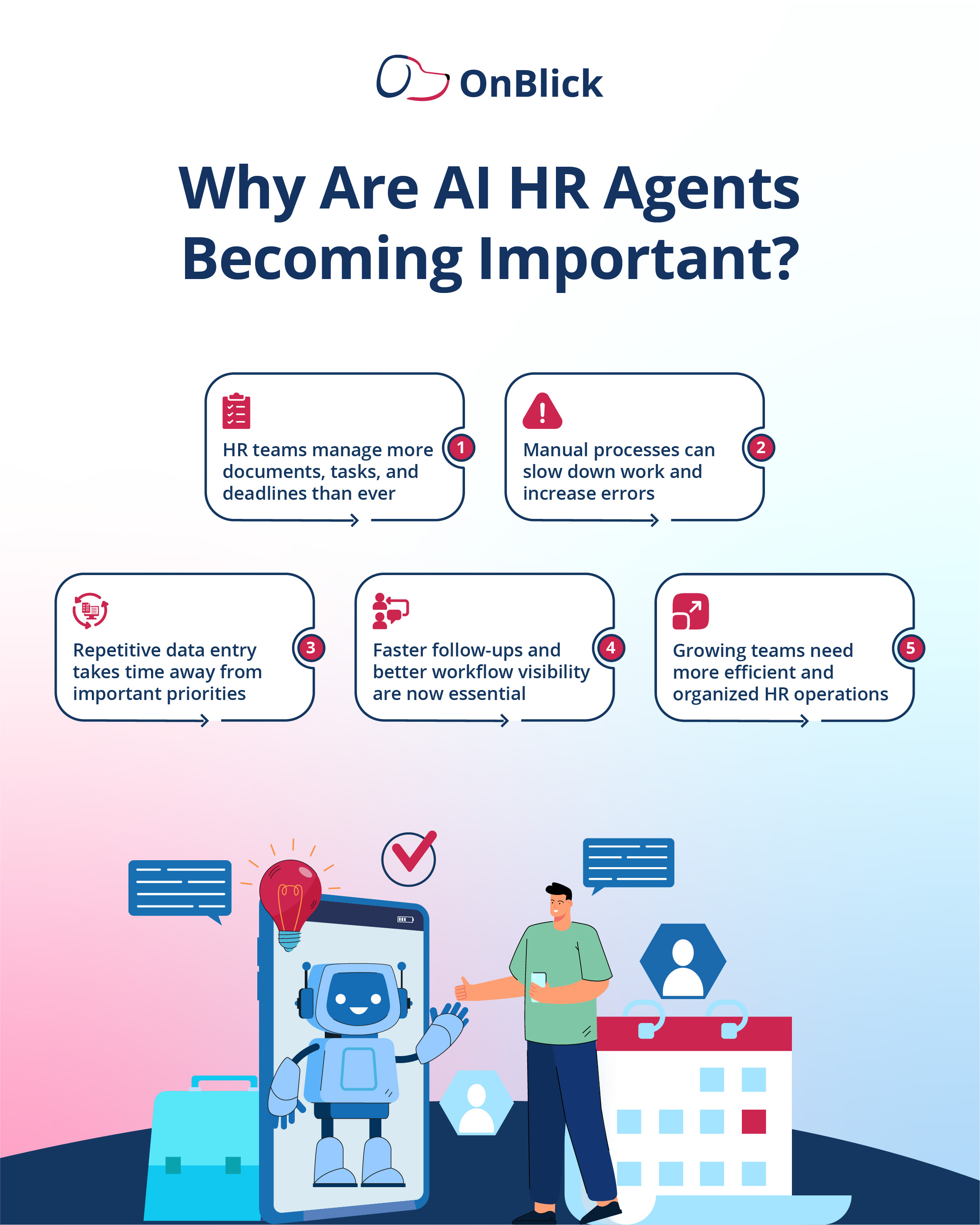
HR work has become more complex, especially for companies managing distributed teams, immigration-related processes, compliance requirements, staffing operations, or fast-growing workforces.
Many HR teams still depend on manual checks, spreadsheets, email follow-ups, and separate tools to manage important processes. This often creates delays, duplication, and missed updates.
AI HR Agents are becoming important because they help address some of the most common HR challenges, including:
- Too many documents to review and process
- Repetitive data entry across multiple systems
- Missed deadlines or delayed follow-ups
- Lack of visibility into pending tasks
- Incomplete employee or compliance records
- Time-consuming timesheet and work data review
- Difficulty managing multiple workflows at once
By supporting these routine and process-driven tasks, AI can help HR teams save time, reduce manual effort, and improve consistency across everyday operations.
Are AI HR Agents Only Used for Recruitment?
No. AI is widely used in recruitment for tasks such as candidate sourcing, resume screening, interview scheduling, and candidate engagement. Because of this, many people first associate AI in HR with hiring and talent acquisition.
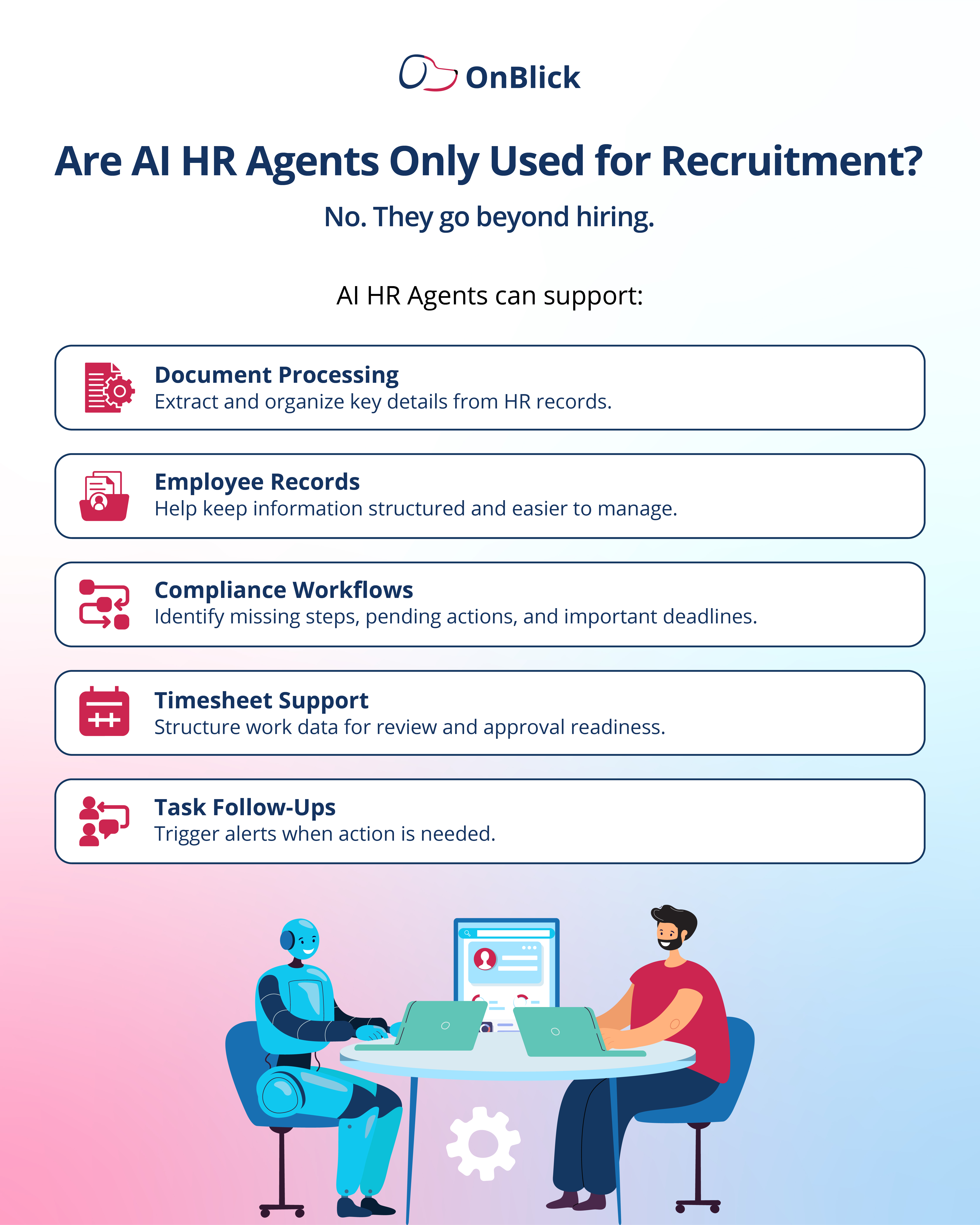
However, AI HR Agents can support much more than recruitment. They can assist with broader HR operations, including document processing, employee record management, compliance workflows, timesheet support, deadline tracking, and task follow-ups.
For example, an AI HR Agent can help read HR documents, extract important information, identify missing details, monitor workflow steps, and trigger alerts when action is required. This makes it useful not only for hiring teams, but also for HR, compliance, staffing, and operations teams that manage high-volume documentation and time-sensitive processes.
In short, recruitment is one important use case, but AI HR Agents can also help improve everyday HR operations by reducing manual work and keeping workflows organized.
How Does an AI HR Agent Work?
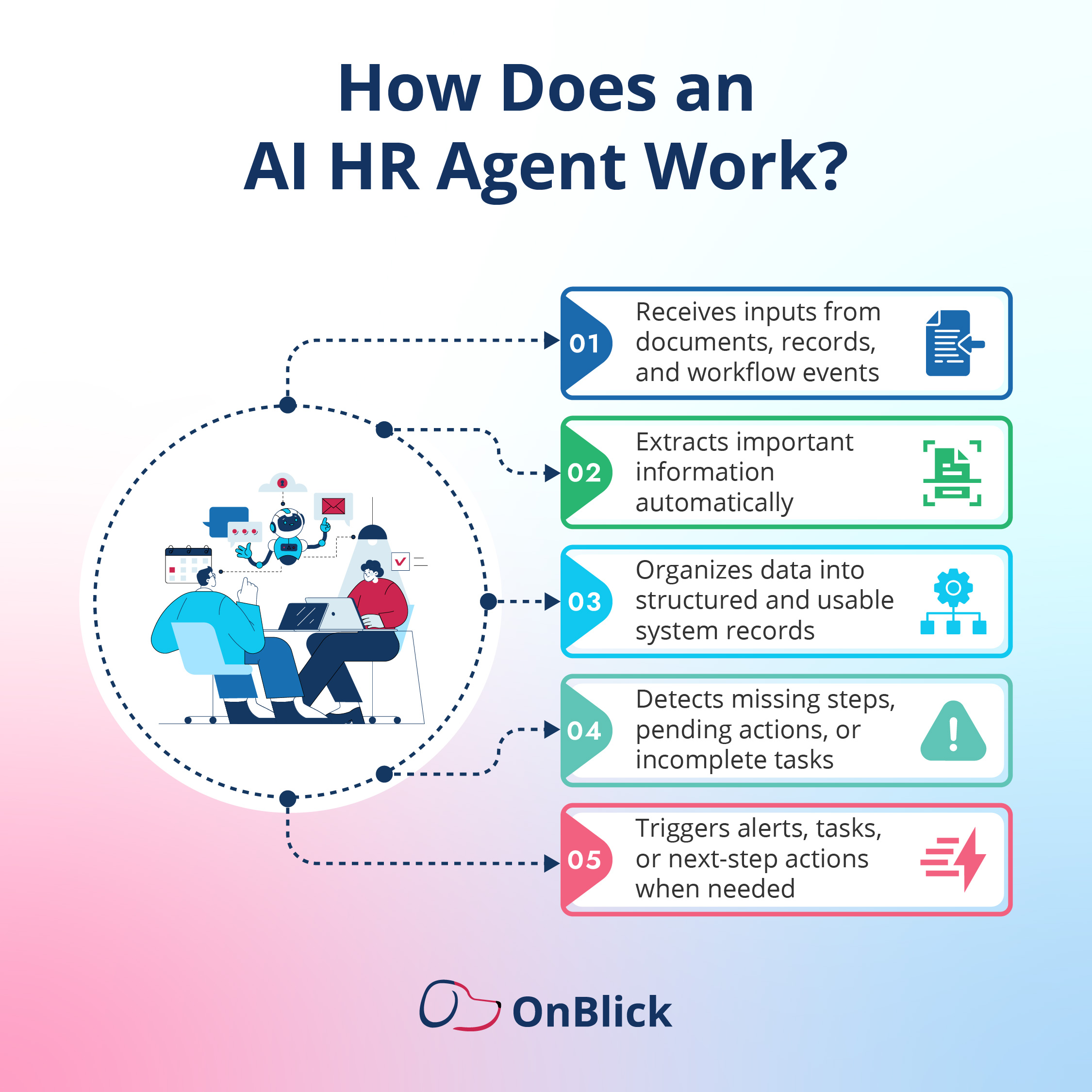
An AI HR Agent works by processing information from different HR inputs and helping convert that information into useful actions.
A typical AI HR Agent may work in the following way:
- First, it receives information from documents, records, uploads, timesheets, forms, or workflow events.
- Then, it reads and interprets the information to identify important details.
- Once the data is understood, it can organize the information into structured records, detect missing items, and support the next action in the workflow.
- For example, if an employee document is uploaded, the AI HR Agent may extract key details, identify whether required fields are missing, and help populate the relevant record. If a deadline is approaching, it may trigger an alert or task for the HR team.
This helps reduce the need for constant manual checking and allows teams to act faster when something needs attention.
Key AI HR Agent Use Cases
AI HR Agents can support several areas of HR operations. The exact use cases may vary depending on the organization, but the most useful applications often involve documents, workflows, time data, and follow-ups.
1. Document Intelligence
HR teams handle a wide range of documents, including employee records, onboarding files, compliance forms, policy acknowledgments, timesheets, work authorization documents, and other uploaded records.
An AI HR Agent can help read these documents and extract important information from them. This reduces the time spent manually reviewing files and entering data into systems.
Document intelligence can help HR teams:
- Extract key fields from documents
- Convert unstructured files into structured records
- Reduce repetitive data entry
- Improve document processing speed
- Keep employee records more organized
For HR teams that manage compliance-heavy documentation, this can be especially useful.
2. Workflow Assistance
Many HR processes include multiple steps. A document may need to be uploaded, reviewed, approved, updated, signed, or followed up on. If one step is missed, the entire process can be delayed.
An AI HR Agent can help monitor workflows and identify pending actions. It can detect incomplete steps, missing documents, or tasks that need follow-up.
Workflow assistance can help HR teams:
- Track pending actions
- Identify incomplete steps
- Reduce missed follow-ups
- Improve coordination across teams
- Keep processes moving without constant manual tracking
This can be helpful in areas such as onboarding, compliance, immigration workflows, staffing operations, and employee record management.
3. Timesheet and Work Data Support
Timesheet management can become time-consuming when teams work across different projects, clients, locations, or assignments. HR and operations teams often need to review time entries, map them to the right project, and prepare the data for approvals or payroll-related processes.
An AI HR Agent can help structure timesheet inputs and organize time-related data in a more usable format.
AI can support timesheet and work data processes by:
- Reading timesheet inputs from different formats
- Structuring time entries for review
- Mapping work data to projects or clients
- Supporting approval readiness
- Reducing manual processing time
This can help teams improve accuracy and reduce delays in time-related workflows.
4. Alerts and Task Triggers
HR teams often need to track deadlines, document expirations, pending approvals, follow-ups, and process updates. When these are tracked manually, important actions can be missed.
An AI HR Agent can help by triggering alerts or tasks when something requires attention. This may include:
- Upcoming document expirations
- Missing information
- Incomplete workflow steps
- Pending approvals
- Time-sensitive follow-ups
- Records that need review or update
Instead of relying only on manual reminders, HR teams can use AI-supported alerts to stay more proactive and organized.
Benefits of AI HR Agents for Employers
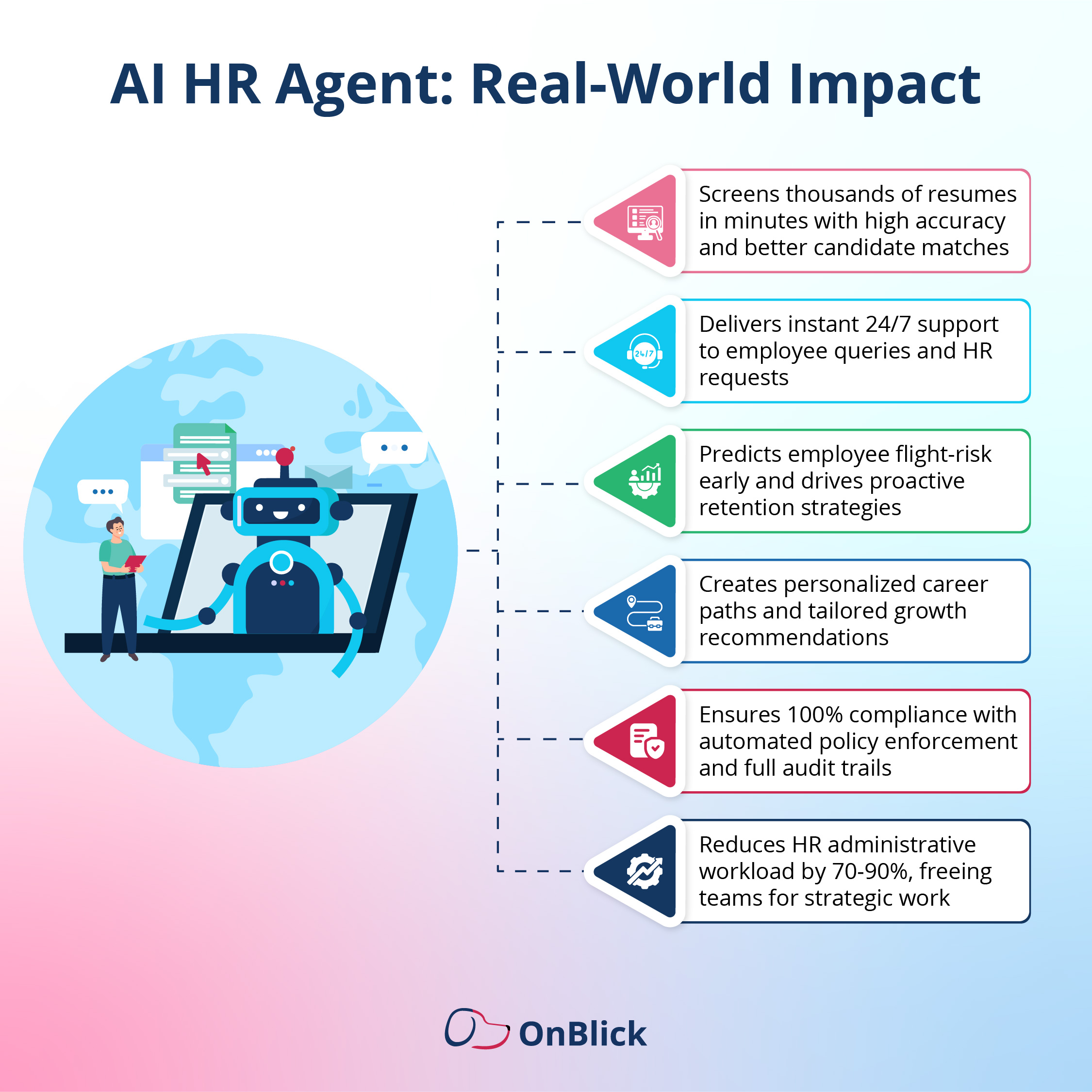
AI HR Agents can bring practical benefits to employers, especially those managing high-volume HR tasks or compliance-sensitive processes.
How Can AI Help HR Teams Save Time?
- Reduced Manual Work
One of the biggest benefits of AI in HR is the reduction of repetitive manual work. HR teams can spend less time entering data, checking documents, and tracking routine tasks.
- Better Workflow Visibility
AI HR Agents can help teams see what is pending, what is incomplete, and what requires action. This improves visibility across HR processes.
- Faster Document Processing
By helping extract and structure information from documents, AI can speed up document-heavy HR tasks and reduce delays.
- Fewer Missed Steps
AI-supported alerts and workflow checks can help reduce the risk of missed follow-ups, incomplete records, or delayed actions.
- More Time for High-Value HR Work
When routine tasks are reduced, HR professionals can spend more time on employee engagement, communication, workforce planning, policy improvement, and people-related decisions.

Can AI HR Agents Replace HR Teams?
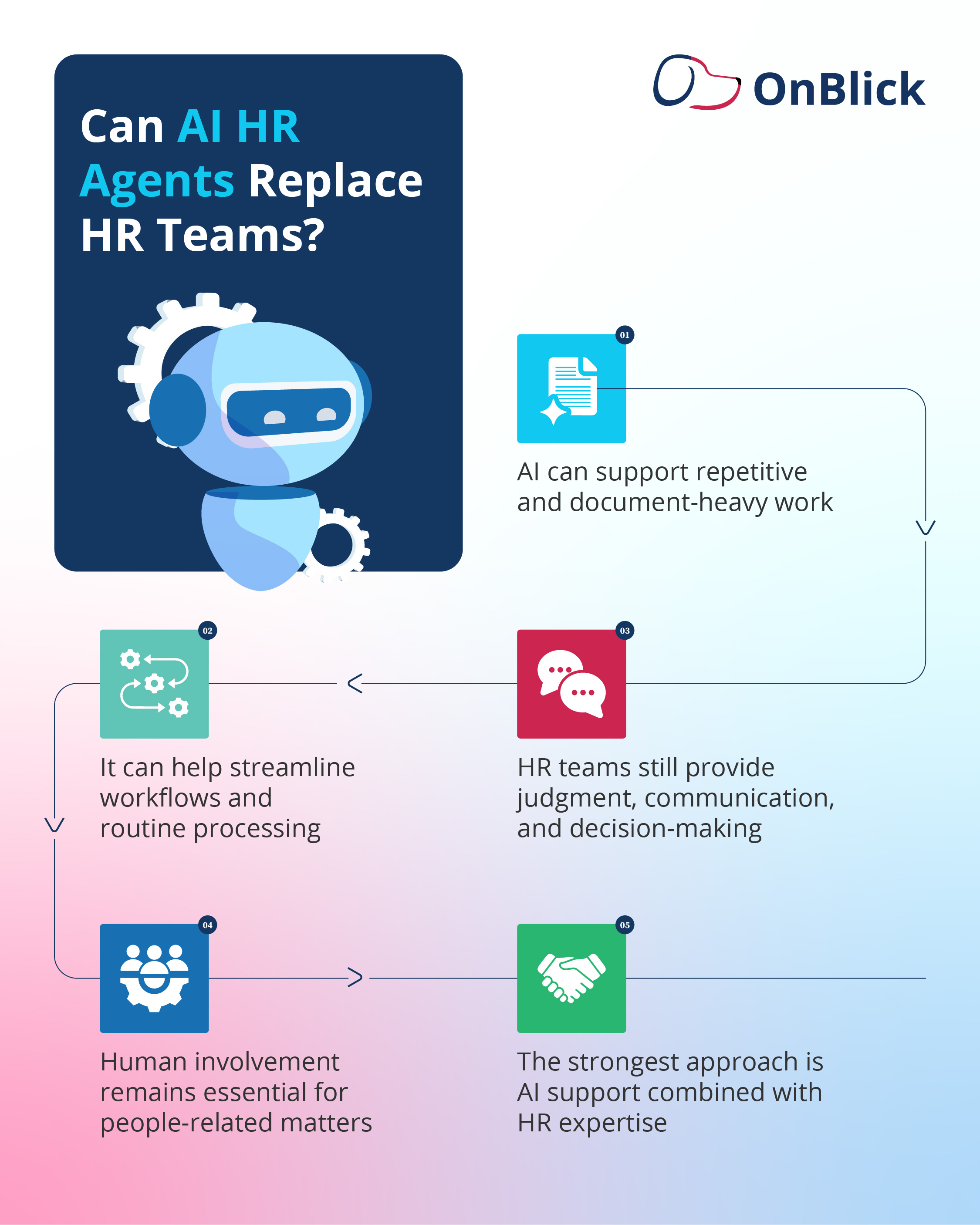
No, AI HR Agents are not meant to replace HR teams.
HR work requires human judgment, empathy, communication, policy understanding, and decision-making. Employees often need guidance, context, and support that cannot be fully handled by technology.
AI HR Agents are best used as support systems. They can assist with repetitive, data-heavy, and process-driven work, while HR professionals continue to manage decisions, exceptions, employee conversations, and sensitive matters.
The most effective approach is not AI instead of HR. It is AI supporting HR.
What Should Companies Look for in an AI HR Agent?
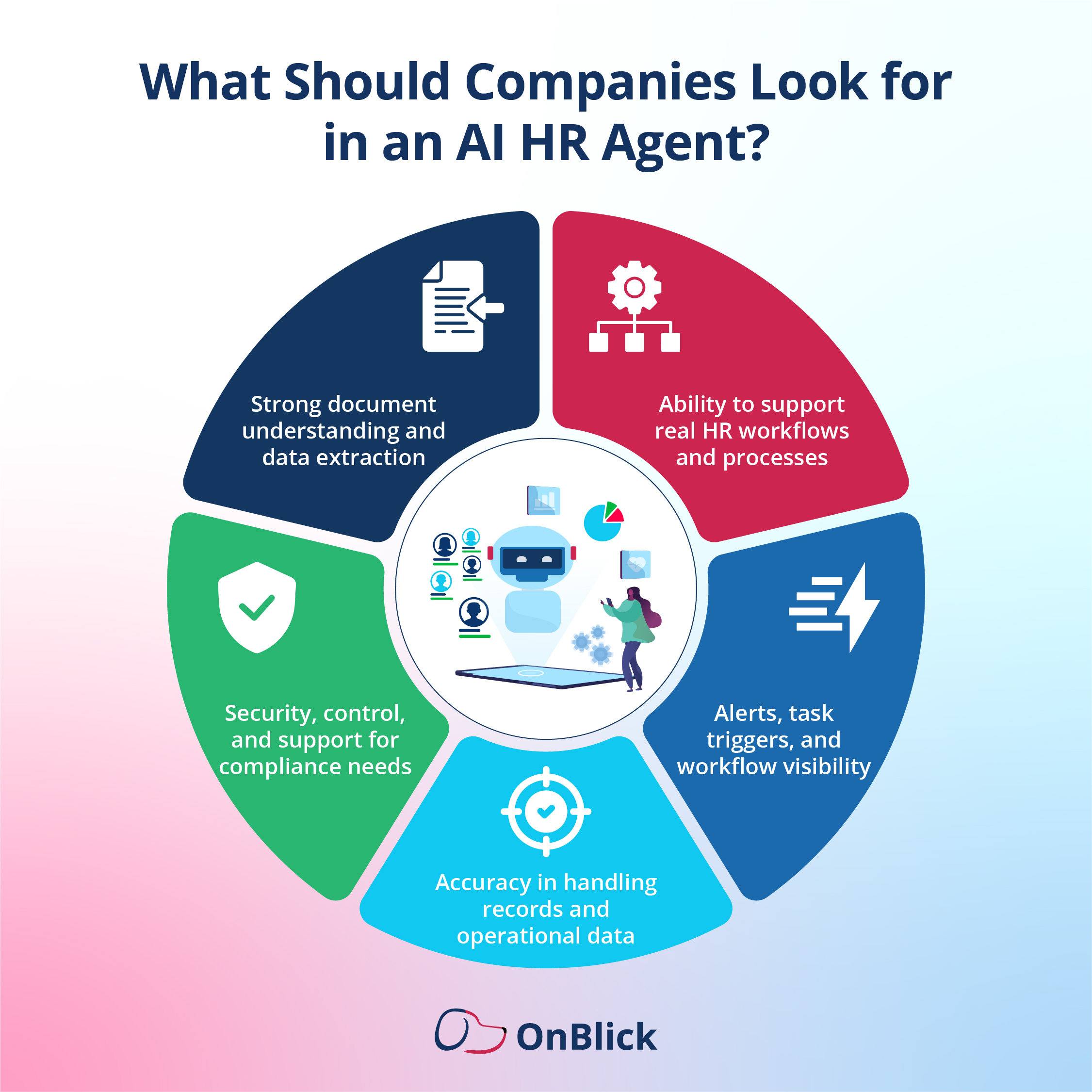
Before adopting an AI HR Agent, companies should evaluate whether the system can support real HR needs rather than offering only basic automation.
Employers should look for capabilities such as:
- Document reading and data extraction
- Support for HR workflows and task triggers
- Ability to identify missing or incomplete information
- Alerts for deadlines and follow-ups
- Support for timesheets or work data processing
- Strong security and access control
- Clear record visibility
- Suitability for compliance-heavy HR processes
- Ability to fit into existing HR operations
The right AI HR Agent should help improve efficiency without making processes harder for HR teams to manage.
Frequently Asked Questions About AI HR Agents
What is an AI HR Agent?
An AI HR Agent is an AI-powered system that supports HR teams by helping process documents, organize employee information, monitor workflows, and trigger tasks or alerts when action is needed. It helps reduce manual work and improves visibility across HR processes.
How is AI used in HR?
AI is used in HR to support tasks such as document processing, data extraction, onboarding assistance, employee record management, workflow tracking, timesheet processing, alerts, and routine HR support. It helps HR teams manage information faster and more efficiently.
How can AI help HR teams?
AI can help HR teams reduce repetitive tasks, process information faster, identify missing details, organize records, and stay on top of important deadlines. It allows HR professionals to spend less time on manual work and more time on employee support, planning, and decision-making..
What are some examples of AI in HR?
Examples of AI in HR include AI HR assistants, HR chatbots, document intelligence tools, automated data extraction, onboarding support, workflow alerts, timesheet support, compliance task tracking, and employee self-service tools.
What are the main AI use cases in HR?
The main AI use cases in HR include recruitment support, onboarding assistance, document processing, employee record management, compliance workflow tracking, timesheet processing, HR helpdesk support, alerts, and task automation.
What is the difference between an AI HR Agent, AI HR assistant, and HR chatbot?
An HR chatbot mainly answers routine employee questions. An AI HR assistant helps with simple tasks such as reminders, forms, and employee queries. An AI HR Agent goes further by interpreting information, supporting workflows, detecting missing steps, monitoring deadlines, and triggering actions.
Are AI HR Agents only used for recruitment?
No. AI HR Agents are not limited to recruitment. While AI can support hiring tasks such as resume screening, candidate sourcing, and interview scheduling, AI HR Agents can also assist with document processing, employee records, compliance workflows, timesheets, deadlines, and task follow-ups.
Can AI help with HR compliance workflows?
Yes. AI can support HR compliance workflows by helping track documents, identify missing information, monitor deadlines, detect incomplete steps, and trigger follow-ups when action is needed. This can be useful for teams managing documentation-heavy and time-sensitive compliance processes.
Can an AI HR Agent reduce manual data entry?
Yes. An AI HR Agent can help extract key information from documents, forms, timesheets, and employee records. This reduces the need for HR teams to manually enter the same information across systems and helps keep records more structured.
Will AI HR Agents replace HR professionals?
No. AI HR Agents are designed to support HR professionals, not replace them. HR still requires human judgment, communication, empathy, policy understanding, and decision-making. AI helps with repetitive and process-driven work so HR teams can focus on higher-value responsibilities.
How OnBlick’s AI HR Agent Supports HR and Compliance Workflows
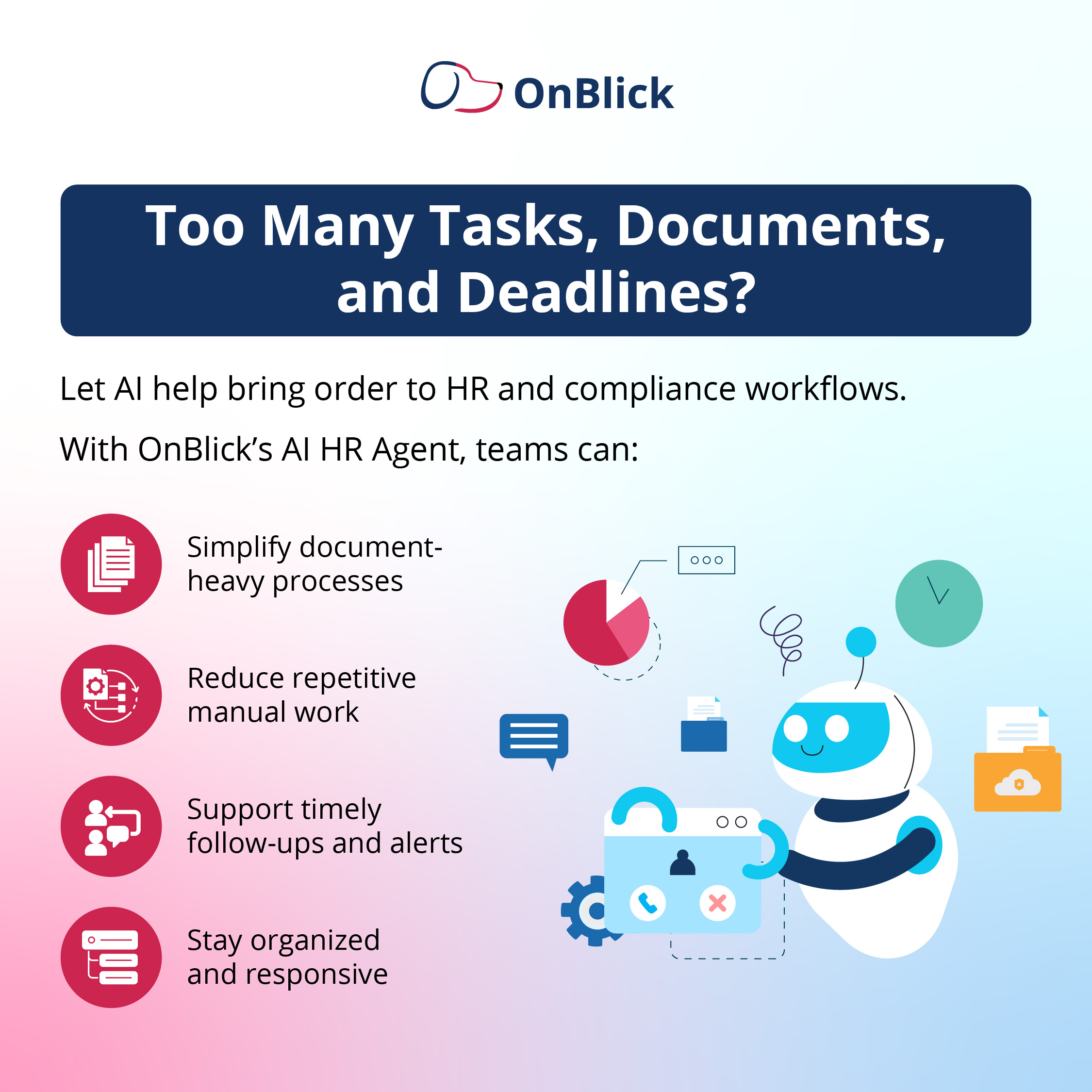
OnBlick’s AI HR Agent is designed to support HR, immigration compliance, and staffing-related workflows by helping teams reduce manual effort and improve process visibility.
It can assist with document intelligence, data extraction, timesheet structuring, workflow alerts, and task triggers. This helps HR teams identify missing documents, incomplete steps, upcoming deadlines, and records that require attention.
For employers managing documentation-heavy HR and compliance processes, OnBlick’s AI HR Agent can help bring more structure, speed, and consistency to everyday operations.
Book a free OnBlick demo to learn how AI-powered HR and compliance workflows can help your team reduce manual work and stay better organized.
Conclusion
HR teams are expected to manage more documents, more deadlines, and more complex workflows than ever before. As these responsibilities grow, manual processes can slow teams down and increase the chances of missed steps.
AI HR Agents offer a practical way to support HR operations by helping teams process information, reduce repetitive tasks, trigger timely follow-ups, and improve workflow visibility.
While AI cannot replace the human side of HR, it can become a valuable support layer for teams that want to work faster, stay organized, and manage HR and compliance workflows with greater confidence.