.gif)



Employee turnover is one of the clearest signals that something in the employee lifecycle may need attention. When employees leave frequently, HR teams may face repeated hiring cycles, onboarding pressure, productivity gaps, higher manager workload, and lower team morale.
Some turnover is expected, but frequent or avoidable exits can point to deeper issues in hiring, onboarding, management, workload, or employee support. For HR teams, reducing turnover starts with understanding why people leave, where exit patterns appear, and which actions can improve retention.
This article explains what employee turnover means, how to calculate employee turnover rate, common causes of turnover, warning signs HR teams should watch, and practical ways to reduce avoidable employee exits.
What is Employee Turnover?
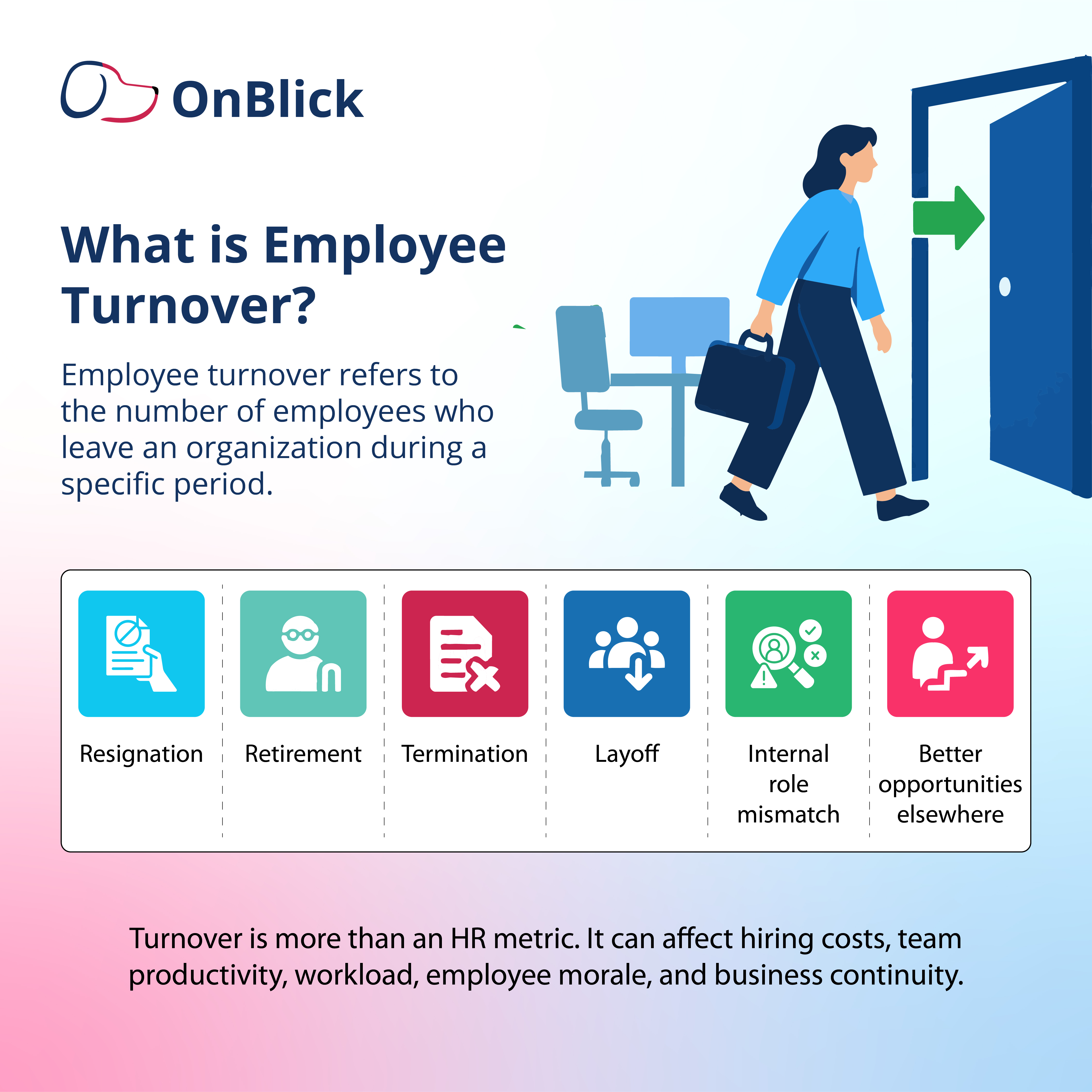
- Employee turnover refers to employees leaving an organization during a specific period. It may include resignations, retirements, layoffs, terminations, or other employee exits.
- For HR teams, turnover is more than a headcount change. It shows how often employees leave, how often roles need to be refilled, and whether certain teams or roles may need closer attention.
- Turnover can happen for many reasons. Some exits are expected, while others may point to problems in hiring, onboarding, management, workload, compensation, or employee support. That is why HR teams should track turnover over time and look for patterns instead of treating each exit as an isolated event.
Employee turnover vs employee retention vs attrition
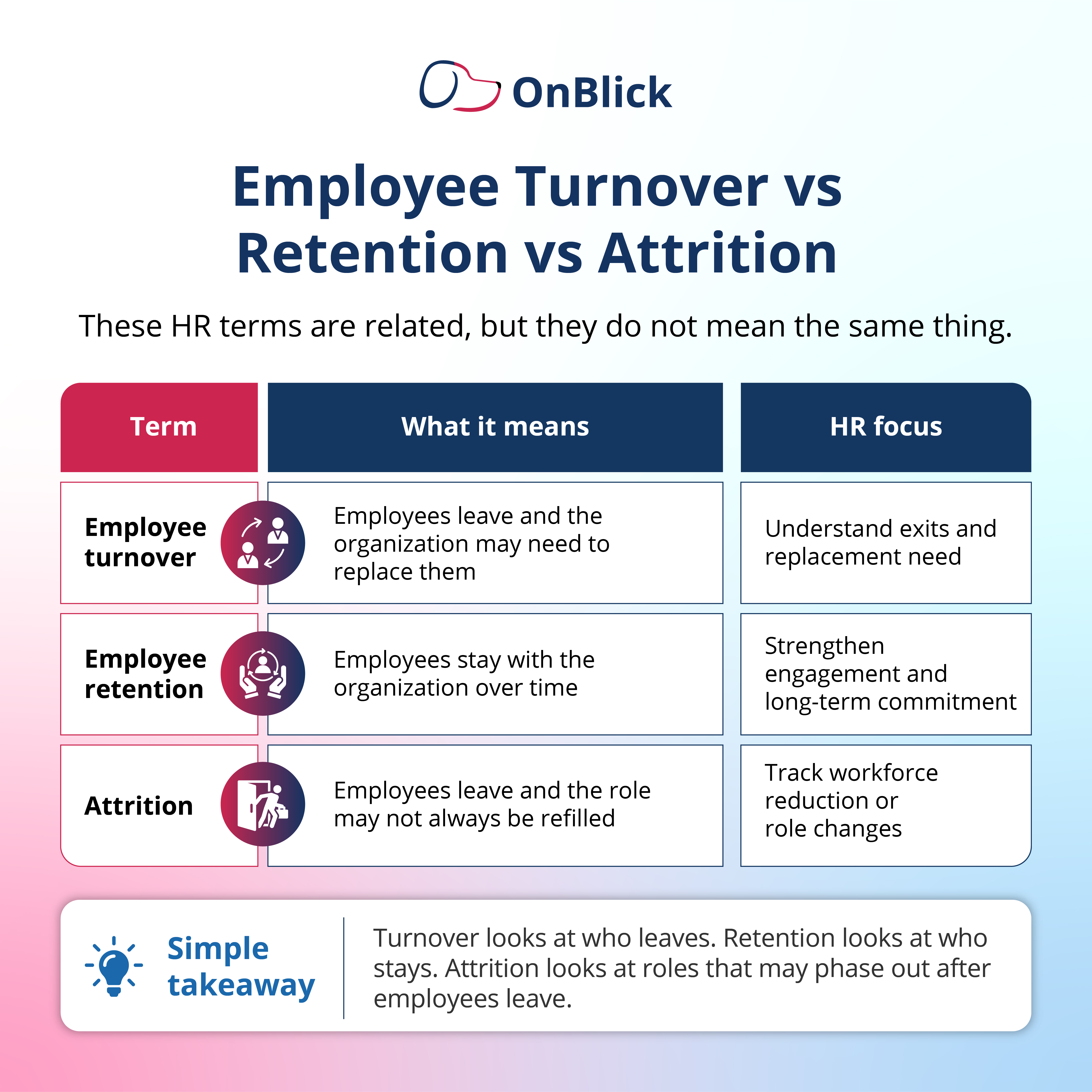
- Employee turnover, retention, and attrition are related, but they do not mean the same thing.
- Employee turnover focuses on employees who leave and may need to be replaced. It helps HR understand exit patterns and replacement needs.
- Employee retention focuses on employees who stay. A strong retention strategy helps employers keep skilled employees, reduce avoidable exits, and build more stable teams.
- Attrition usually refers to a reduction in the workforce when employees leave and the role may not be refilled. For example, a company may allow a role to close after retirement or resignation instead of hiring a replacement.
- Understanding the difference matters because each metric leads to a different HR response. High turnover may call for stronger retention steps. Low retention may point to engagement or management concerns. Attrition may reflect workforce planning or role changes.
Types of employee turnover HR teams should track
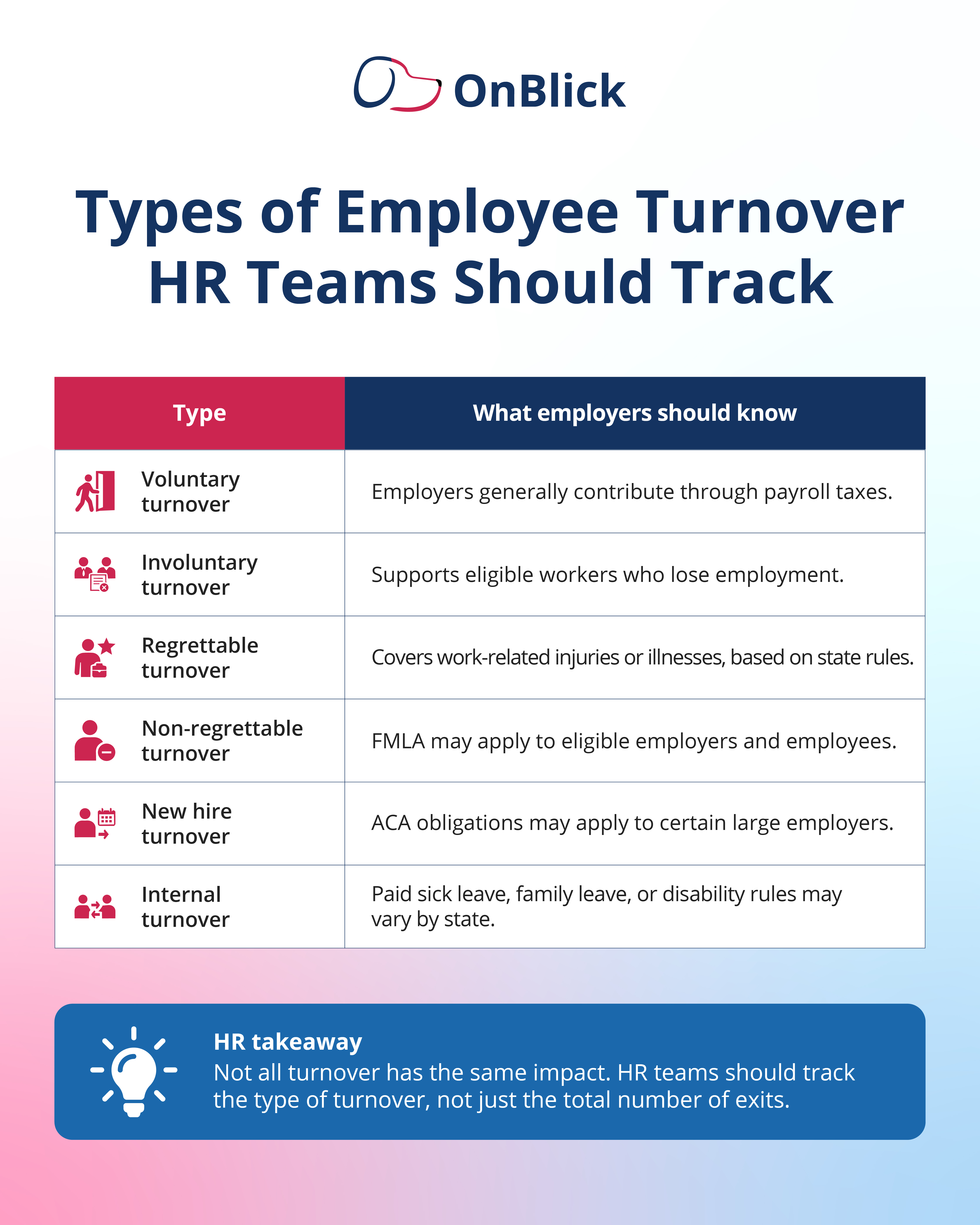
HR teams should not treat all turnover the same. Different types of turnover can point to different problems.
- Voluntary turnover happens when employees choose to leave. This may be due to career growth, pay, workload, manager relationship, flexibility, or personal reasons.
- Involuntary turnover happens when the employer ends the employment relationship. This may include terminations, layoffs, or role eliminations.
- Regrettable turnover occurs when high-performing or hard-to-replace employees leave. This type of turnover can have a stronger impact on team performance and knowledge continuity.
- New hire turnover happens when employees leave within the first few months. It may point to hiring mismatches, weak onboarding, unclear role expectations, or lack of early manager support.
- Tracking turnover by type helps HR teams understand whether the problem is hiring quality, manager effectiveness, workload, compensation, career growth, or employee experience.
How to calculate employee turnover rate
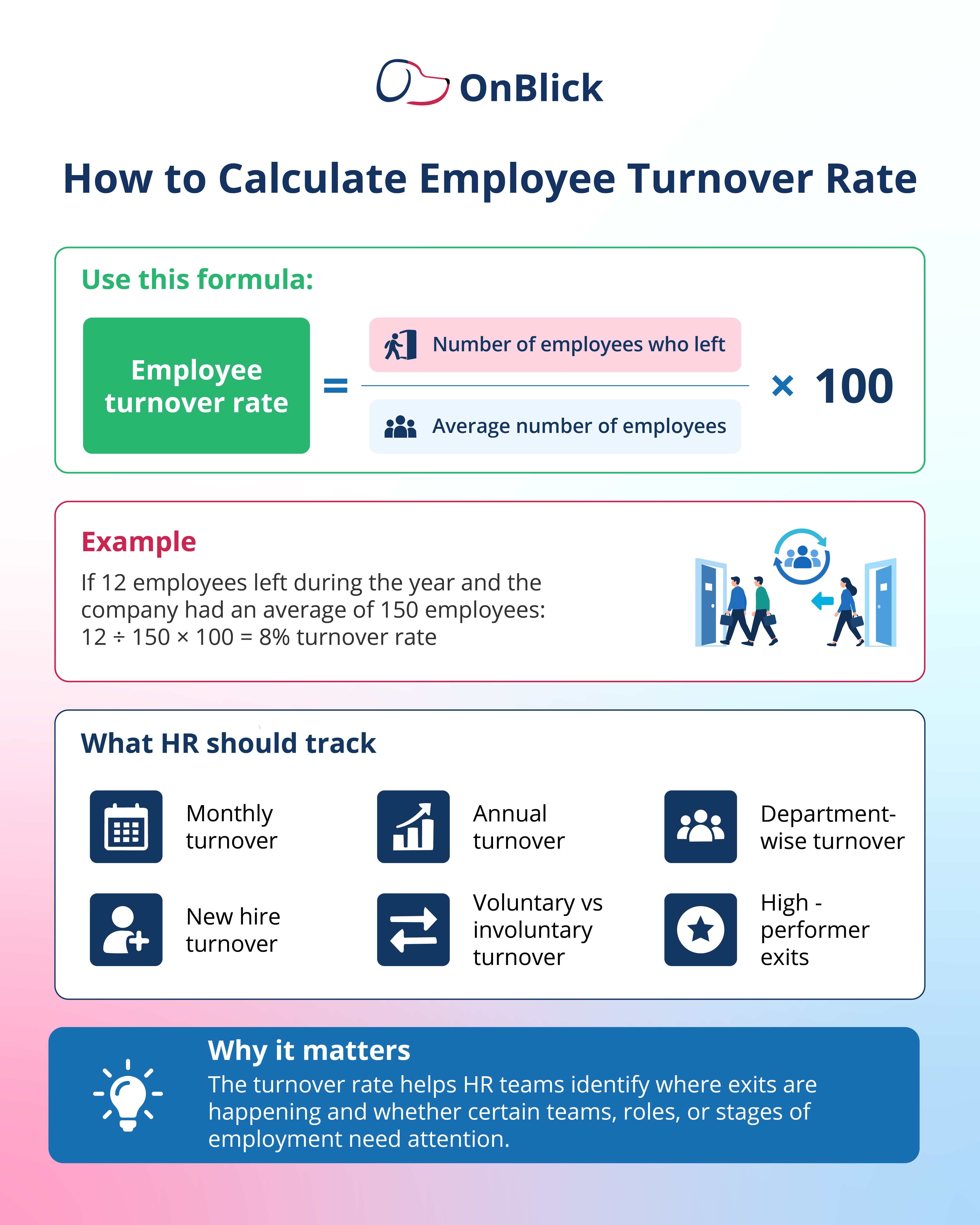
Employee turnover rate shows the percentage of employees who left during a specific period. HR teams may calculate it monthly, quarterly, or annually.
Employee turnover rate = Number of employees who left ÷ Average number of employees × 100
For example, if 12 employees left during the year and the company had an average of 150 employees:
12 ÷ 150 × 100 = 8% turnover rate
- A company-wide turnover rate is useful, but it should not be the only number HR reviews. A single percentage can hide important details. HR teams should also review turnover by department, role, location, manager, tenure, and exit type.
- For example, a company may have a normal overall turnover rate, but one department may be losing new hires faster than others. That pattern needs a different response than company-wide turnover.
What is a high or healthy employee turnover rate?
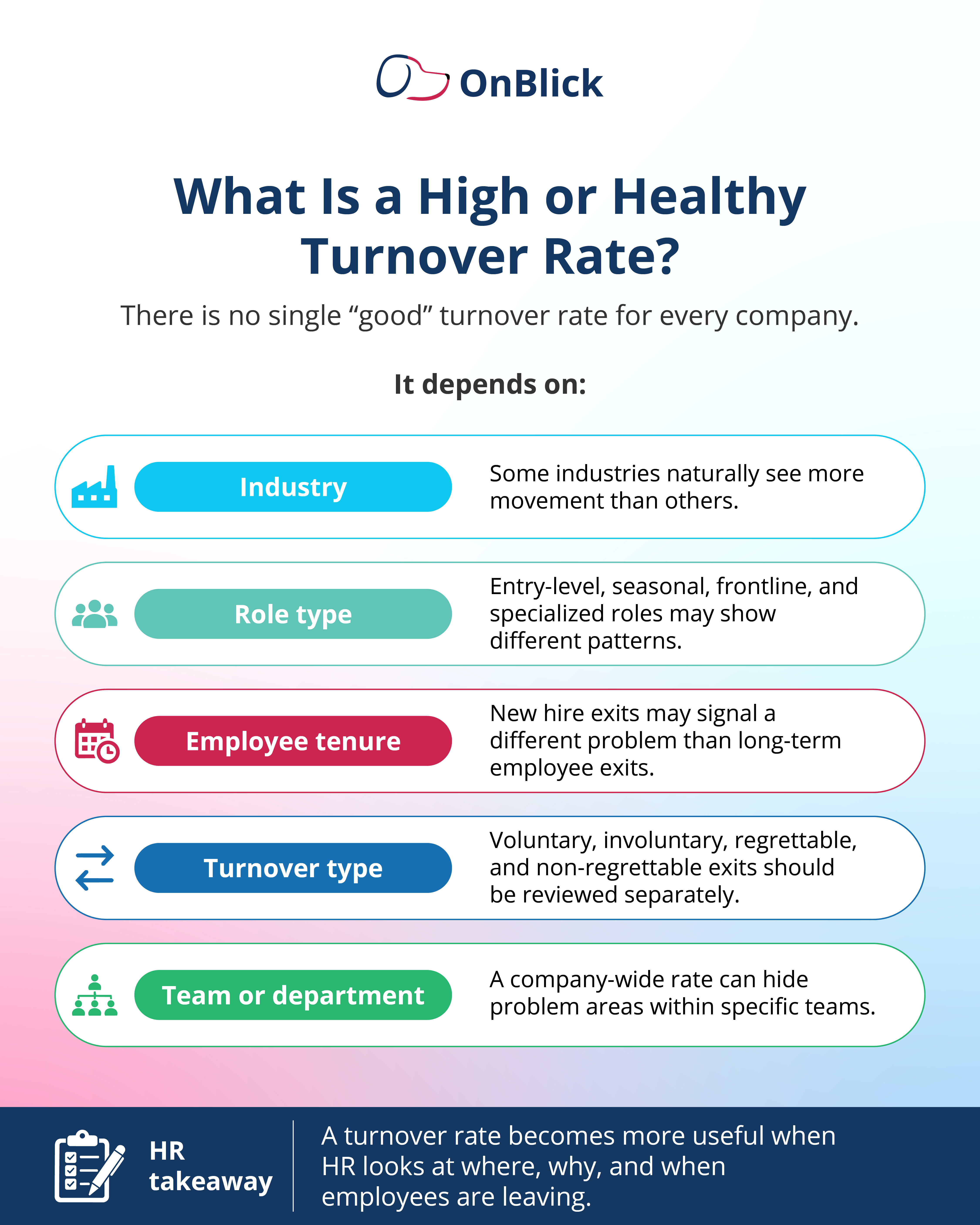
- There is no single turnover rate that is healthy for every employer. A high or acceptable rate depends on the industry, role type, company size, labor market, seasonality, and workforce structure.
- Some roles may naturally have higher movement, especially entry-level, seasonal, frontline, or shift-based jobs. Other roles may be harder to replace because they require specialized skills, client knowledge, or long training periods.
- HR teams should also look at the type of turnover. A small number of high-performer exits may be more concerning than a larger number of planned or non-regrettable exits. New hire turnover may suggest a hiring or onboarding issue, while long-tenure exits may point to career growth or retention concerns.
- The better question is not only “Is our turnover rate high?” It is “Where is turnover happening, why are employees leaving, and which exits could have been prevented?”
Why employers should reduce avoidable turnover
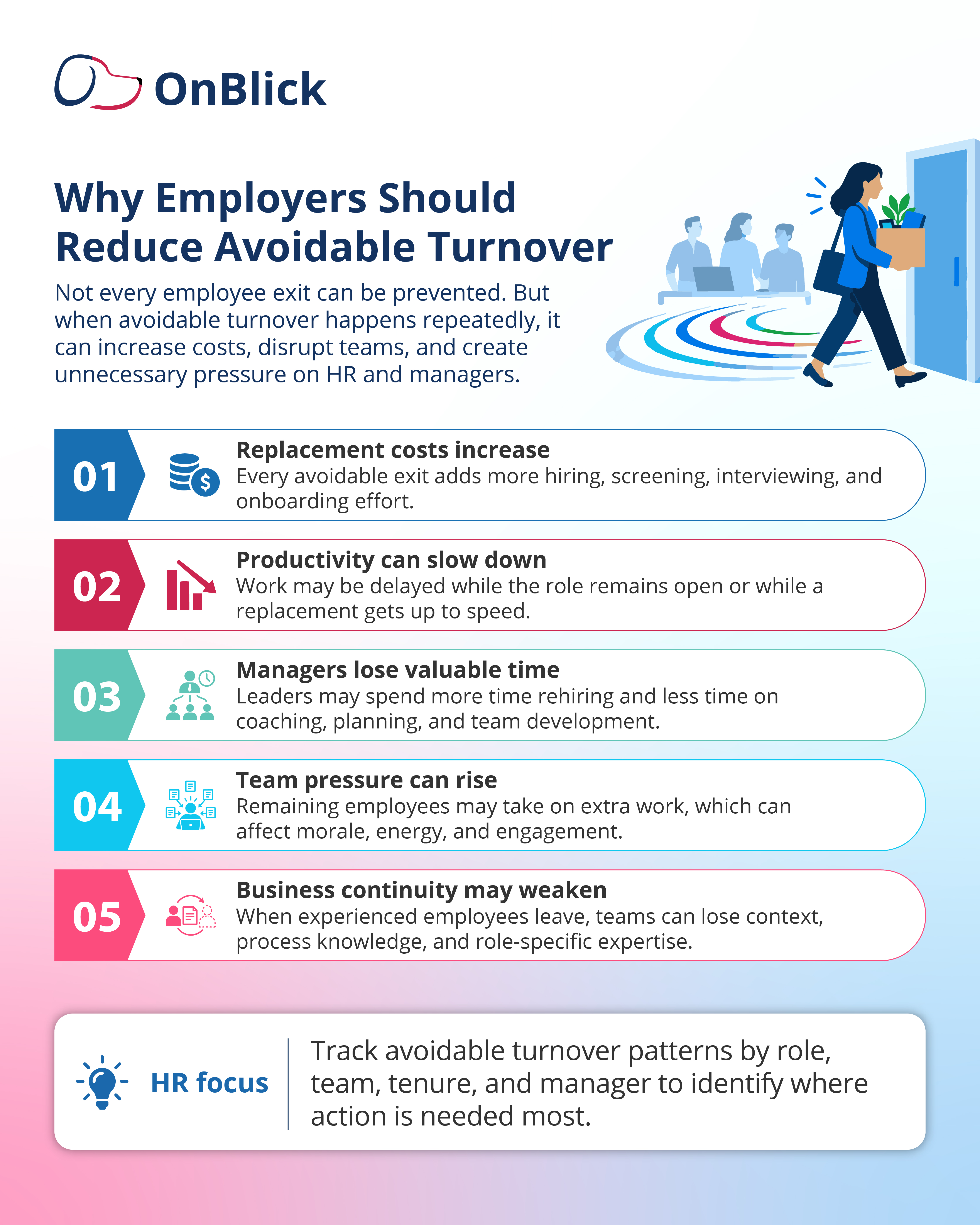
- Not every employee exit can or should be prevented. Some turnover is expected and may even create room for new skills, role changes, or better team fit. The real concern is avoidable turnover that repeats across teams, roles, or managers.
- Avoidable turnover can increase hiring pressure. HR teams may spend more time sourcing, screening, interviewing, and onboarding replacements instead of improving employee programs and people processes.
- It can also slow productivity. When a role is vacant, work may be delayed or shifted to other employees. When a replacement joins, the person needs time to learn the role, systems, expectations, and team workflows.
- Frequent exits can affect team morale. Remaining employees may feel added pressure or question whether workload, management, or growth opportunities are being addressed.
- For employers, reducing avoidable turnover means identifying the conditions that push employees away and improving the processes that support them.
Common causes of employee turnover
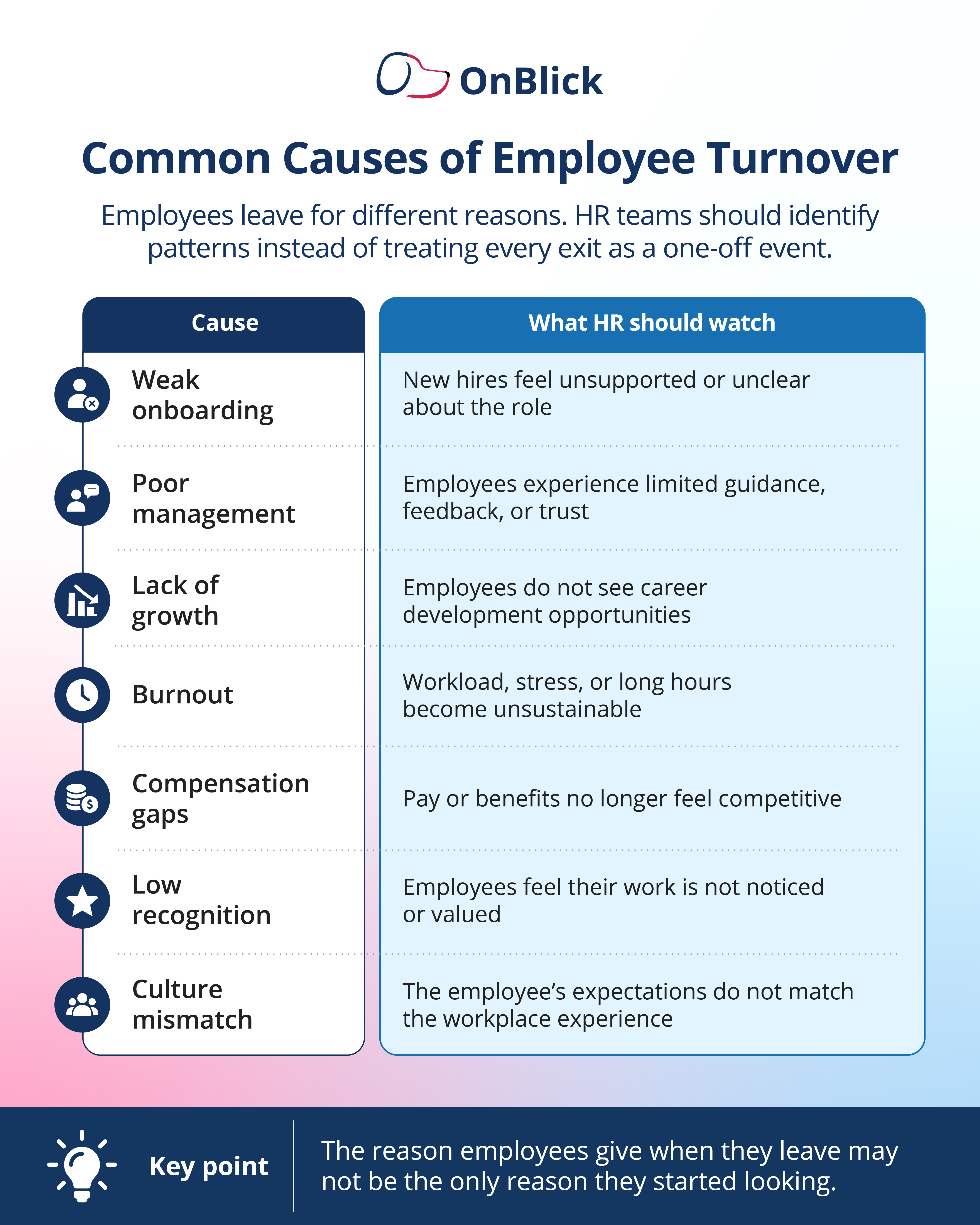
Employees leave for different reasons, but repeated patterns often point to issues HR can investigate and address.
- Weak onboarding can cause early exits when new hires do not understand their role, tools, manager expectations, or success measures. Poor manager relationships can also increase turnover when employees feel unsupported, unheard, or unclear about priorities.
- Limited growth opportunities are another common reason employees leave. If employees cannot see a future inside the company, they may look elsewhere for career movement.
- Workload and burnout also matter. Long hours, unclear priorities, understaffing, and constant pressure can make employees feel that staying is not sustainable.
- Compensation and benefits can influence turnover when employees believe their pay, benefits, or flexibility no longer match their role or market expectations. Other causes may include lack of recognition, poor communication, culture mismatch, or inconsistent employee support.
- The key is to look for patterns. One exit may have a personal reason. Repeated exits from the same role, team, or tenure group may show a deeper issue.
Early warning signs of employee turnover
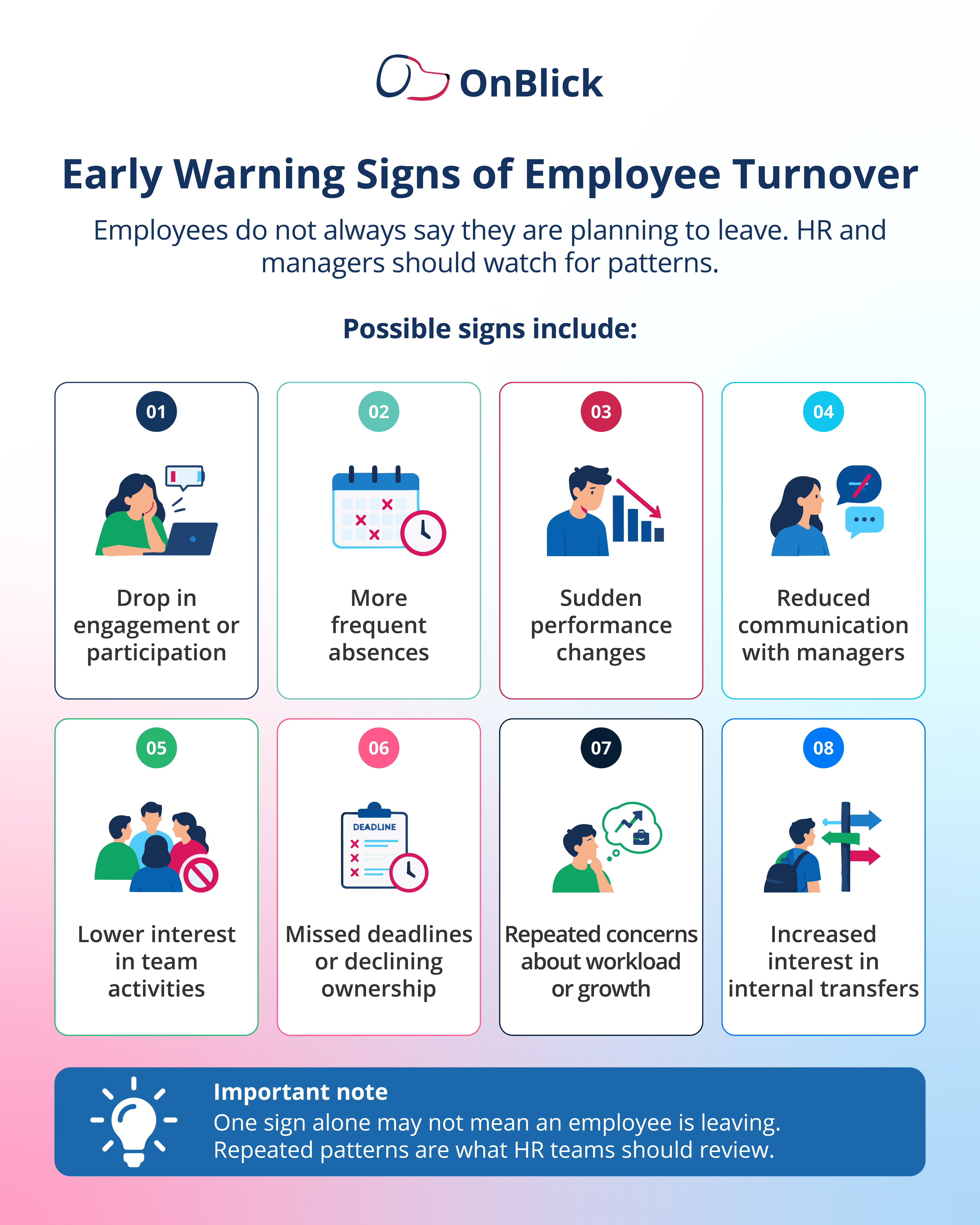
- Employees do not always say they are planning to leave. HR teams and managers should pay attention to repeated changes in behavior or work patterns.
- Possible warning signs include increased absences, sudden disengagement, missed deadlines, lower participation in meetings, reduced communication, or declining performance. Employees may also become less interested in long-term projects, development conversations, or team activities.
- Frequent concerns about workload, manager communication, pay, growth, or flexibility should also be reviewed carefully. These concerns may not always lead to resignation, but repeated feedback can signal turnover risk.
- HR should avoid making assumptions based on one sign alone. Instead, teams should look for patterns across attendance, performance, feedback, manager notes, and employee conversations.
- Early action matters. A timely check-in, workload review, manager conversation, or growth discussion may help address concerns before an employee decides to leave.
How HR teams can reduce employee turnover
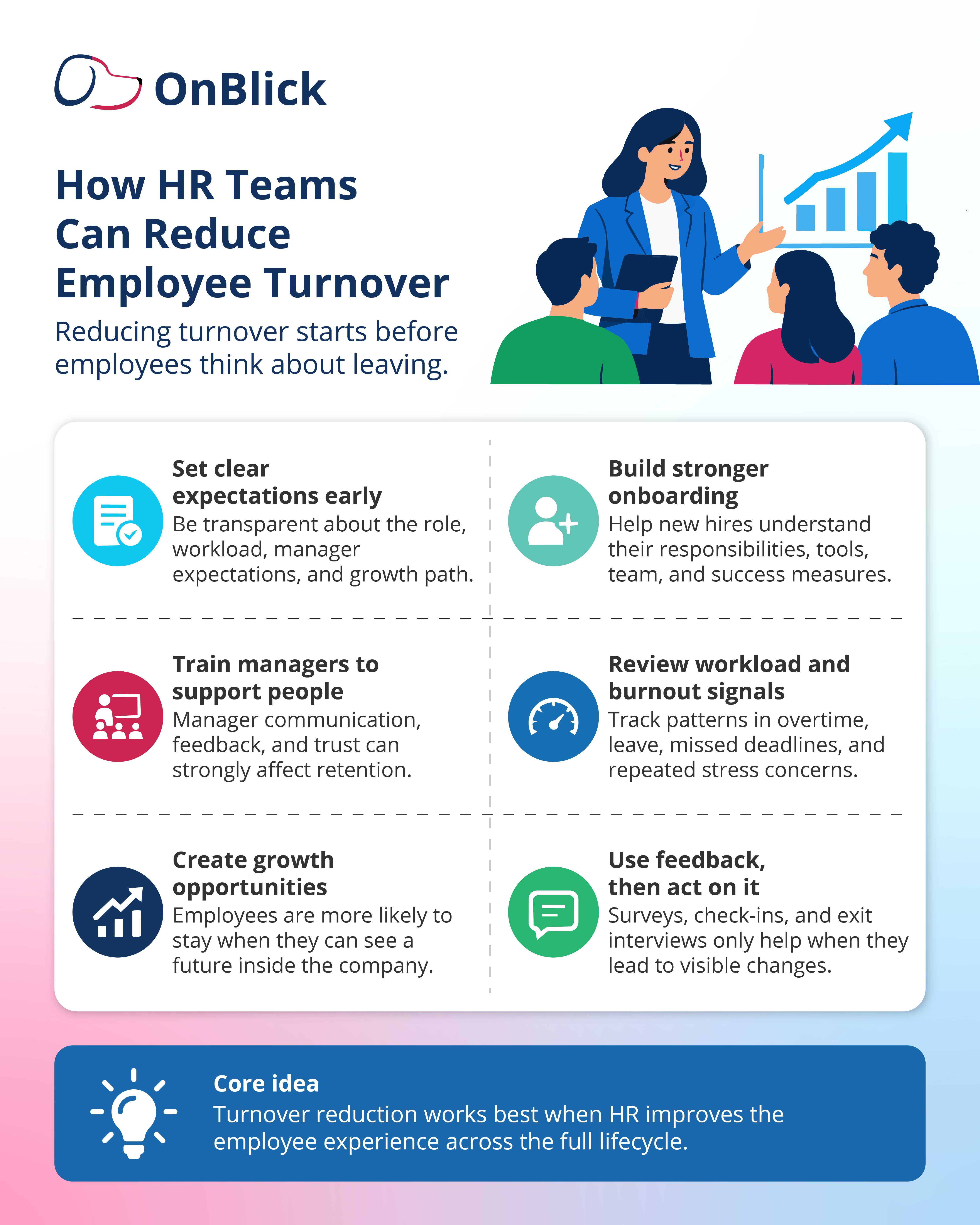
- Reducing employee turnover starts with improving the employee experience before people decide to leave. HR teams should focus on the full employee lifecycle, not only exit interviews. Hiring should begin with clear role expectations. Candidates should understand the job, workload, reporting structure, schedule, and growth path before joining.
- Onboarding should help new hires settle into the role quickly. This includes documents, tools, introductions, training, manager check-ins, and a clear first-week and first-month plan.
- Managers also play a major role in retention. HR should support managers with training on feedback, communication, workload planning, recognition, and employee development.
- Workload should be reviewed regularly. If the same employees are always overextended, turnover risk can increase. HR can work with managers to identify staffing gaps, repeated overtime, leave patterns, and stress signals.
- Career growth also matters. Employees are more likely to stay when they see learning opportunities, internal movement, and a future within the organization.
- Finally, feedback should lead to action. Engagement surveys, check-ins, and exit interviews are useful only when HR uses them to improve processes.
How onboarding affects new hire turnover
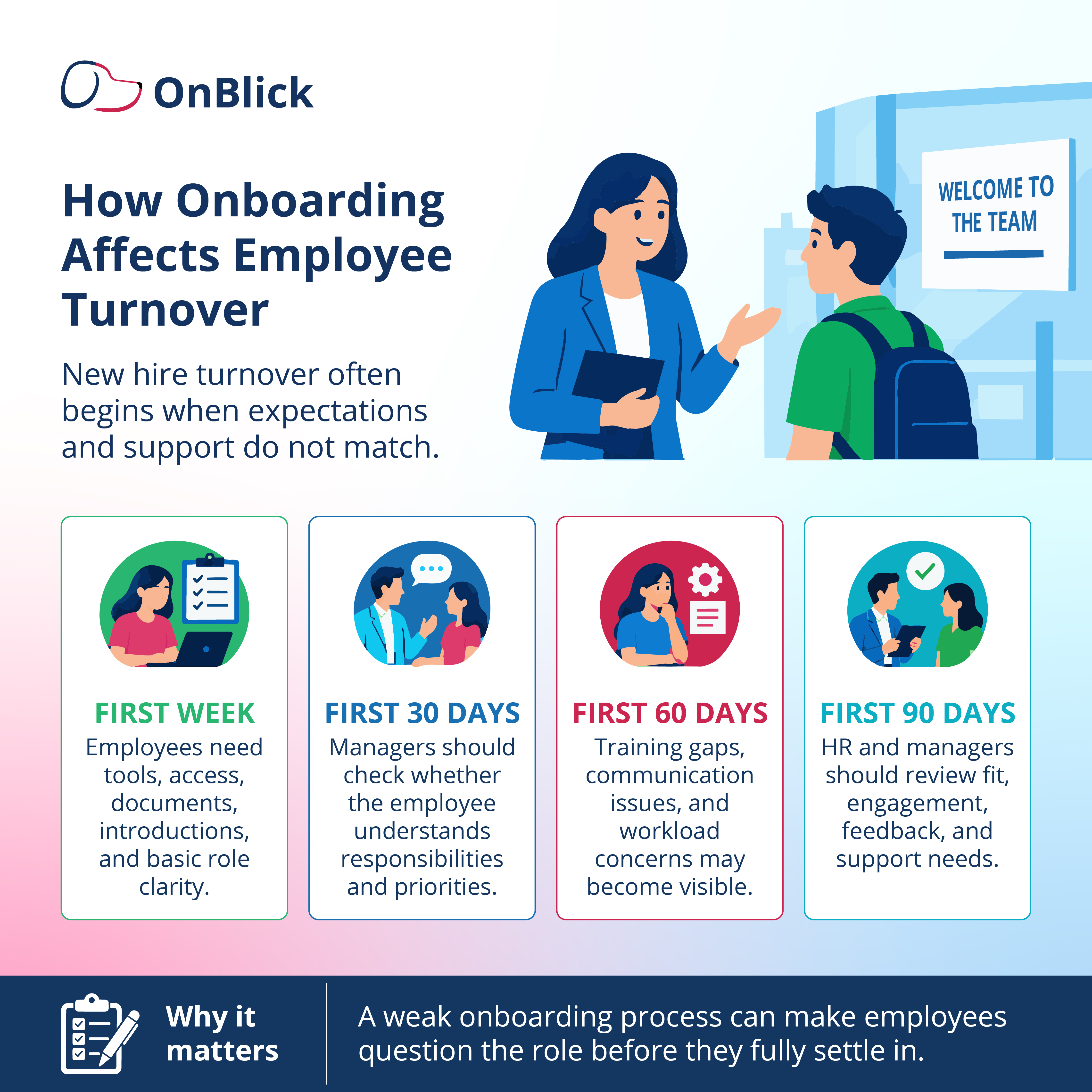
- New hire turnover often begins when the employee’s early experience does not match expectations. The first 30, 60, and 90 days are important because employees are still deciding whether the role, manager, and workplace feel right. Poor onboarding can leave employees confused about responsibilities, tools, performance expectations, or team norms. Delayed system access, missing documents, unclear training, or limited manager contact can also make the employee feel unsupported.
- Strong onboarding gives new hires structure. It helps them understand what to do, who to ask, what success looks like, and how their role connects to the team.
- HR teams should track whether onboarding tasks, manager check-ins, training steps, and required documents are completed on time. If new hires often leave early, onboarding should be one of the first processes HR reviews.
Turnover metrics HR teams should track
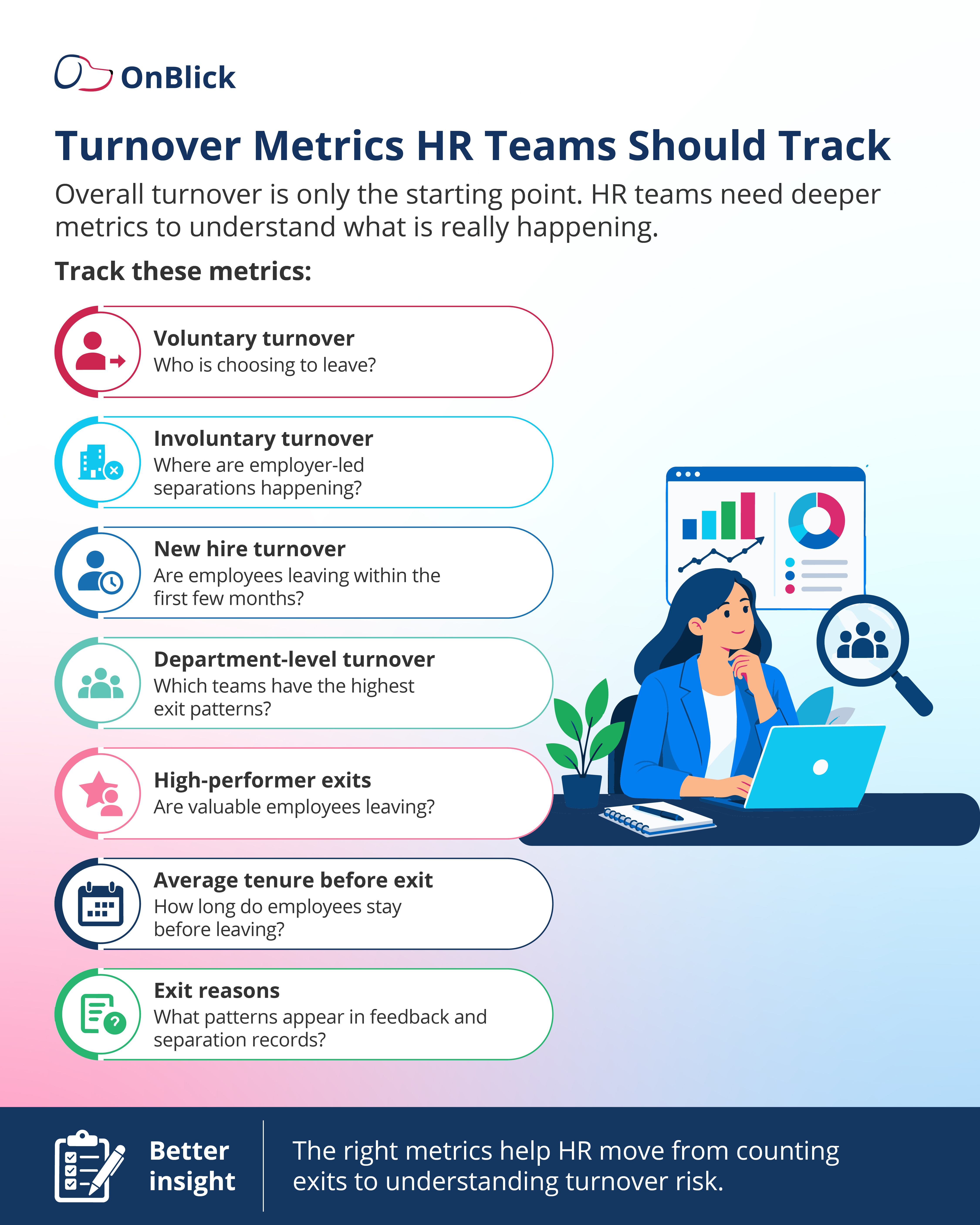
- Overall turnover rate is only the starting point. HR teams need more detailed metrics to understand what is really happening.
- Useful turnover metrics include voluntary turnover rate, involuntary turnover rate, new hire turnover rate, department-level turnover, role-level turnover, and location-level turnover.
- HR should also track high-performer exits, average tenure before exit, exit reasons, replacement time, and turnover by manager. These metrics can show whether turnover is tied to a specific team, job type, manager, or stage of employment.
- Exit feedback should also be organized. If employees repeatedly mention workload, growth, pay, manager support, or role mismatch, HR can use that information to guide retention actions.
- Better metrics help HR move from counting exits to identifying patterns and deciding where to act.
Where HR teams should look for turnover patterns
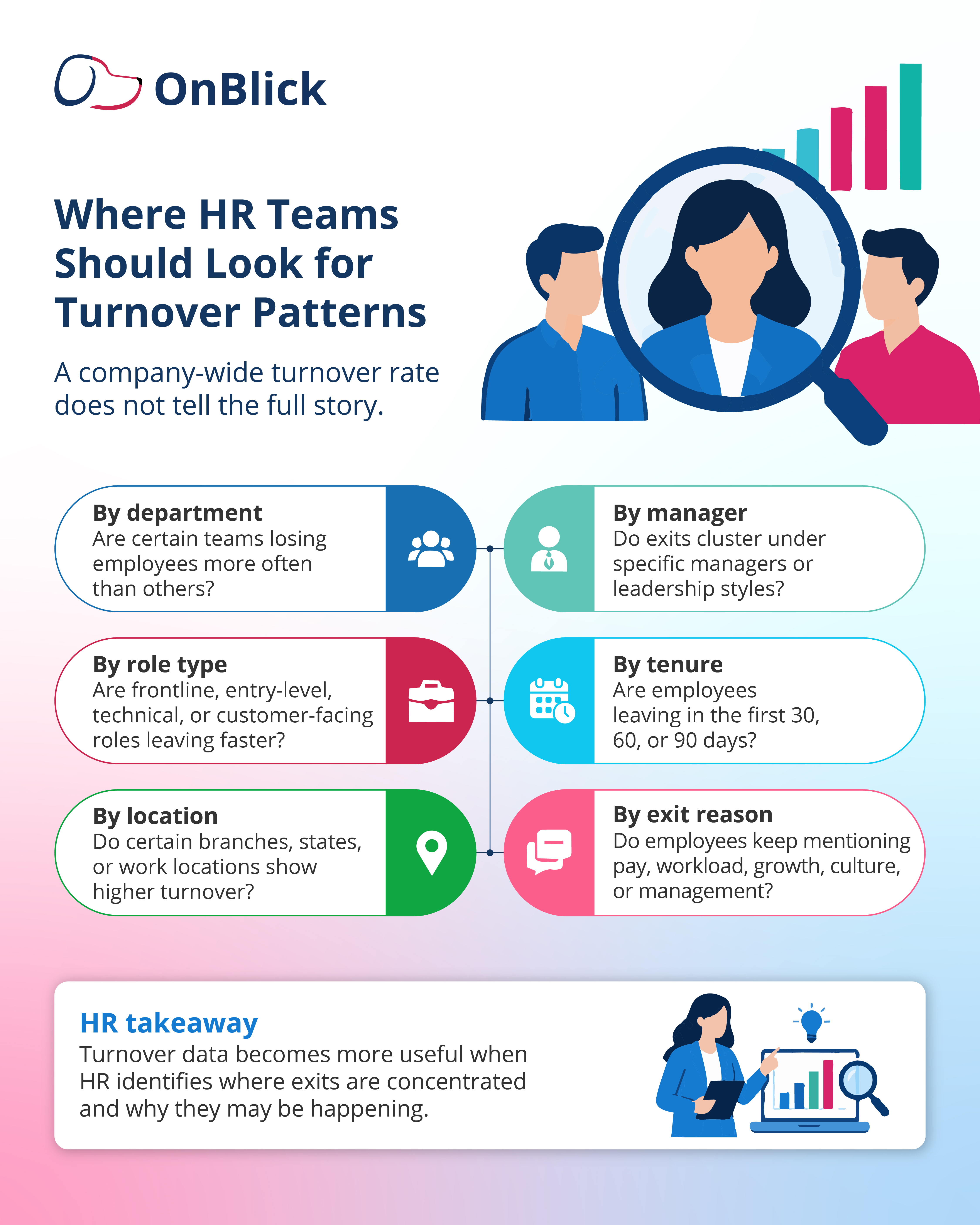
- A company-wide turnover rate can hide important details. HR teams should look deeper to understand where exits are concentrated. Start with departments. If one team has higher turnover than others, HR should review workload, management style, role clarity, and employee feedback.
- Next, review tenure. Employees leaving within the first 30, 60, or 90 days may point to hiring or onboarding gaps. Employees leaving after one or two years may point to career development or growth concerns.
- HR should also review role type. Frontline, entry-level, technical, customer-facing, and leadership roles may have different turnover drivers.
- Manager-level patterns can also be useful. Repeated exits under the same manager may indicate a need for coaching, workload review, or communication support.
- The goal is to find the pattern behind the number.
Common mistakes employers make when managing turnover
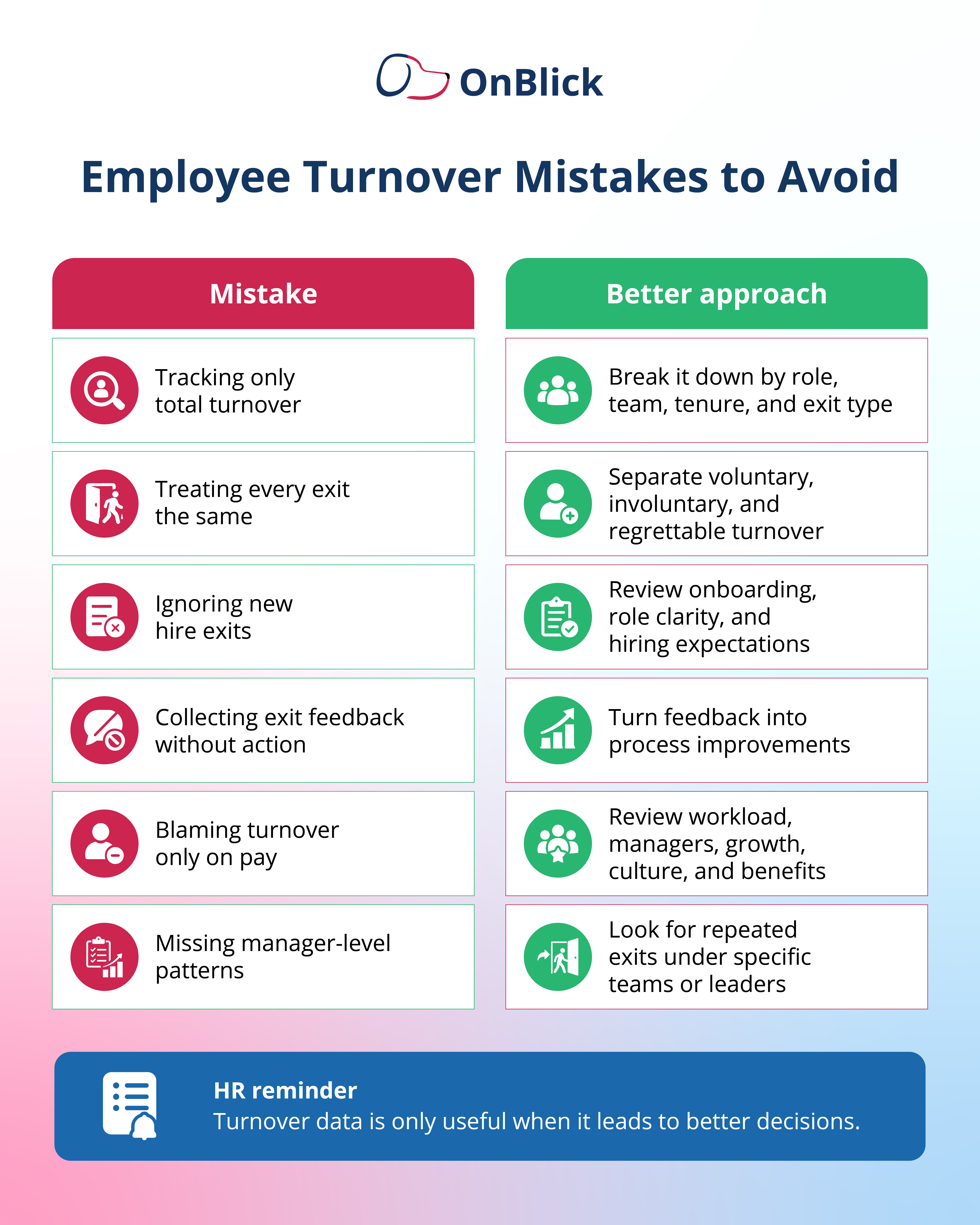
- One common mistake is tracking only total turnover. A single company-wide number does not show which teams, roles, or managers need attention.
- Another mistake is treating every exit the same. Voluntary turnover, involuntary turnover, regrettable turnover, and new hire turnover each require a different response.
- Employers also miss opportunities when they collect exit feedback but do not act on it. Exit interviews should help identify recurring issues, not just complete an HR process.
- Blaming turnover only on pay is another mistake. Compensation matters, but employees may also leave because of workload, managers, lack of growth, poor communication, or weak onboarding.
- HR teams should also avoid waiting until resignation to respond. Regular check-ins, manager training, feedback review, and turnover reporting can help employers act earlier.
How HR software helps manage turnover risk
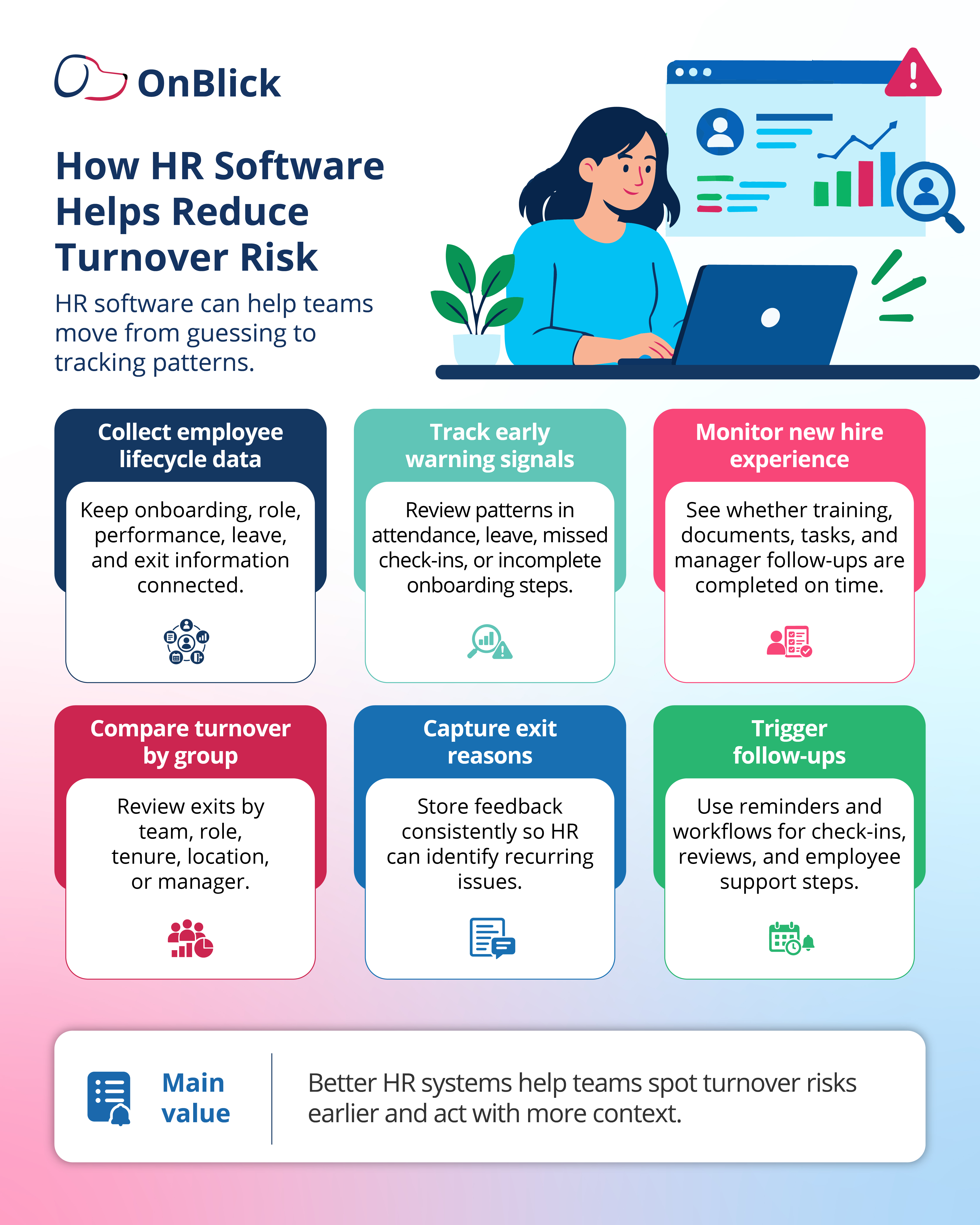
- HR software can help teams track turnover patterns and manage retention-related processes with better visibility.
- Centralized employee records make it easier to review role history, manager assignments, documents, performance activity, leave, and employment changes. Onboarding workflows help HR see whether new hire tasks, training steps, and documents are completed on time.
- Time and leave data can help managers and HR notice repeated absence patterns or workload concerns that may need follow-up. Performance records and review schedules can also support better manager-employee conversations.
- HR software can also help track exits more consistently. Exit reasons, separation dates, tenure, role, department, and manager details can be reviewed together to identify trends.
- The value is not in data alone. It comes from using that data to improve employee processes, manager support, and retention planning.
How OnBlick helps HR teams support retention
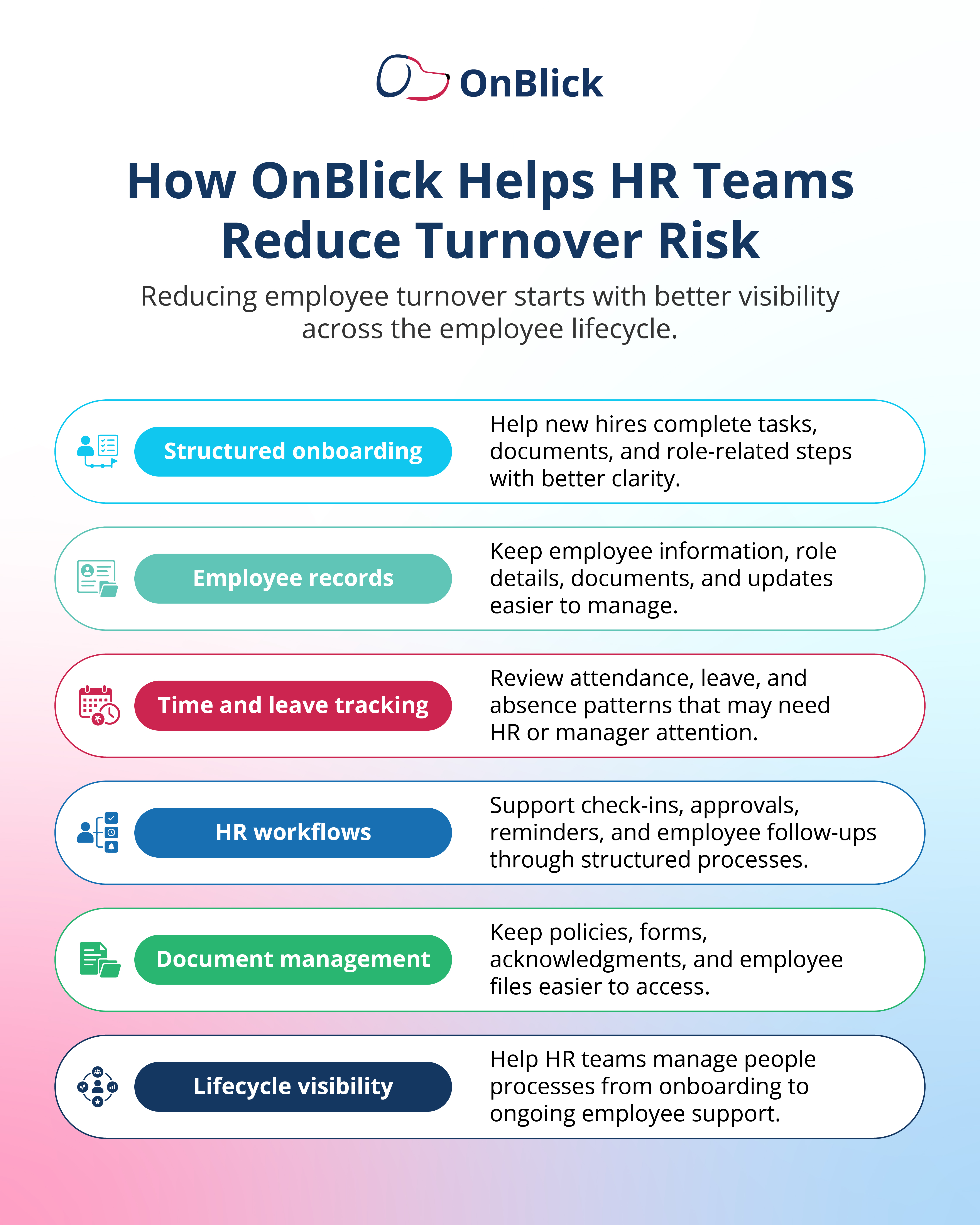
OnBlick helps HR teams manage employee lifecycle processes with better structure and visibility. This can support retention efforts by helping HR organize onboarding, employee records, time and leave data, documents, workflows, and compliance-related processes.
- With OnBlick, HR teams can support new hire onboarding, track employee information, manage HR documents, maintain leave and attendance visibility, and create more structured follow-ups across employee processes.
- For employers trying to reduce avoidable turnover, organized HR workflows can make a difference. HR teams can respond faster, maintain better records, and support employees more consistently from onboarding through ongoing employment.
- OnBlick helps HR teams reduce manual work, improve process clarity, and manage people operations in a more organized way.
Conclusion
Employee turnover is not only a number to report. It is a signal that helps HR teams understand where employees are leaving, why exits are happening, and which parts of the employee lifecycle need attention.
Employers can reduce avoidable turnover by improving hiring alignment, strengthening onboarding, supporting managers, reviewing workload, tracking the right metrics, and acting on employee feedback.
With better processes and clearer data, HR teams can move from reacting to resignations to identifying patterns earlier. OnBlick helps HR teams manage onboarding, employee records, time and leave, documents, workflows, and HR processes in one organized platform.
Schedule an OnBlick demo to see how better HR workflows can support employee lifecycle management and retention-focused processes.
FAQs about Employee Turnover
1. What is a good employee turnover rate?
A good employee turnover rate depends on the industry, role type, company size, workforce structure, and labor market conditions. Instead of relying only on one benchmark, HR teams should compare turnover by department, role, tenure, manager, and exit reason to understand whether the rate is healthy or concerning.
2. What is considered a high employee turnover rate?
A turnover rate may be considered high when exits are frequent, hard to explain, costly to replace, or concentrated in specific teams, roles, or managers. It is especially concerning when high performers, new hires, or employees in critical roles leave at a higher rate than expected.
3. What is the difference between employee turnover and attrition?
Employee turnover usually refers to employees leaving and the organization needing to replace them. Attrition often refers to employees leaving and the role not always being refilled. Turnover is more closely tied to replacement hiring, while attrition may reflect workforce reduction, restructuring, or role changes.
4. How often should HR teams measure employee turnover?
HR teams can measure turnover monthly, quarterly, and annually. Monthly tracking helps identify sudden changes, while quarterly and annual reviews help show longer-term patterns. Employers should also review turnover after major changes such as restructuring, policy updates, leadership changes, or rapid hiring.
5. Why do employees leave within the first 90 days?
Employees may leave within the first 90 days because of unclear role expectations, poor onboarding, lack of manager support, delayed access to tools, weak training, or a mismatch between the job description and the actual work. Early turnover often signals that the hiring or onboarding process needs review.
6. Can employee turnover ever be positive?
Yes. Some turnover can be healthy when it creates room for better role fit, improved performance, new skills, or workforce changes. The concern is not every exit. The bigger concern is avoidable turnover, repeated exits, high-performer departures, or turnover that points to deeper issues in the employee experience.
7. What is voluntary employee turnover?
Voluntary employee turnover happens when an employee chooses to leave the organization. This may happen because of career growth, compensation, benefits, workload, manager relationship, flexibility, culture fit, personal reasons, or better opportunities elsewhere.
8. What is involuntary employee turnover?
Involuntary employee turnover happens when the employer ends the employment relationship. This may include terminations, layoffs, role eliminations, or separations due to performance, conduct, business restructuring, or workforce planning needs.
9. How can exit interviews help reduce turnover?
Exit interviews can help HR teams understand why employees leave and whether there are recurring issues across teams, managers, roles, or stages of employment. They are most useful when feedback is reviewed regularly and used to improve onboarding, manager training, workload planning, compensation reviews, or employee support.
10. How can HR software help identify turnover trends?
HR software can help HR teams review turnover by department, role, location, manager, tenure, and exit reason. It can also connect turnover data with onboarding, attendance, leave, performance, and employee records, giving HR better visibility into patterns that may need action.