.gif)


Today, we come across a lot of businesses that face pressure to manage people operations with consistency, visibility, and control. HR responsibilities, from onboarding and documentation to compliance and workforce support, have become more detailed and directly linked to business outcomes.
It goes without saying that expansion makes it difficult for an organization to manage HR responsibilities manually. This difficulty is reflected in teams often struggling with process consistency, employee support, documentation, and policy alignment. In this scenario, several companies turn to HR business partners, who align HR priorities with business needs, improve coordination, strengthen HR processes, and support growth more effectively.
This article discusses what an HR business partner is, what HRBPs do, their key responsibilities and skills, how companies benefit from HRBP support, and when external HRBP support may be worth considering.
What Is an HR Business Partner?
- An HR Business Partner is an HR professional who collaborates closely with leadership and business teams to help align people-related priorities with the overall organizational strategy.
- An HRBP is not just an administrator of HR functions. Instead, they contribute to larger business goals by enabling better workforce planning, people processes, employee support, and HR effectiveness.
- Many organizations have HRBPs who are intermediaries between HR and the rest of the business. They strive to make sure organizational goals align with the HR. It can include hiring, improving the employee experience, strengthening people processes, helping managers address workforce issues, and ensuring HR practices support growth and stability.
The role of an HRBP can vary depending on three major factors:
- company size
- company structure
- business needs
In some organizations, HRBPs focus more on strategy and leadership support. In others, especially where operations are more compliance-heavy or process-driven, their role could prioritize coordination of day-to-day HR responsibilities and management of critical workflows.
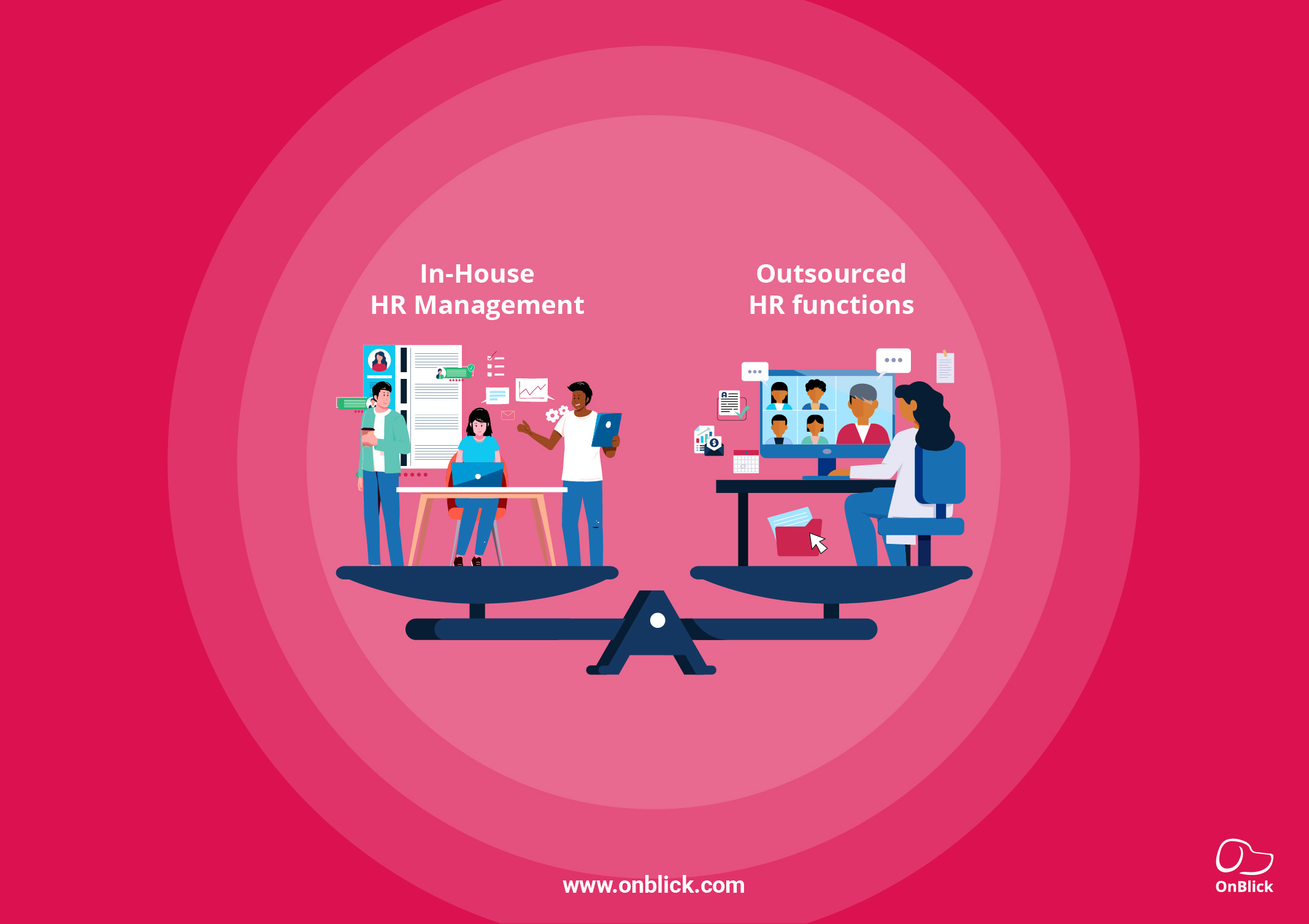
These days, many organizations seek support from HR business partners not only for strategic direction but also for improved structures, communication, and reliability in their HR operations.

What Does an HR Business Partner Do?
- An HR business partner converts the business needs into effective HR solutions and strategies.
- While general HR administration is the responsibility of the HR generalist, an HR Business Partner focuses on working with managers and senior teams in areas of HR that impact workforce performance, productivity, employee engagement and people operations.
- A key part of their job is assisting managers to enhance people management. Some of the activities are assisting with recruitment strategies, streamlining the onboarding process, addressing employee issues, aiding in the enforcement of policies, and being part of performance reviews.
- HR Business Partners also assist in the uniform implementation of HR policies and procedures throughout teams and divisions. HRBPs typically significantly contribute to the enhancement of HR operations.
- They might spot any breakdowns in communication, places where delay in follow-up is happening, or areas that lack coordination. Through this, they assist companies in improving processes, minimizing misunderstandings, and enhancing the general productivity of HR functions.
- HRBPs facilitate change and growth by helping the organization anticipate how to meet its talent needs. Whether it is improving employee experience, automating processes or extending operational assistance, their aim is to help organizations in dealing with personnel-related issues in a more systematic and linear manner.

What Are the Responsibilities of HRBPs?
- While the exact duties of HR business partners may vary from one organization to another, their role generally revolves around helping companies to manage people-related priorities in a more structured and effective way.
- HRBPs are often expected to support both business needs and HR execution, making sure that people processes support the stability, growth and day-to-day efficiency of the organization.
- The HRBP plays a significant role in supporting workforce planning and employee processes. This might include streamlining onboarding procedures, helping managers sort through employee problems, assisting with policy enforcement, improving communication between departments and resulting in more uniform HR practices.
- They also help to prevent routine people operations from becoming fragmented or difficult to manage in many cases.
- HRBPS may also take responsibility for improving process visibility and follow through. This includes identifying where tasks are being delayed, where communication is unclear, or where documentation and employee files are not being processed consistently. They help to improve coordination and strengthen control over processes by helping teams to close these operational gaps.
- In more compliance and documentation-heavy environments, HRBPs could support more structured processes such as onboarding, employee records, verification-related processes, and ongoing stakeholder coordination.
- Often, their responsibilities extend beyond advising to ensuring that critical HR processes are conducted with greater consistency, accountability, and attention to detail.

What Skills Do HR Business Partners Need?
- HR business partners need to have people skills, business understanding and process-oriented thinking.
- They bridge HR with broader organizational needs and are expected to work across teams, support decision-making, and contribute to the improvement of people-related processes.
- Communication is one of the most important skills for HRBP. They need to work with leadership, managers, employees, and sometimes outside stakeholders. This means they need to be able to communicate issues effectively, facilitate discussions, and support coordination across functions.
- Also, strong interpersonal skills enable them to handle sensitive people issues more clearly and professionally.
- HR business partners also need problem-solving skills and process management skills. In many organizations, they are expected to identify gaps, reduce confusion, improve follow-up and help make HR operations more consistent. This calls for an eye for detail, good judgment and the ability to support structured execution, not just to react when things go wrong.
- Another vital strength is business understanding. The most competent HRBPs understand how workforce decisions affect larger organizational goals.
- Flexibility, stakeholder management, and an understanding of documentation are particularly important where HR processes are essential to compliance, employee records, and ongoing operational support.

Why Employers Are Rethinking HR Support Today
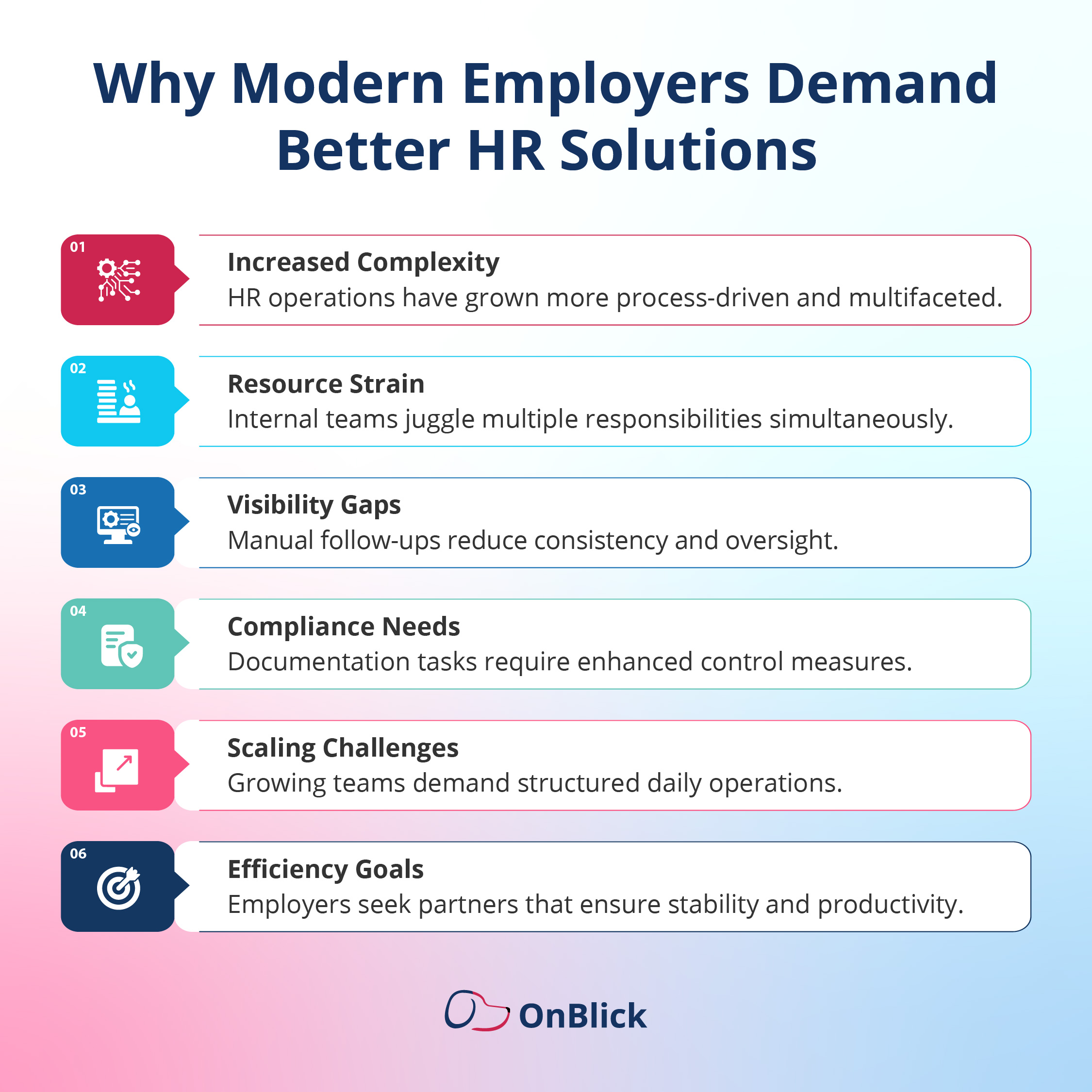
Many employers are reconsidering HR support because people operations has become more complex, more process-driven, and more strongly connected to compliance, employee experience, and business continuity. Tasks that could have been managed through informal coordination now often require more structure, clearer ownership, and more dependable follow-through.
- One reason for this change is that HR is now responsible for several areas at the same time. Internal teams are under pressure to deal with onboarding processes, employee records, communication of policies, steps for compliance, handling of documentation, and coordination of a continuing workforce. When these tasks are spread over multiple systems or depend on manual follow-up, it’s harder to keep them accurate and visible.
- Organizations also have added pressure to reduce delays, improve documentation control, and respond more consistently to workforce needs. As teams grow larger, different processes can create operational pressure and hinder effective management of critical HR activities. That’s why a significant number of employers are actively looking for a more structured support approach to help optimize day-to-day operations.
- In this context, HR support is not seen solely as an internal administrative function. Several companies see it as a necessary component of operational readiness, employee support, and process stability.
How Companies Benefit from HR Business Partners
- HRBPs can assist companies manage personnel responsibilities more effectively, thus adding value. Their support is vital to achieve better coordination, stronger HR processes and a more structured approach to workforce needs as organizations continue to grow.
- One of the primary benefits of HRBP support is greater process consistency. When HR activities are handled with clearer workflows and more robust follow-up, companies can reduce confusion, improve timelines, and manage employee-related responsibilities with increased control. This is much critical in workplaces where documentation and process accuracy are highly significant.
- HRBPs can also help reduce some of the administrative burden off internal teams. They assist managers, coordinate people-related processes and help maintain day-to-day operations running more smoothly. This enables organizations to manage HR responsibilities more effectively without having to rely exclusively on reactive problem-solving.
- Another major benefit is improved visibility. HR business partners help organizations have more knowledge of current tasks, employee support needs, and process gaps that they may not be able to detect otherwise. This may lead to better communication, better decision-making, and more resilient HR operations over time.
- In general, HRBPs help companies build a more reliable people-support system that promotes productivity of the workforce and broader business priorities.

When Do Companies Need External HRBP Support?
Not every business has the in-house resources to manage growing HR responsibilities with the consistency and follow-through they require.
- Companies often begin exploring external HRBP support when people operations become more time-consuming, more document-heavy, or harder to coordinate across teams.
- This need is often more obvious when internal HR teams are already juggling a lot of priorities. Symptoms that more support may be required include: recurring follow-up, delays in onboarding, scattered employee records, inconsistent communication, or gaps in processes.
- For some employers, it’s not lack of effort but lack of adequate structured support to keep operations running smoothly.
- External HRBP support can be beneficial for those companies with more complex workforce operations or compliance-heavy processes.
- When closer attention is required in documentation, employee coordination, process control, and ongoing follow-through, third-party support can help strengthen consistency without requiring the company to immediately expand its internal team.
- For growing employers, external support can pave the way to not only improve day-to-day HR operations but also maintain better visibility, stronger coordination, and more reliable process execution.

How OnBlick’s HR Business Process Associates Support Employers
- At OnBlick, we support employers through HR Business Process Associates, a service model designed to help companies manage HR and immigration-related operations with greater consistency, visibility, and control. This support is especially valuable for organizations that handle documentation-heavy workflows, compliance-related responsibilities, and ongoing employee coordination across multiple stakeholders.
- Unlike a general administrative support model, OnBlick’s HR Business Process Associates help bring more structure to critical day-to-day responsibilities. This can include support with onboarding, employee setup, Form I-9 and E-Verify coordination, documentation follow-up, record maintenance, immigration-related process support, and other operational tasks that require careful follow-through. The goal is to help employers reduce process gaps, improve coordination, and manage these responsibilities more reliably.
- This model can be particularly useful for employers that need stronger support without immediately expanding internal headcount. For growing teams, immigration-heavy environments, or organizations dealing with repeated follow-up and process delays, structured external support can help improve day-to-day operations while maintaining better process control.
By working through a more organized support model, employers can improve consistency across HR operations, reduce administrative strain on internal teams, and maintain stronger readiness across documentation and compliance-related processes.

OnBlick Support Plans for Different Employer Needs
Different employers need different levels of support depending on their hiring model, operational complexity, and internal bandwidth. To address this, OnBlick offers service plans designed around varying levels of HR and immigration support needs.
Onboard Pro Plan
The Onboard Pro Plan supports core onboarding and employee setup activities. This includes onboarding coordination, Form I-9, E-Verify, employee setup, and related documentation workflows. It is a suitable option for employers looking for stronger support around new hire processes and early-stage compliance steps.

LCA Compliance Plan
The LCA Compliance Plan expands support beyond onboarding to include labor-condition-related processes. In addition to onboarding and Form I-9 support, this plan includes LCA coordination, PAF creation, and related document follow-up. It is designed for employers that need more structure around immigration-related compliance documentation.

HRBP Plus Plan
The HRBP Plus Plan is designed for employers with broader immigration support needs. It includes onboarding, Form I-9, LCA, PAF, H-1B coordination, and Form I-983 / STEM OPT-related support. This plan is a good fit for companies that need more connected support across immigration-heavy workflows.

HRBP 360 Plan
The HRBP 360 Plan offers a broader support model for employers that need more comprehensive operational assistance. In addition to onboarding and compliance support, it extends into H-1B coordination, Form I-983 / STEM OPT support, offboarding, leave-related coordination, and ongoing employee record support. This plan is intended for organizations looking for more complete day-to-day HR and immigration process support.

By offering different support levels, OnBlick helps employers choose a model that aligns more closely with their operational needs, documentation requirements, and internal capacity.
Frequently Asked Questions About HR Business Partners
- What is HR business partnering?
HR business partnering is an approach in which HR works closely with business leaders and teams to support organizational goals through people-related planning, coordination, and process improvement. It moves HR beyond routine administration and toward a more business-aligned role.
- What is the role of a human resources business partner?
The role of a human resources business partner is to connect HR priorities with business needs. This often includes supporting managers, improving people processes, helping address workforce challenges, and contributing to more consistent and effective HR operations.
- How is an HR business partner different from an HR manager?
An HR manager is often more focused on managing HR functions, policies, and internal HR administration. An HR business partner typically works more closely with leadership and business teams to align HR support with broader organizational priorities and operational needs.
- Why is HR considered a strategic business partner?
HR is considered a strategic business partner because workforce decisions affect growth, performance, retention, process stability, and employee experience. When HR supports business goals more directly, it can help organizations make stronger people-related decisions and operate more effectively.
- How do HR business partners support business growth?
HR business partners support business growth by helping companies improve hiring support, employee coordination, process consistency, workforce planning, and overall HR effectiveness. Their involvement can make it easier for organizations to scale people operations in a more structured way.
- When should a company consider external HRBP support?
A company may consider external HRBP support when internal teams are stretched, documentation-heavy processes are creating pressure, onboarding and follow-up are becoming inconsistent, or the business needs more structured support without immediately increasing internal headcount.
- Can HR business partners help with compliance-heavy HR operations?
Yes. HR business partners can help improve consistency, coordination, and process control in environments where documentation, follow-up, and employee-related operations require closer attention. This can be especially valuable in compliance-heavy settings.
- How can HR business partners support onboarding and employee documentation?
HR business partners can support onboarding and employee documentation by improving coordination, reducing delays, strengthening follow-up, and helping maintain better visibility into forms, records, and related process steps. Their support can help make these activities more consistent and easier to manage.
- What types of companies benefit most from HRBP support?
HRBP support is especially valuable for growing companies, businesses with limited internal HR bandwidth, employers managing process-heavy people operations, and organizations that need stronger structure around employee support, documentation, and coordination.
- How do HR business partners improve process consistency across teams?
HR business partners improve process consistency by helping define clearer workflows, strengthening coordination, improving follow-up, and identifying gaps that create delays or confusion. Their support helps teams handle people-related processes in a more structured and dependable way.
Conclusion
HR business partners play an important role in helping organizations manage people-related priorities with greater structure, consistency, and business alignment. As HR operations become more complex and more closely tied to documentation, coordination, and day-to-day process control, the value of stronger HRBP support continues to grow.
For many employers, the challenge is not simply managing individual HR tasks, but maintaining visibility, follow-through, and operational consistency across multiple responsibilities at once. This is where the right support model can make a meaningful difference.
At OnBlick, our HR Business Process Associates help employers bring more control and reliability to compliance-heavy HR and immigration operations. Whether a company needs support with onboarding, documentation, process coordination, or broader day-to-day responsibilities, a more structured support model can help improve efficiency and strengthen overall HR operations.
Book a free OnBlick demo to learn more about our HR services