.gif)


These days, with the increasing complexity of HR operations, several employers are rethinking how different responsibilities should be managed. While some functions are closely linked to leadership, culture, and internal decision-making, others are more process-heavy, documentation-driven, or time-consuming to manage entirely in-house. In such scenarios, the question of in-house vs outsourced HR functions becomes more relevant for growing organizations.
The right approach may not always be about choosing one model over the other. In many cases, it is about understanding which HR functions are better kept internal, which are commonly outsourced, and when external support can help improve overall HR operations.
This article explores the difference between in-house and outsourced HR functions, the pros and cons of each model, what companies should keep internal, when outsourcing makes sense, and when a hybrid model may work best.
In-House vs Outsourced HR Functions: Why the Choice Matters
- As HR operations grow more complex, the question of whether to manage HR functions in-house or outsource them becomes more important. What may once have been handled through a smaller internal team now often involves a wider range of responsibilities. This includes areas such as onboarding, employee documentation, compliance-related follow-up, policy coordination, workforce support, and ongoing record management.
- Some HR functions require close connection to leadership, company culture, and internal decision-making, while others are more process-driven and depend on consistency, timely follow-up, and operational control. This calls for serious consideration of what to outsource and what to keep internal.
- This decision matters not only for efficiency, but also for visibility, accountability, and business continuity. When the right HR support model is in place, companies are better positioned to reduce administrative strain, improve process consistency, and effectively manage people-related responsibilities.
That is why taking a closer look at the balance between in-house and outsourced HR functions is essential.
What is the Difference Between In-House and Outsourced HR Functions?
In-house HR
- In-house HR functions are managed by an internal team that works within the organization and handles HR responsibilities as part of the company’s day-to-day operations.
- These functions are typically carried out by employees who understand the company’s culture, leadership style, internal policies, and workforce dynamics more closely.
- Due to this, in-house HR is often seen as more directly connected to internal decision-making and employee experience.
Outsourced HR
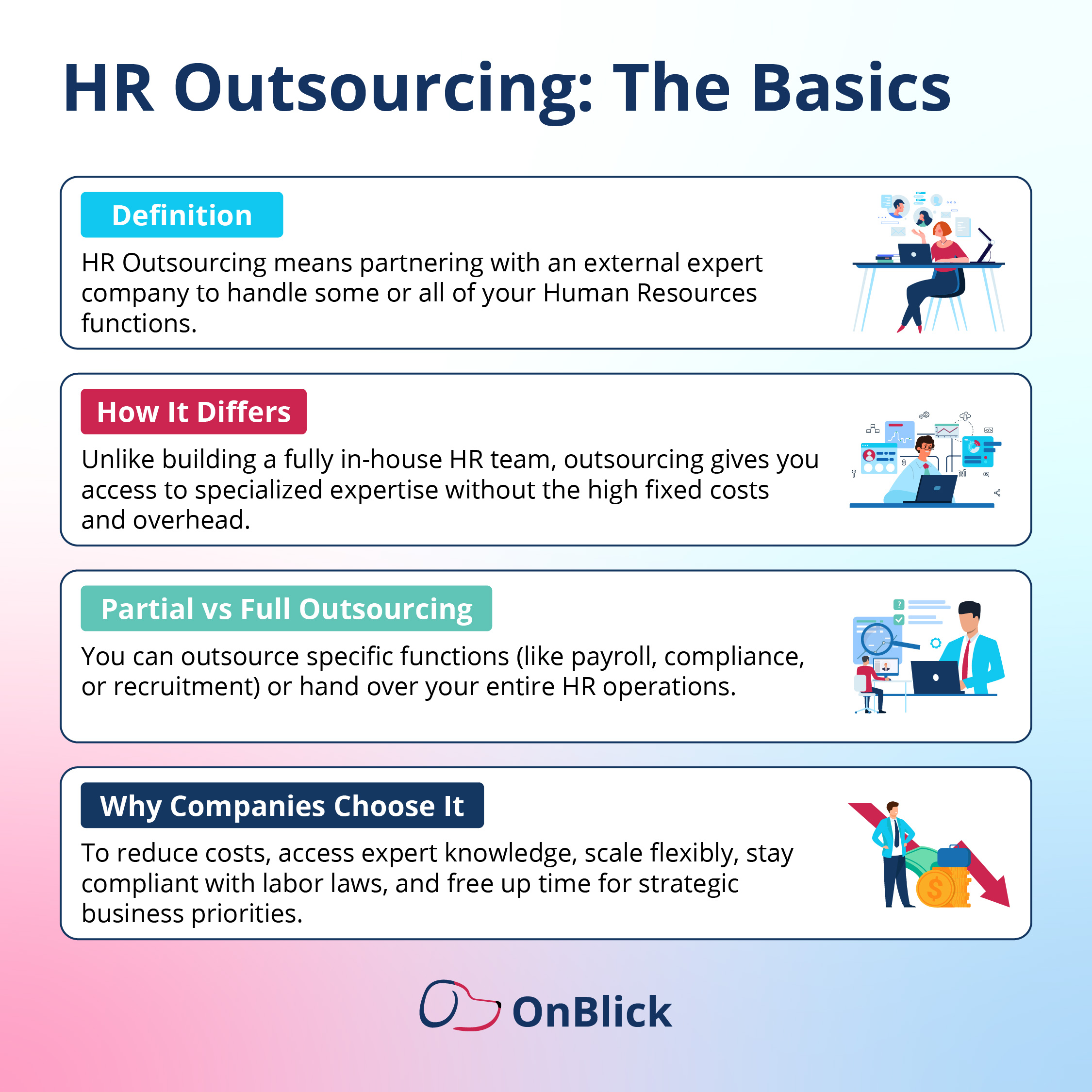
- On the other hand, outsourced HR functions are handled by an external provider that supports some or all HR responsibilities on behalf of the company.
- Sometimes, this support may be limited to specific tasks, such as onboarding coordination, employee documentation, compliance-related workflows, or payroll-related administration.
- Or it may extend into broader day-to-day HR support - depending on the company’s needs.
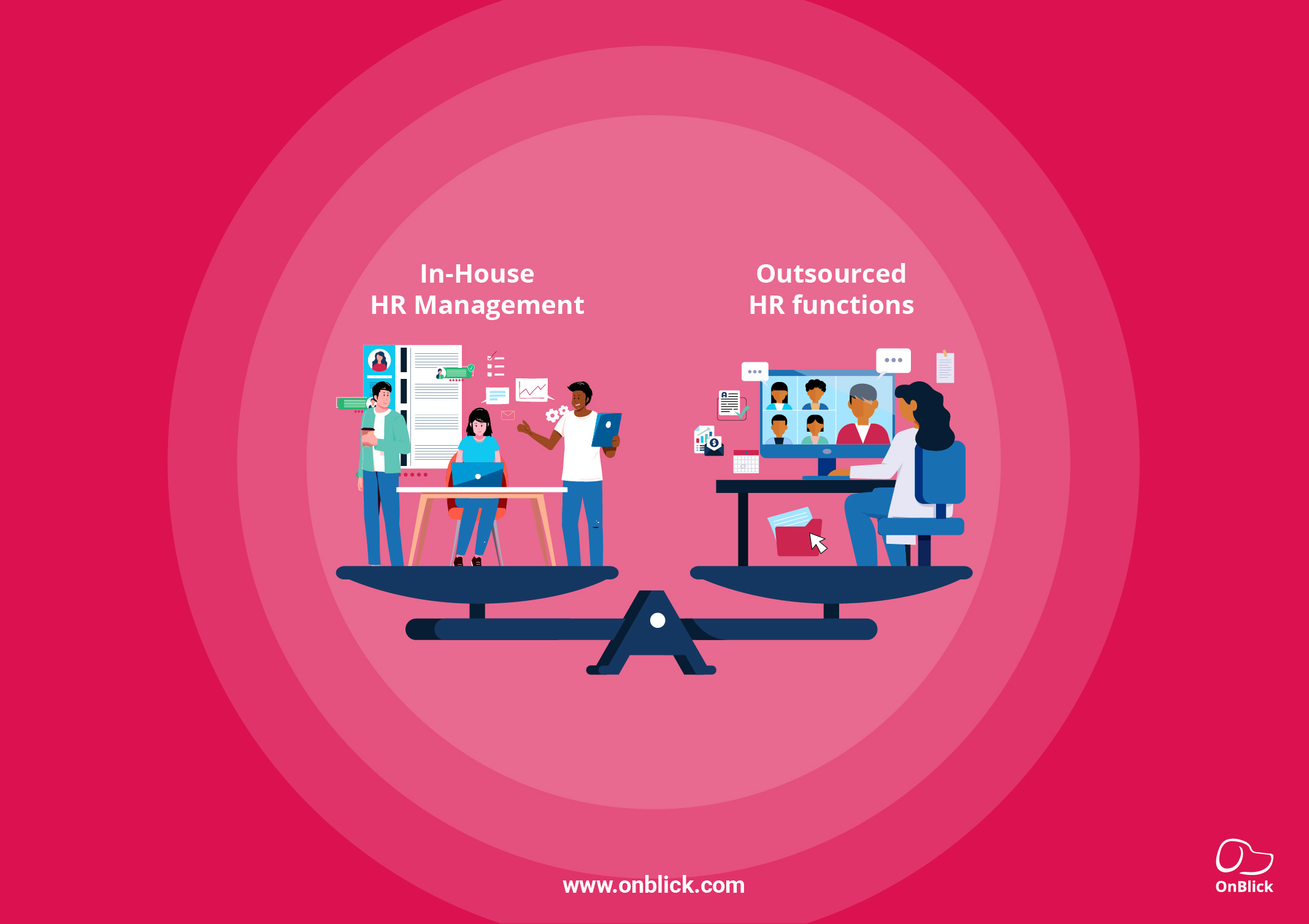
The main difference between the two models is about where responsibility sits and how the work is managed.
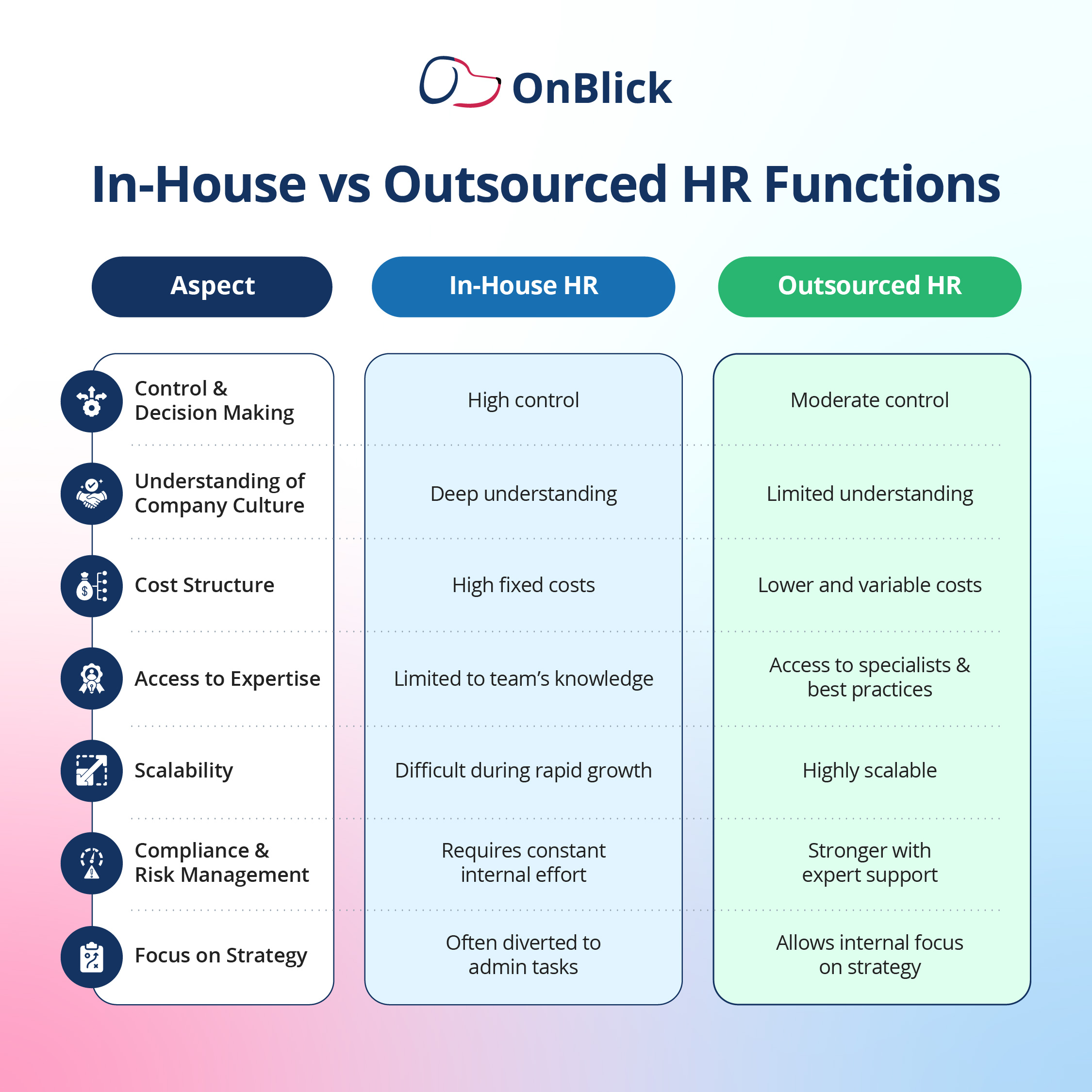
- In-house HR offers closer internal access and stronger day-to-day familiarity with the business.
- In contrast, outsourced HR can provide additional structure, process support, and specialized help without requiring the company to build the same capacity internally.
In reality, this is not always an either-or decision. A lot of employers use a mix of both models, keeping some HR functions internal while outsourcing others. They go with the latter for functions that are more process-heavy, documentation-driven, or difficult to manage consistently with existing resources.
For this reason, understanding the difference between in-house and outsourced HR functions is inevitable to choose the right support model.
Pros and Cons of In-House HR
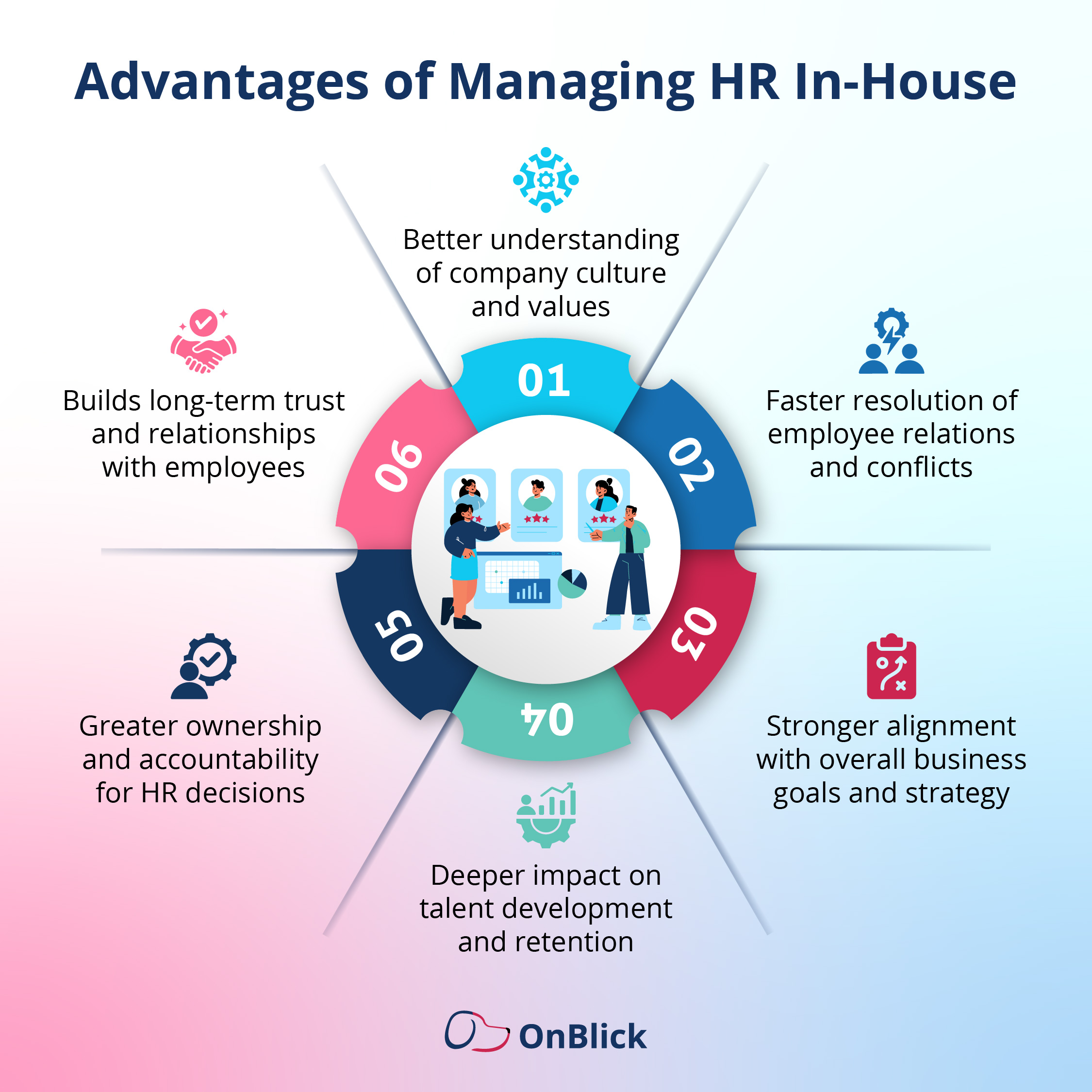
- When HR functions are handled in-house, companies have more direct control over how people-related responsibilities are managed.
- Since the HR team works within the organization, it is often more familiar with the organizational culture, internal policies, nature of leadership, and workforce dynamics.
- This can make in-house HR especially valuable for handling sensitive employee matters, supporting internal leadership, and aligning people decisions closely with business priorities.
- Another advantage of in-house HR is accessibility. Internal HR teams are often easier for managers and employees to reach quickly, and they can respond with a stronger understanding of the company’s specific context.
- This can be especially helpful when HR work involves internal coordination, performance-related conversations, employee engagement efforts, or company-specific policy decisions.
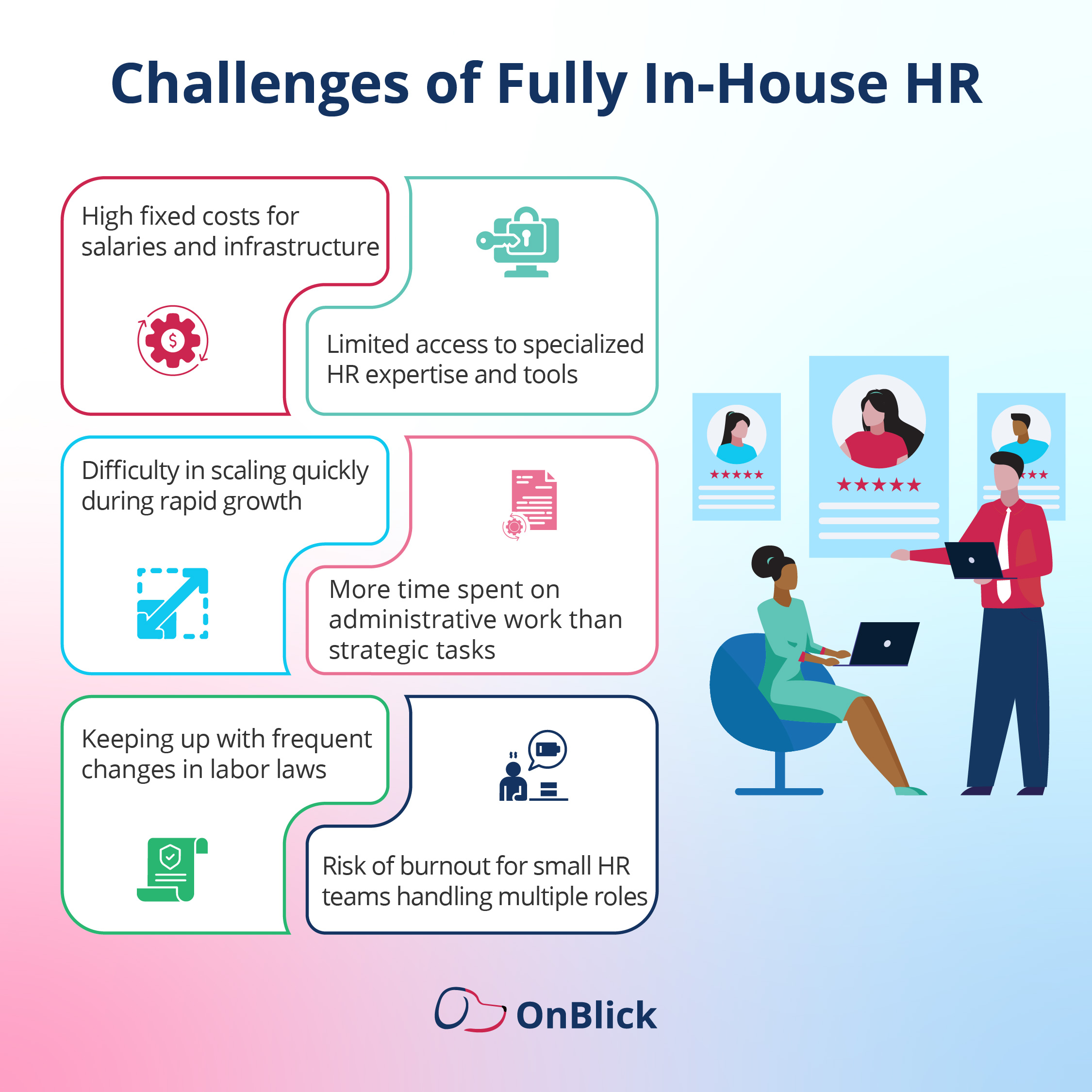
- At the same time, in-house HR can become difficult to scale when responsibilities grow faster than internal capacity.
- As onboarding volumes increase and documentation, follow-up, compliance-related tasks, and record management become more demanding, internal teams may begin to face bandwidth limitations.
- In such cases, even well-functioning HR teams can find it harder to maintain consistency and visibility across day-to-day operations.
For many employers, the challenge with in-house HR is not the model itself, but the pressure placed on a limited team. When too many process-heavy responsibilities sit internally without enough support, delays, repeated follow-up, and operational strain can become more common.
Pros and Cons of Outsourcing HR Functions
- Outsourcing HR functions can help companies manage process-heavy responsibilities more efficiently, especially when internal teams are already stretched or when the business needs more structured support without immediately adding headcount.
- External HR support can reduce administrative strain, improve follow-through, and bring more consistency to tasks that depend on documentation, coordination, and timely execution.
- One of the main advantages of outsourcing HR functions is flexibility. Companies can choose to outsource only specific responsibilities, such as onboarding support, documentation handling, or compliance-related workflows, rather than shifting all HR functions externally.
- This makes outsourcing a practical option for organizations that want targeted support while still keeping core strategic HR responsibilities in-house.
- Outsourced HR support can also be valuable when specialized expertise or additional process control is needed.
- For example, employers dealing with compliance-heavy operations, immigration-related workflows, or documentation-sensitive processes may benefit from an external team that can help bring more structure, visibility, and consistency to these responsibilities.
.jpg)
However, outsourcing is not always the right fit for every HR function. Some responsibilities require deep internal context, close leadership involvement, or ongoing cultural alignment that may be better handled by an internal team.
The effectiveness of outsourcing also depends heavily on choosing the right provider and clearly defining which responsibilities should remain internal and which can be managed externally.
In many cases, the strongest approach is not complete outsourcing, but selective outsourcing. When used thoughtfully, outsourced HR functions can help companies strengthen day-to-day execution while allowing internal teams to stay focused on areas that require closer internal ownership.

What HR Functions Are Usually Better Kept In-House?
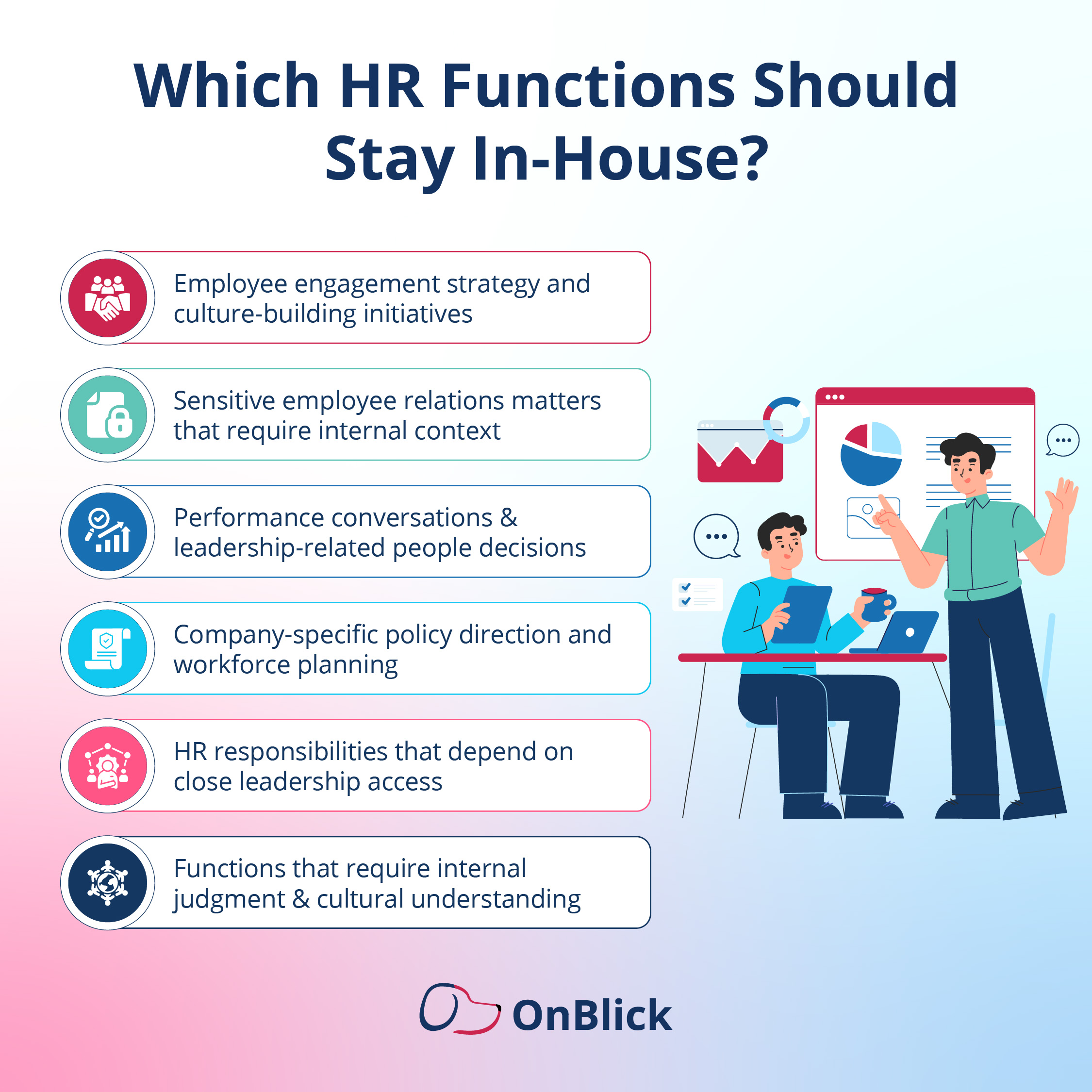
- Some HR functions are usually better kept in-house because they require judgment, confidentiality, and direct involvement in people-related decisions that shape the employee experience and the broader direction of the company.
- For example, employee engagement strategy is often best managed internally because it depends on a strong understanding of company culture, leadership priorities, and employee sentiment.
- The same is true for sensitive employee relations matters, performance conversations, leadership coaching, and other areas where HR support needs to be closely tied to the company’s internal dynamics.
- Functions related to people leadership and long-term workforce planning also tend to stay in-house. These responsibilities often involve decisions that affect organizational structure, team development, management practices, and company-specific policy direction.
- Because they are closely connected to business strategy and internal leadership, they usually benefit from direct internal ownership.
In general, HR functions are better kept in-house when they require constant internal visibility, cultural understanding, and close alignment with leadership decisions. These are typically areas where the value of internal context matters more than external process support.
What HR Functions Are Commonly Outsourced?
- HR functions are often outsourced when they are more process-driven, documentation-heavy, or time-consuming to manage consistently with existing internal resources.
- These responsibilities may still be important, but they do not always require the same level of internal leadership involvement as more strategic or culture-sensitive HR functions.
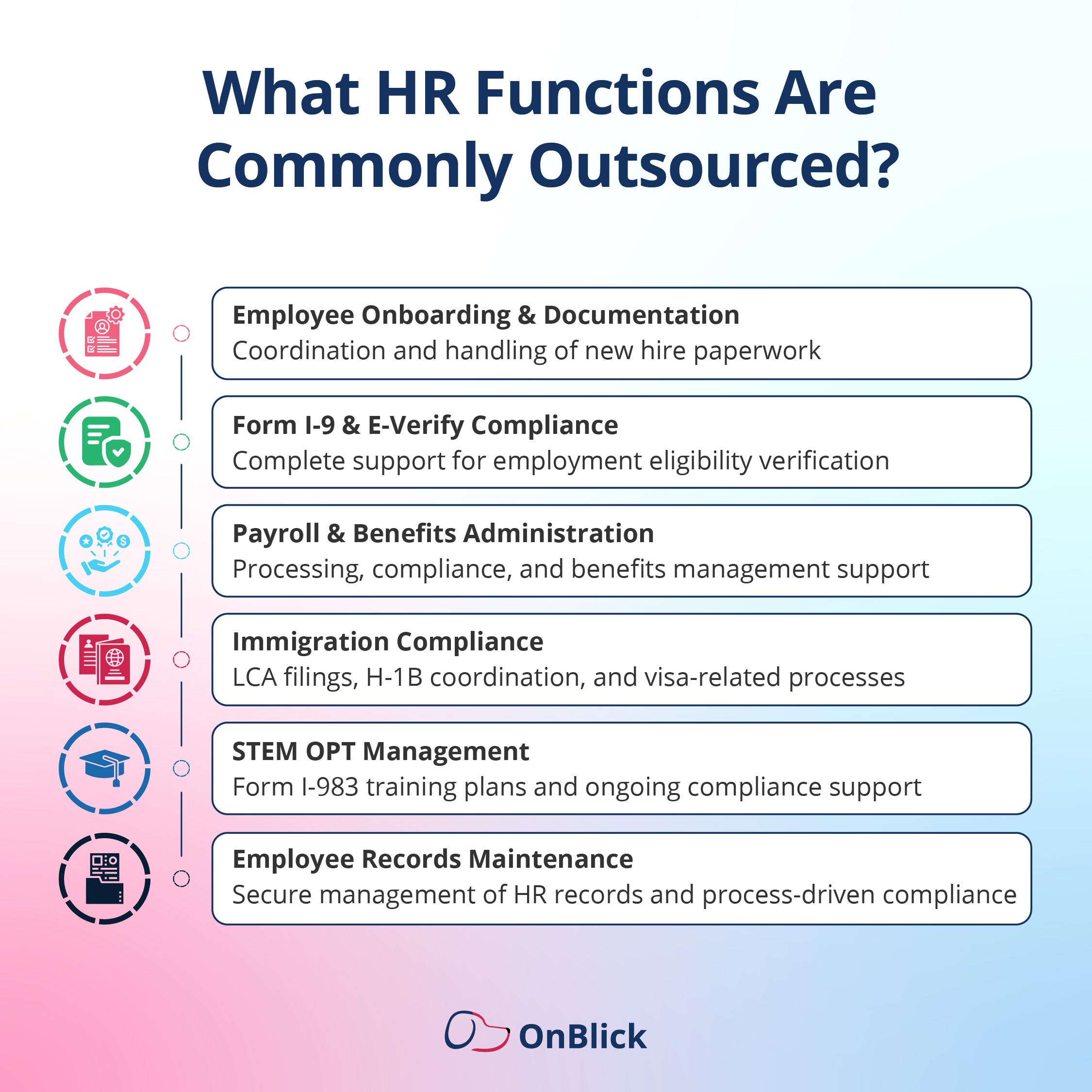
- Commonly outsourced HR functions include onboarding coordination, employee documentation handling, payroll-related support, and ongoing administrative follow-up.
- Many employers also outsource responsibilities that depend on timely execution, process consistency, and organized recordkeeping, especially when internal teams are already managing a wide range of other priorities.
- In compliance-heavy environments, outsourced support is often used for functions such as Form I-9 and E-Verify coordination, documentation tracking, record maintenance, LCA and PAF support, H-1B process coordination, and STEM OPT or Form I-983-related workflows.
- These tasks often require close follow-up, clearer process visibility, and more structured handling than internal teams can always maintain on their own.
Employers usually outsource these functions not because they are less important, but because they benefit from stronger operational support. When handled well, outsourced HR functions can help reduce administrative strain, improve consistency, and make it easier for companies to maintain smoother day-to-day HR operations.
When a Hybrid HR Model Works Best
For many employers, the most practical approach is not choosing between fully in-house HR and fully outsourced HR, but combining the two.
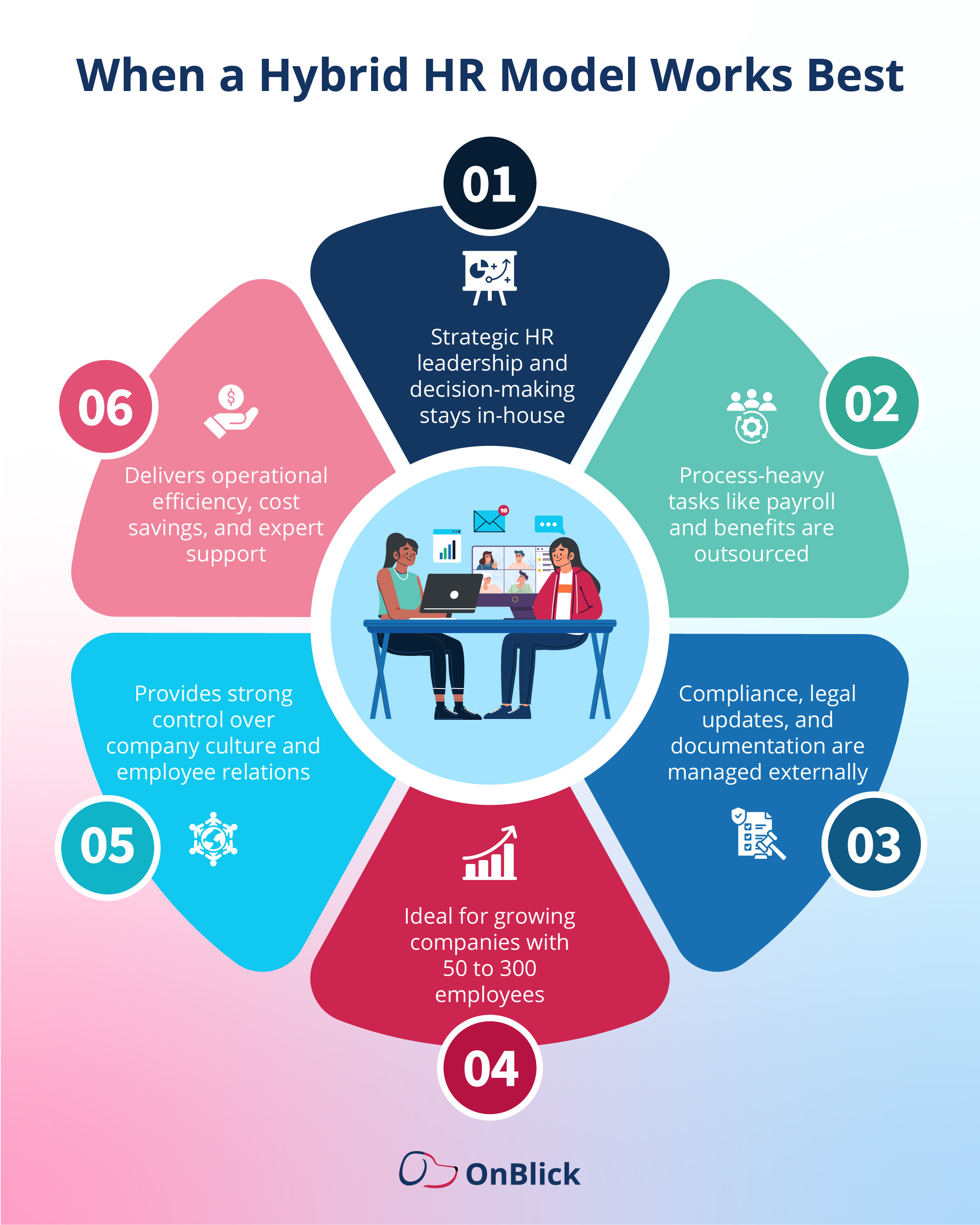
- A hybrid HR model works well when some responsibilities need close internal ownership, while others are better supported through an external team that can help manage process-heavy or compliance-driven work more consistently.
- This model is especially useful when a company wants to keep strategic HR functions in-house while outsourcing tasks that require more operational follow-through.
- Leadership support, employee engagement, performance discussions, and culture-related decisions may stay internal, while onboarding coordination, employee documentation, compliance-related workflows, and ongoing administrative support are handled externally.
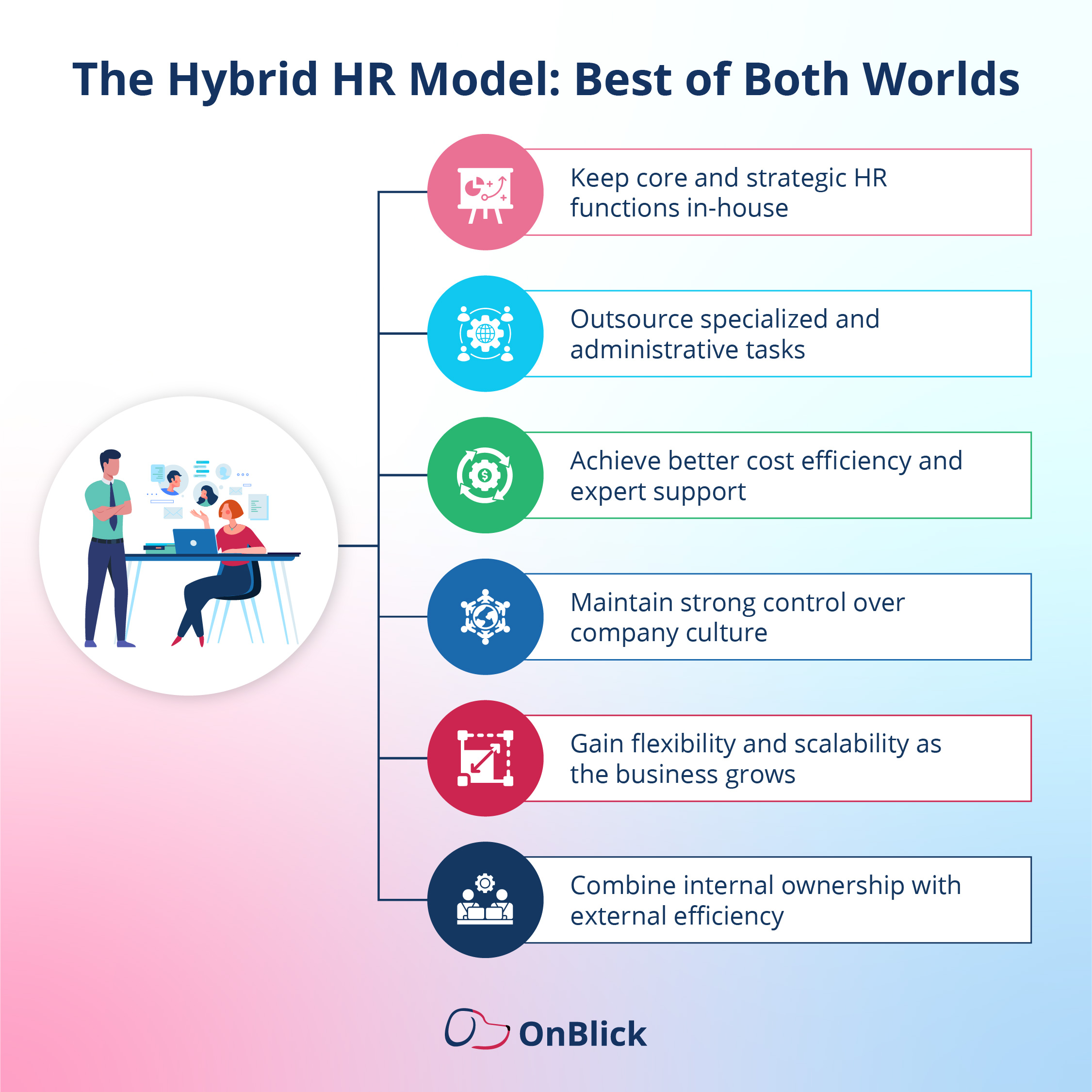
- A hybrid model can also help growing companies scale more effectively. Instead of expanding internal HR headcount immediately, employers can add external support in areas where process demands are increasing.
- This allows internal HR teams to stay focused on high-value responsibilities while still improving consistency, visibility, and execution across day-to-day operations.
- For many businesses, a hybrid model offers the best balance of control and support. It keeps core people decisions close to the organization while strengthening the areas where additional structure and follow-through are most needed.
How OnBlick Supports Employers with HR Services
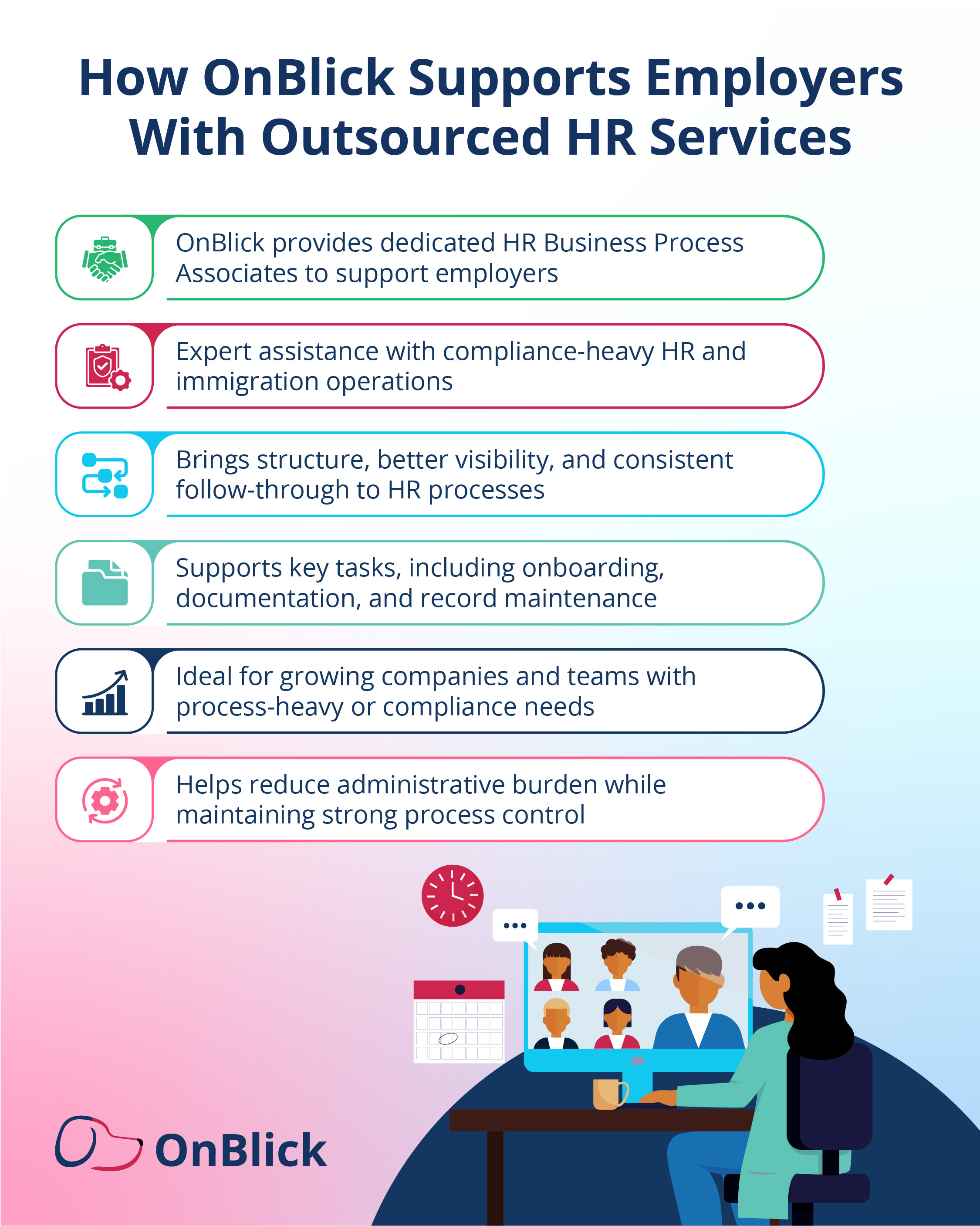
OnBlick supports employers through HR services designed to help manage compliance-heavy and process-driven HR operations more effectively. This support is particularly valuable for companies that need stronger follow-through across documentation, onboarding, coordination, and ongoing workforce-related responsibilities, but do not want to expand internal headcount immediately.
Our HR services are delivered through structured support models that help employers improve consistency, reduce administrative strain, and maintain better visibility into critical HR processes. This can include support with onboarding coordination, Form I-9 and E-Verify workflows, employee documentation handling, LCA and PAF support, H-1B coordination, STEM OPT / Form I-983-related processes, and ongoing records maintenance.
This model can work especially well for employers that need additional support in process-heavy areas while keeping strategic HR decisions internal. By helping manage day-to-day responsibilities more reliably, OnBlick enables companies to strengthen HR execution without losing control over the functions that matter most internally.
Frequently Asked Questions About In-House and Outsourced HR
- How does HR outsourcing work?
HR outsourcing works by assigning specific HR responsibilities to an external provider instead of handling them entirely through an internal team. Depending on the company’s needs, this may involve support for selected functions such as onboarding, documentation handling, compliance-related workflows, payroll-related administration, or broader day-to-day HR operations.
- Why do companies outsource HR?
Companies outsource HR to reduce administrative strain, improve process consistency, access specialized support, and manage certain responsibilities more efficiently without immediately expanding internal headcount. It is often used when internal teams are stretched or when process-heavy work requires more structure and follow-through.
- What types of HR tasks are most commonly outsourced?
Commonly outsourced HR tasks include onboarding coordination, employee documentation handling, payroll-related support, Form I-9 and E-Verify processes, records maintenance, and other administrative or compliance-heavy responsibilities. In some cases, employers also outsource immigration-related HR support such as LCA, PAF, H-1B, and STEM OPT / Form I-983 workflows.
- What are the main benefits of outsourcing HR functions?
The main benefits of outsourcing HR functions include reduced administrative burden, improved consistency, better process visibility, more structured follow-up, and access to support that can scale with business needs. It can also help internal teams stay focused on more strategic or culture-sensitive responsibilities.
- What are the risks or drawbacks of outsourcing HR?
Outsourcing may be less effective for responsibilities that require close internal judgment, leadership involvement, or deep cultural understanding. The model also depends heavily on selecting the right provider and clearly defining which functions should remain internal and which can be handled externally.
- How do companies decide whether to keep HR in-house or outsource it?
Companies usually make this decision by looking at the nature of the work, the level of internal context required, the capacity of the internal team, and the amount of follow-up or documentation involved. Strategic and culture-sensitive responsibilities are often kept internal, while process-heavy and repetitive functions are more likely to be outsourced.
- When does a hybrid HR model work better than full outsourcing?
A hybrid HR model works better when a company wants to keep strategic HR responsibilities in-house while outsourcing process-driven or compliance-heavy functions. This approach allows employers to maintain internal control where it matters most while adding external support in areas that require more operational follow-through.
- How can outsourced HR support help with compliance-heavy operations?
Outsourced HR support can help bring more structure, visibility, and consistency to operations that involve documentation, deadlines, repeated follow-up, and ongoing record maintenance. This is especially useful in environments where compliance-related tasks are difficult to manage consistently with limited internal resources.
- What should business owners look for in a third-party HR company?
Companies should look for a provider that offers clear process ownership, reliable follow-through, visibility into ongoing tasks, relevant compliance support experience, and a model that fits the company’s actual needs. The right partner should strengthen day-to-day execution without creating confusion around responsibility or communication.
- What is an HR outsourcing company?
An HR outsourcing company is an external provider that supports businesses with selected HR functions or broader HR operations. These companies may offer help with administrative HR work, compliance-related processes, employee documentation, onboarding support, and other responsibilities that employers choose not to manage entirely in-house.
Conclusion
There is no one-size-fits-all answer when it comes to in-house vs outsourced HR functions. Some responsibilities are better kept internal because they depend on leadership access, company culture, and highly contextual decision-making.
Others are more process-driven and may benefit from external support that can improve consistency, reduce administrative strain, and strengthen day-to-day execution.
For many employers, the best approach is not choosing one model completely over the other, but finding the right balance between internal ownership and external support.
A hybrid model often makes the most practical sense, especially when companies want to keep strategic HR decisions in-house while adding support for process-heavy, documentation-heavy, or compliance-sensitive responsibilities.
OnBlick supports employers through HR Business Process Associates (HRBPAs), helping bring more structure, consistency, and visibility to process-heavy HR and immigration operations.
Book a free OnBlick demo to explore how we can support your team.