.gif)

.jpg)

Most people consider team-building activities in the workplace as games, events, or short breaks. But when planned well, they can do much more. They can help employees communicate better, build trust, work across teams, and feel more connected to the workplace.
For HR teams and managers, team building is not just about making employees participate in fun activities. It is about choosing the right activities for the right purpose.
This blog explores practical team-building activities for work, including ideas for teams of different types and sizes, remote employees, meetings, and workplace engagement. It also explains how HR teams can choose activities that feel purposeful, comfortable, and useful for employees.
What are Team-Building Activities?
- Team-building activities are planned exercises, games, discussions, or group experiences that help employees interact and work better together.
- They help strengthen relationships, improve communication, and encourage collaboration within a team.
- In the workplace, these activities can take many forms. They may include quick icebreakers during meetings, problem-solving exercises, virtual activities for remote teams, outdoor events, group discussions, or employee engagement activities. The format can change based on the team’s size, work setting, and goal.
- Team building’s main goal is not to create a fun break from work. A good activity is one that helps employees understand each other better, builds comfort, and improves how they work as a group. For instance, a communication activity can help employees listen more carefully, while a problem-solving activity can encourage teams to plan, think, and make decisions together.
- Team-building activities are most effective when they are intentional. They should match the needs of the team rather than being selected only because they are popular. When they are planned well, these activities can support stronger teamwork, better workplace relationships, and a more positive employee experience.

Why Are Team-Building Activities Important at Work?
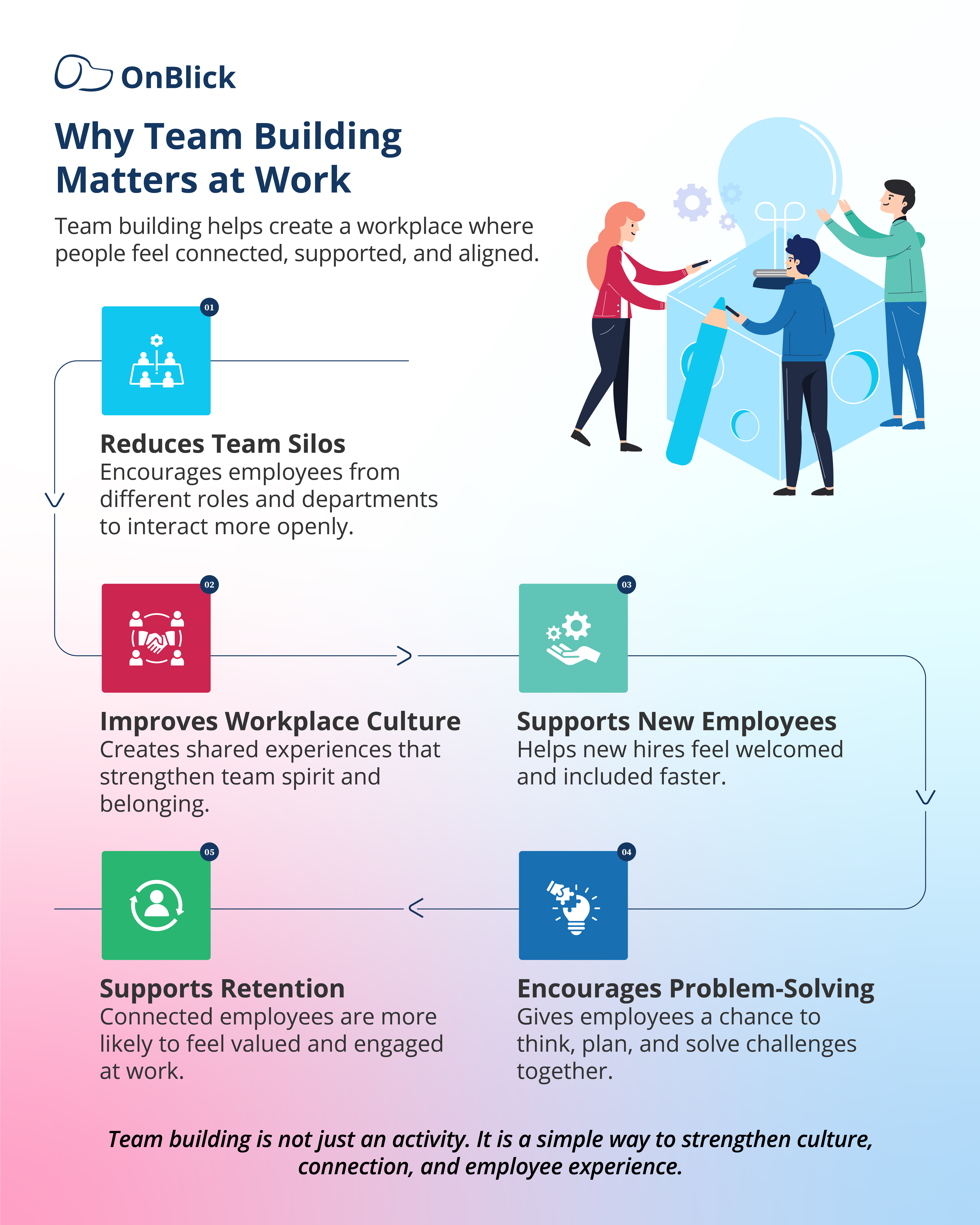
In the workplace, team-building activities remain important since they help employees connect in ways that daily tasks and meetings may not allow. In many organizations, employees work with the same people every day but may still have limited opportunities to understand each other’s strengths, working styles, or challenges.
- One of the biggest benefits of team building is that it can reduce workplace silos. Employees from different departments or roles often focus only on their own tasks. Team-building activities can create opportunities for cross-functional interaction, making it easier for employees to collaborate when real work requires coordination.
- Team building can also support new employees. When someone joins a company, it may take time for them to feel included. Simple team bonding activities, icebreakers, or group discussions are sure to help new hires feel more comfortable with their colleagues and the workplace culture.
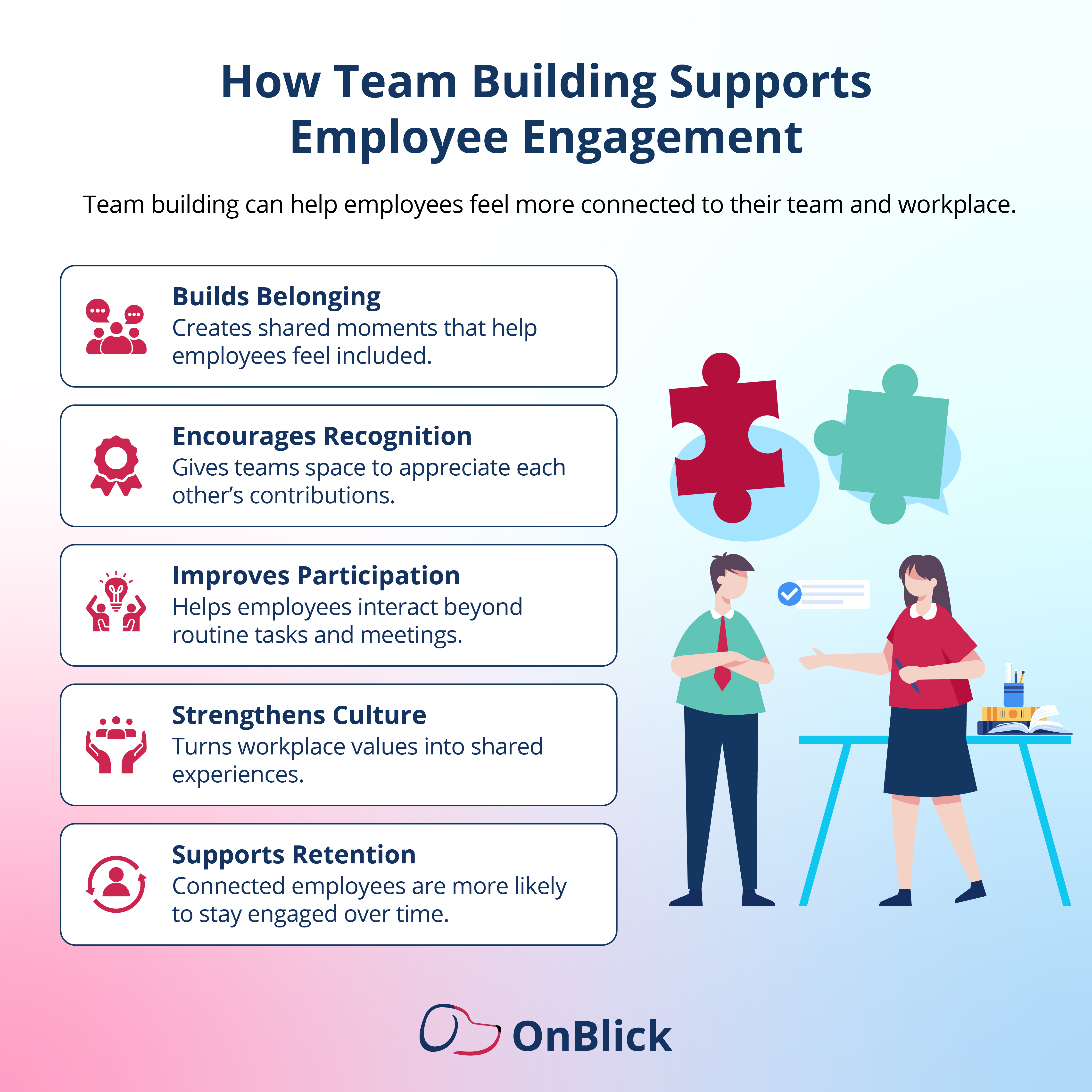
- Another important benefit is employee engagement. When employees feel connected to their team, they are more likely to participate, share ideas, and feel a sense of belonging. Team-building activities help create shared experiences that strengthen workplace culture and make employees feel valued.
- For HR teams and managers, team building is also a practical way to identify team dynamics. Activities can reveal communication gaps, leadership styles, collaboration challenges, or areas where teams may need more support. This makes team building useful not only for morale, but also for improving the way teams function at work.
How to Choose the Right Team-Building Activity
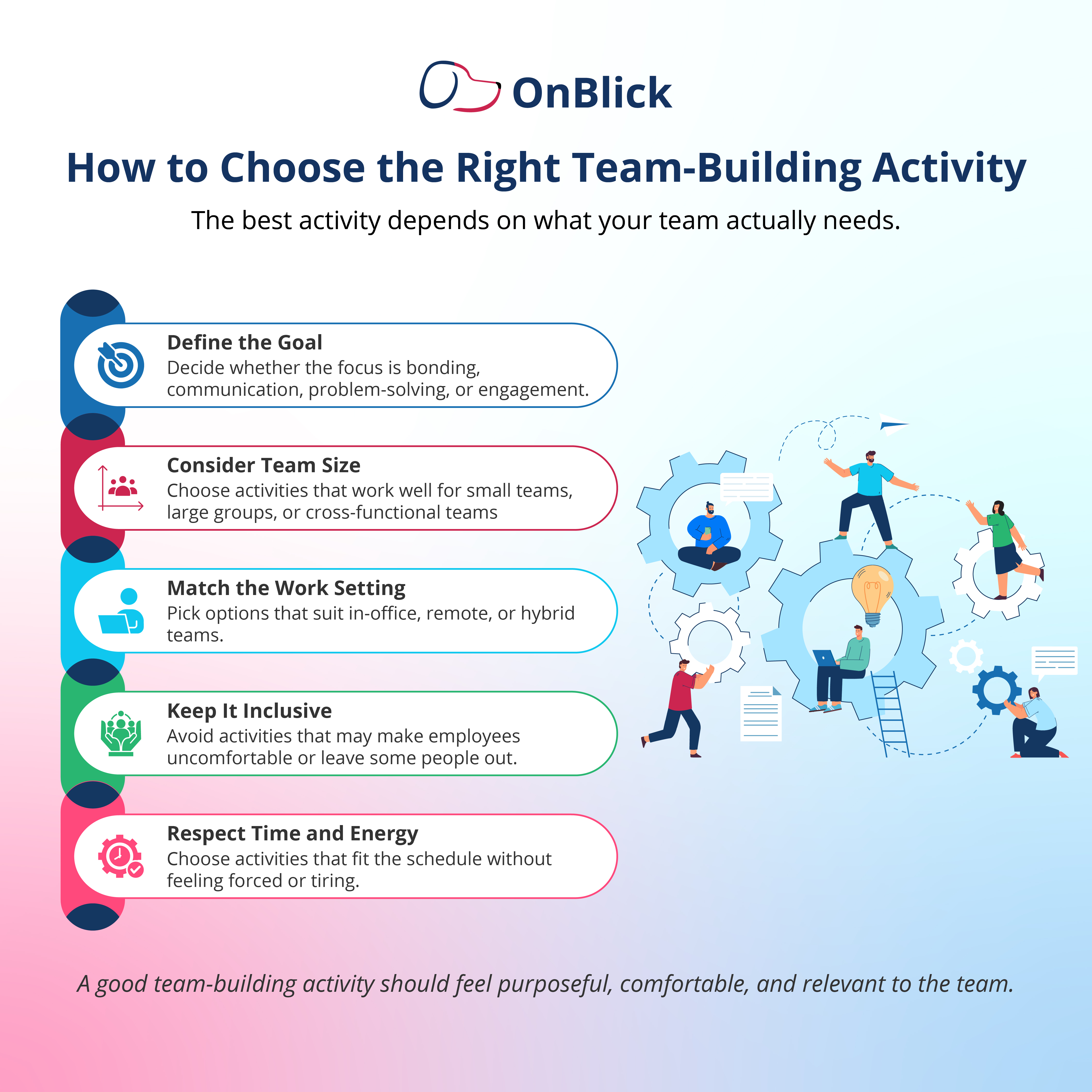
The right team-building activity depends on factors such as the team’s goal, size, work setting, and comfort level. An activity that works well for a small in-office team may not work for a large remote group. Likewise, an activity planned for fun may not be suitable when the real need is to improve communication or problem-solving.
Before choosing an activity, HR teams and managers should first identify the purpose. They may ask and find answers for questions like whether the goal is to:
- Help new employees feel comfortable?
- Improve collaboration between departments?
- Reduce communication gaps?
- Support remote team bonding?
- Boost employee morale?
Once the goal is clear, it becomes easier to choose an activity that fits the team.
- Team size is another important factor. Small teams can benefit from discussion-based activities, reflection exercises, or problem-solving games where everyone gets to participate. Larger groups may need structured activities such as trivia, scavenger hunts, team challenges, or volunteering events that are easier to manage at scale.
- The work setting also matters. In-office teams may be able to participate in physical activities, group games, or lunch-based bonding sessions. Remote and hybrid teams may need virtual team-building activities that work well over video calls and do not require complicated setup.
- Inclusivity should also be considered. Team-building activities should not make employees feel uncomfortable, pressured, or excluded. Activities that require personal sharing, physical performance, or public speaking may not suit everyone. A good activity is one that allows employees to participate comfortably and respectfully.
- Time is another practical factor. Not every activity needs to be long or elaborate. Quick team-building activities during meetings can be useful when teams have limited time. Longer activities may be better suited for workshops, retreats, annual events, or employee engagement programs.
To sum up, the best team-building activities are not always the most creative ones. They are the ones that match the team’s needs, respect employee comfort, and support a clear workplace goal.
Types of Team-Building Activities for Work
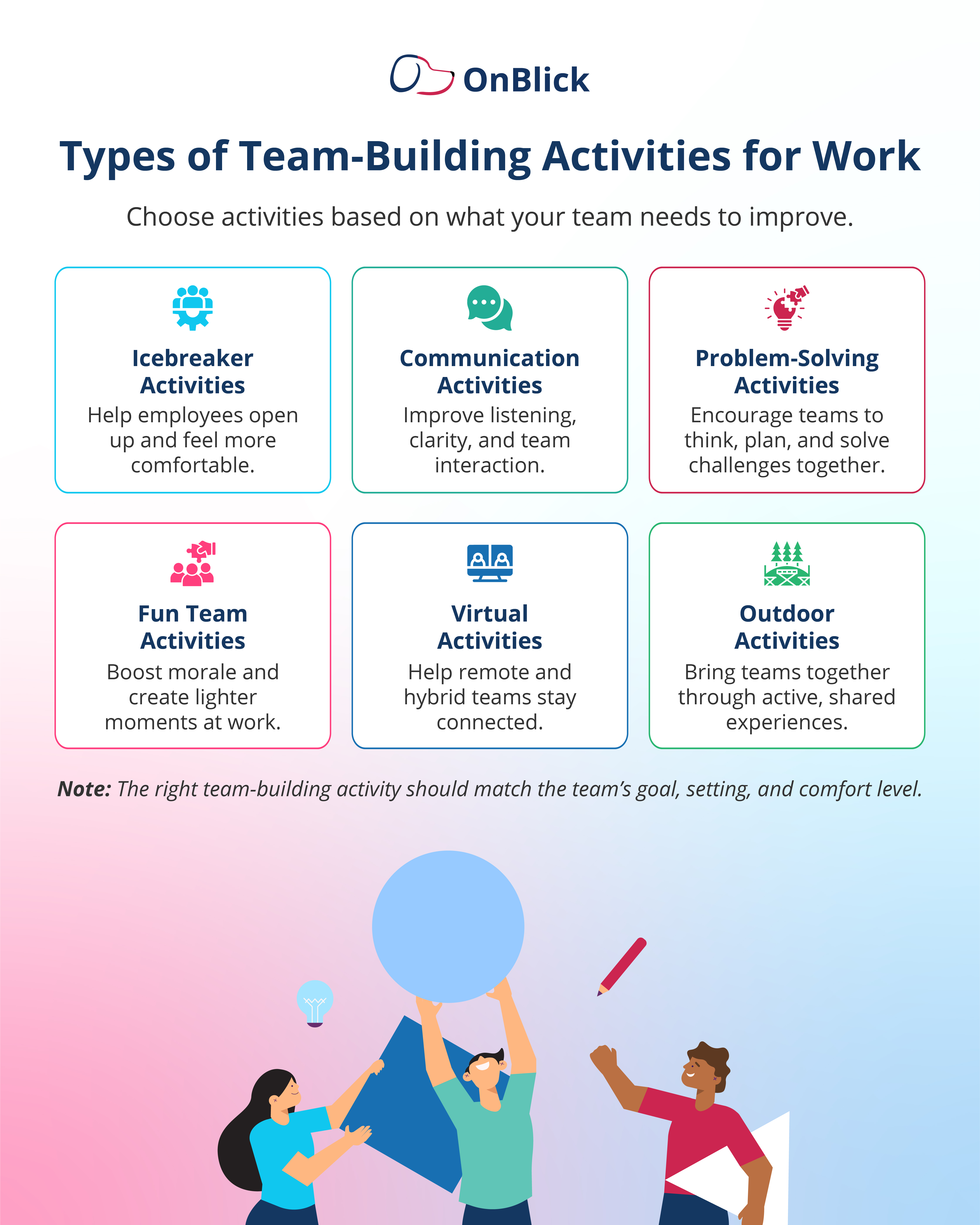
We can plan team-building activities in different ways depending on what the team needs to improve. Some activities help employees get comfortable with each other, while others support communication, problem-solving, or engagement. The goal is to choose an activity that fits the team’s purpose, setting, and comfort level.
- Icebreaker Activities
Icebreaker activities help employees open up and feel more comfortable, especially in new teams, meetings, or onboarding sessions.
- Communication Activities
These activities are meant to help teams improve listening, clarity, and day-to-day interaction at work.
- Problem-Solving Activities
Problem-solving activities encourage employees to think together, make decisions, and solve challenges as a group.
- Fun Team Activities
These activities play a great role in boosting morale and creating lighter moments that support team bonding.
- Virtual Activities
Virtual activities often help remote and hybrid teams stay connected through simple, easy-to-join interactions.
- Outdoor Activities
Outdoor activities are essential to bring teams together through active, shared experiences in a different setting.
Team-Building Activities for Different Teams
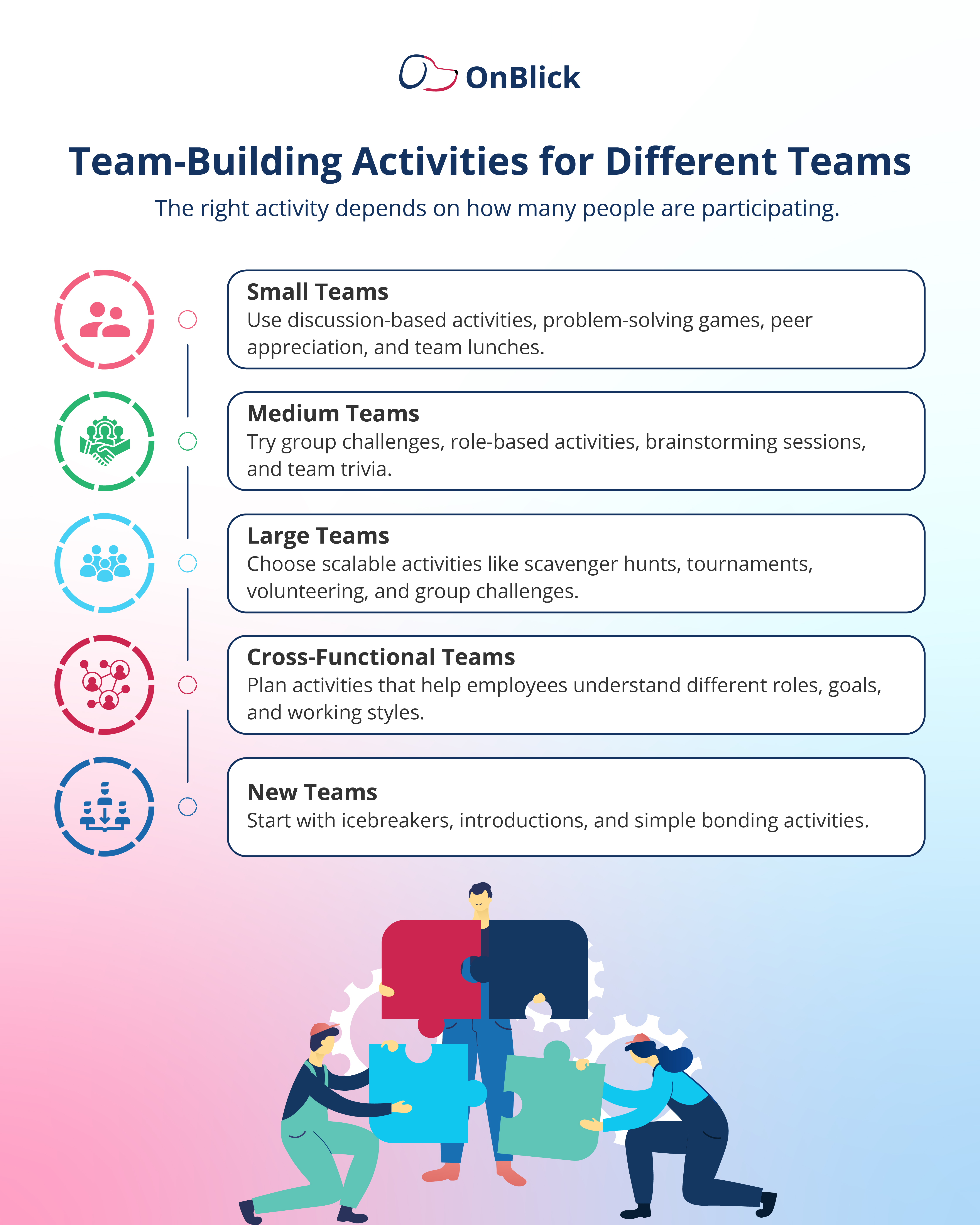
Not every team-building activity works for every group. The right choice depends on the team’s size, work style, and level of familiarity. A small team may benefit from deeper discussions, while a large group may need structured activities that are easy to manage.
- Small Teams
Small teams can try activities that encourage direct interaction, such as team lunches, peer appreciation, quick problem-solving games, or reflection-based discussions. These activities allow every employee to participate and share their views.
- Medium Teams
Medium-sized teams can benefit from group challenges, brainstorming sessions, team trivia, role-based activities, or collaborative games. These activities help employees interact beyond their usual work groups.
- Large Teams
Large groups need activities that are simple, scalable, and inclusive. Scavenger hunts, volunteering activities, team tournaments, sports days, or group challenges can work well when planned with clear instructions.
- Cross-Functional Teams
For employees from different departments, activities should help them understand each other’s roles, goals, and working styles. Cross-team discussions, workplace case challenges, and collaborative planning exercises can be useful.
- New Teams
New teams usually need simple icebreakers, introductions, and bonding activities. The goal should be to help employees feel comfortable before moving into more structured collaboration exercises.
Virtual Team-Building Activities for Remote and Hybrid Teams
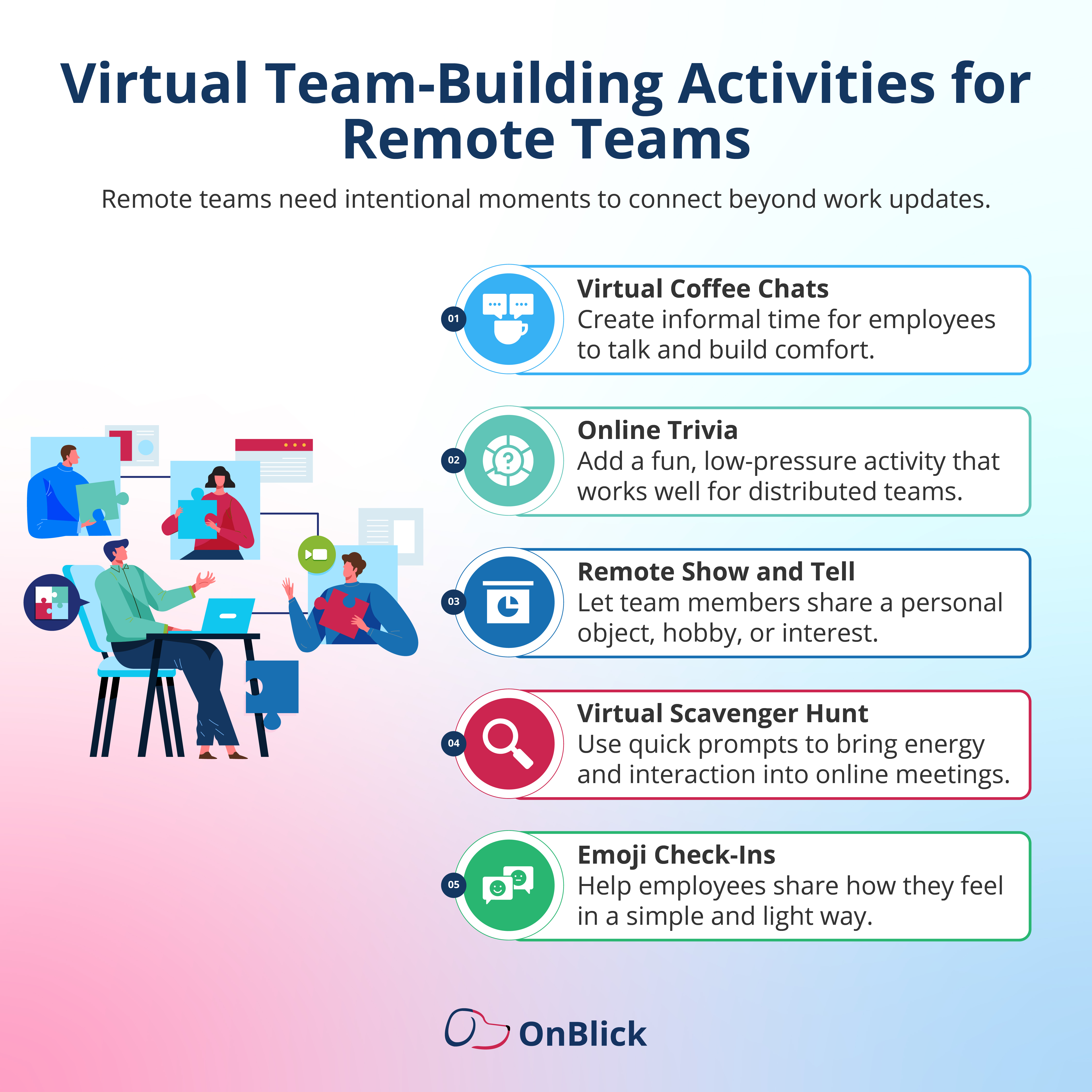
Remote and hybrid teams need intentional opportunities to connect. When employees work from different locations, informal conversations may happen less often. Virtual team-building activities can help reduce isolation and create simple moments of interaction.
The best virtual activities are usually short, easy to join, and comfortable for different personalities. They should not feel like an extra meeting with forced participation. Instead, they should give employees a relaxed way to connect beyond project updates.
Some useful virtual team-building activities include:
- Virtual coffee chats
- Online trivia
- Remote show and tell
- Virtual scavenger hunts
- Emoji check-ins
- Quick team polls
- Peer appreciation sessions
For remote teams, consistency matters. A short monthly activity or a five-minute check-in during regular meetings can be more effective than a long one-time event. The goal is to help employees feel included, even when they are not working in the same physical space.
Quick Team-Building Activities for Meetings
Team building does not always need a long session or separate event. Short activities can be added to regular meetings to help employees interact, reset, and feel more connected.
Quick team-building activities are useful when teams have limited time but still need moments of engagement. They can work well at the beginning of meetings, during team check-ins, or as part of onboarding sessions.
Some simple meeting-friendly activities include:
- One-word check-ins
- Team shout-outs
- Quick polls
- Common ground
- Two-minute introductions
- Mini problem-solving challenges
- Peer appreciation rounds
These activities should be short and easy to participate in. The goal is not to interrupt work, but to create small moments that improve connection and communication over time.
Mistakes to Avoid When Planning Team-Building Activities
Team-building activities can become ineffective when they are planned without a clear purpose. If employees do not understand why an activity is being conducted, it may feel forced or disconnected from their real work experience.
- One common mistake is choosing activities only because they look fun or popular. HR teams and managers should first understand the team’s need, whether it is better communication, stronger bonding, improved collaboration, or higher engagement.
- Another mistake is making participation uncomfortable. Activities that require too much personal sharing, public performance, or physical effort may not suit every employee. Team building should be inclusive and respectful of different personalities, comfort levels, and abilities.
- Companies should also avoid ignoring remote or hybrid employees. If some team members are left out because of location or format, the activity may create distance instead of connection.
- Finally, team building should not be treated as a one-time event. Without feedback or follow-up, it becomes difficult to know whether the activity helped the team or what can be improved next time.

How HR Teams Can Make Team Building More Effective
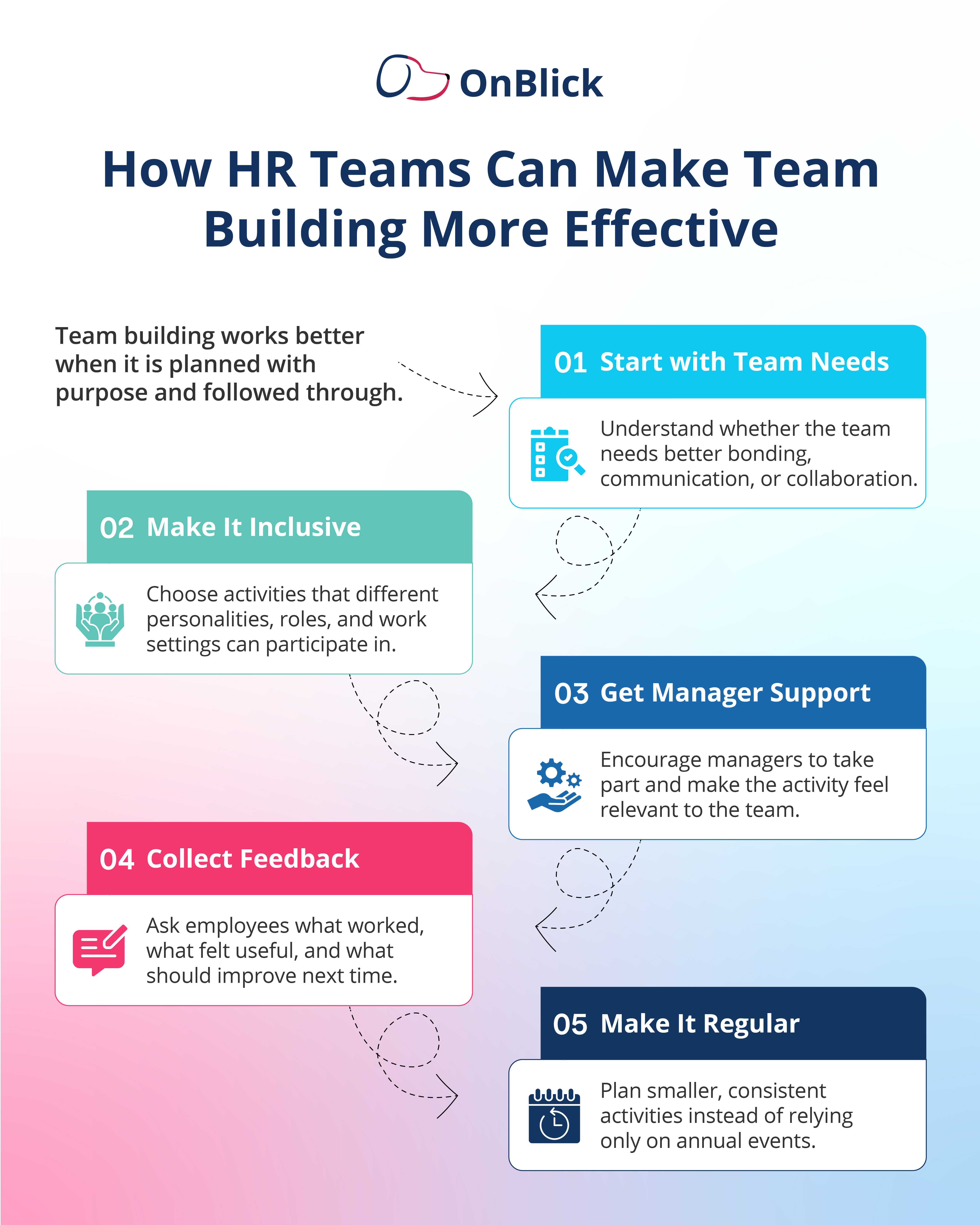
HR teams can make team building more effective by connecting activities to real workplace goals.
- Instead of planning activities only as entertainment, HR should look at what the team needs most: better communication, stronger trust, smoother onboarding, cross-team collaboration, or improved engagement.
- Employee feedback is also important. HR teams can ask employees what types of activities they are comfortable with, what they found useful, and what they would like to avoid. This helps create activities that feel more relevant and inclusive.
- Managers should also be involved. When managers participate and support the activity, employees are more likely to see team building as part of the work culture rather than a separate HR exercise.
- Consistency also matters. Small, regular activities can be more effective than one large annual event. For example, monthly team check-ins, peer appreciation sessions, or short meeting activities can help teams build connections over time.
Outdoor Team-Building Activities for Work
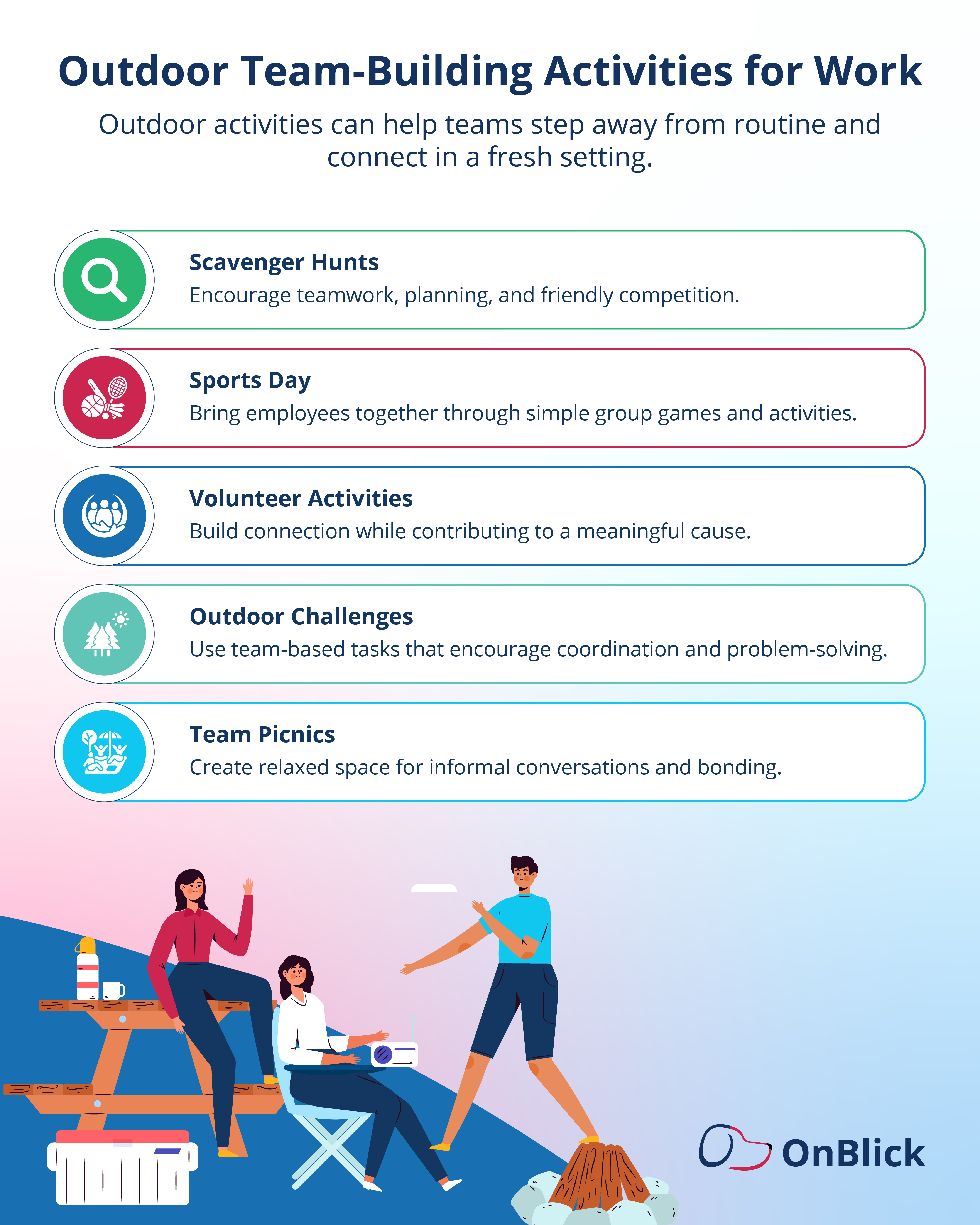
Outdoor team-building activities give employees a chance to step away from regular work routines and interact in a more relaxed setting. They are especially useful for company events, retreats, annual gatherings, and larger employee engagement programs.
These activities can help teams build energy, improve coordination, and create shared experiences outside the usual workplace environment. However, outdoor activities should be planned carefully so that they are inclusive, safe, and comfortable for different employees.
Some useful outdoor team-building activities include:
- Scavenger hunts
- Sports day activities
- Outdoor problem-solving challenges
- Group volunteering
- Team picnics
- Nature walks or wellness sessions
- Friendly team competitions
When planning outdoor activities, HR teams should consider accessibility, weather, travel, physical comfort, and employee preferences. Not every outdoor activity needs to be physically demanding. Simple options like volunteering, team picnics, or outdoor wellness sessions can also help employees connect in a meaningful way.
Outdoor team building works best when the activity allows everyone to participate comfortably and creates a shared experience that supports teamwork, morale, and workplace connection.
How OnBlick Helps HR Teams Focus on People
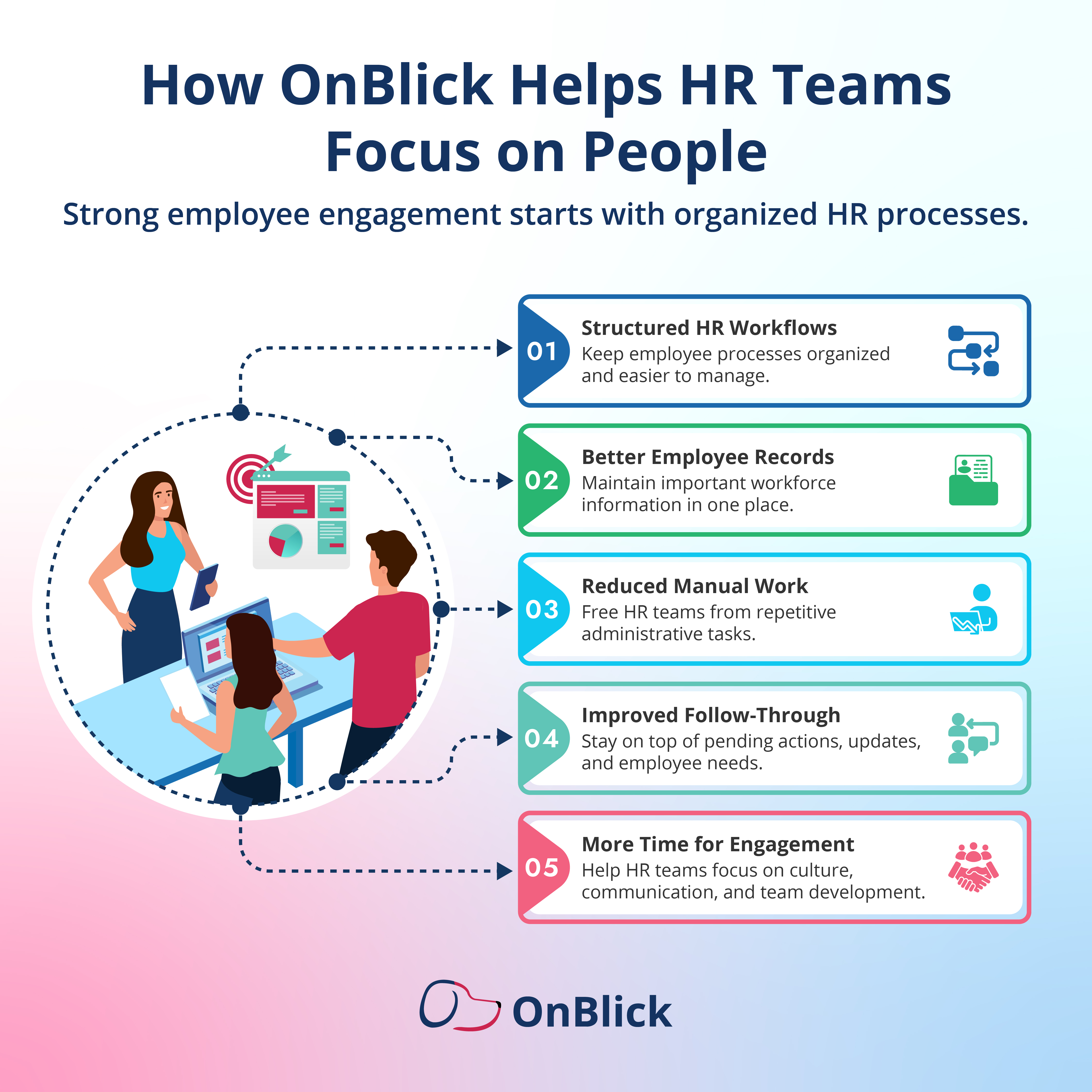
Team building works best when HR teams have the time and space to focus on employee experience. But when HR teams are busy with repetitive administrative work, scattered employee records, and manual follow-ups, people-focused initiatives can often get delayed.
OnBlick helps HR teams manage employee processes, HR workflows, records, and compliance-related tasks in a more organized way. By reducing manual effort and improving process visibility, HR teams can spend more time on employee engagement, communication, onboarding, and team development.
For companies that want to build a stronger workplace culture, the right HR technology can make a real difference. It helps HR teams stay organized while creating more time for activities that improve connection, collaboration, and employee experience.
Book a free OnBlick demo to see how your HR team can simplify processes and focus more on people.
Frequently Asked Questions About Team-building Activities
- What are team-building activities?
Team-building activities are planned exercises, games, discussions, or group experiences that help employees interact, communicate, and work better together. They help improve teamwork, trust, collaboration, and employee engagement.
- What are the best team-building activities for work?
The best team-building activities for work depend on the team’s goal. Icebreakers, communication exercises, problem-solving games, team lunches, virtual activities, scavenger hunts, and peer appreciation sessions are useful options for different workplace needs.
- How do team-building activities improve employee engagement?
Team-building activities improve employee engagement by helping employees feel more connected to their team and workplace. They create opportunities for recognition, participation, informal interaction, and stronger workplace relationships.
- What are some quick team-building activities for meetings?
Quick team-building activities for meetings include one-word check-ins, team shout-outs, quick polls, common ground, short introductions, mini problem-solving challenges, and peer appreciation rounds.
- What are good virtual team-building activities?
Good virtual team-building activities include virtual coffee chats, online trivia, remote show and tell, virtual scavenger hunts, emoji check-ins, team polls, and peer appreciation sessions. These activities work well for remote and hybrid teams.
- What are fun team-building activities for employees?
Fun team-building activities for employees include office trivia, team lunch themes, desk decorating challenges, mini talent shows, sports days, scavenger hunts, and group volunteering activities.
- How often should companies conduct team-building activities?
Companies can conduct small team-building activities monthly or include quick activities in regular meetings. Larger team-building events can be planned quarterly, during retreats, or as part of annual employee engagement programs.
- What are team-building activities for small groups?
Small group team-building activities include team lunches, peer appreciation, reflection discussions, problem-solving games, role-based exercises, and communication activities where every employee has a chance to participate.
- What are team-building activities for large groups?
Large group team-building activities include scavenger hunts, trivia tournaments, sports days, volunteering activities, group challenges, and structured activities that are easy to manage at scale.
- How can HR teams choose the right team-building activity?
HR teams should choose activities based on the team’s goal, size, work setting, comfort level, available time, and employee preferences. The activity should feel inclusive, purposeful, and relevant to the team’s needs.
Conclusion
Team-building activities can help employees connect, communicate, and collaborate more effectively. When planned with purpose, they can support employee engagement, workplace culture, onboarding, and stronger team relationships.
The key is to choose activities that fit the team’s needs. HR teams and managers should not treat team building as a one-time event. Simple, regular, and inclusive activities can create stronger workplace connections over time.
By combining thoughtful team-building efforts with organized HR processes, companies can create a more connected, engaged, and people-focused workplace.