.gif)


U.S. Citizenship and Immigration Services has released a new edition of Form I-129, Petition for a Nonimmigrant Worker, dated 02/27/26. USCIS says it will accept only this edition starting April 1, 2026, while the 01/20/25 edition remains acceptable only if it is received on or before March 31, 2026. For employers tracking USCIS news today and recent USCIS visa form changes, this is one of the most important filing updates to watch. The change is especially important for H-1B cap petitions, amendments, and extensions.
This update is also timely in the context of broader H-1B news. As USCIS increases its focus on data consistency, wage alignment, and filing accuracy, employers need to treat the new form as more than a routine paperwork update.
This article explains the latest Form I-129 changes, what the new i-129 edition date means, and how employers should prepare before the April 1, 2026 transition.

What is Form I-129 and Why It Matters
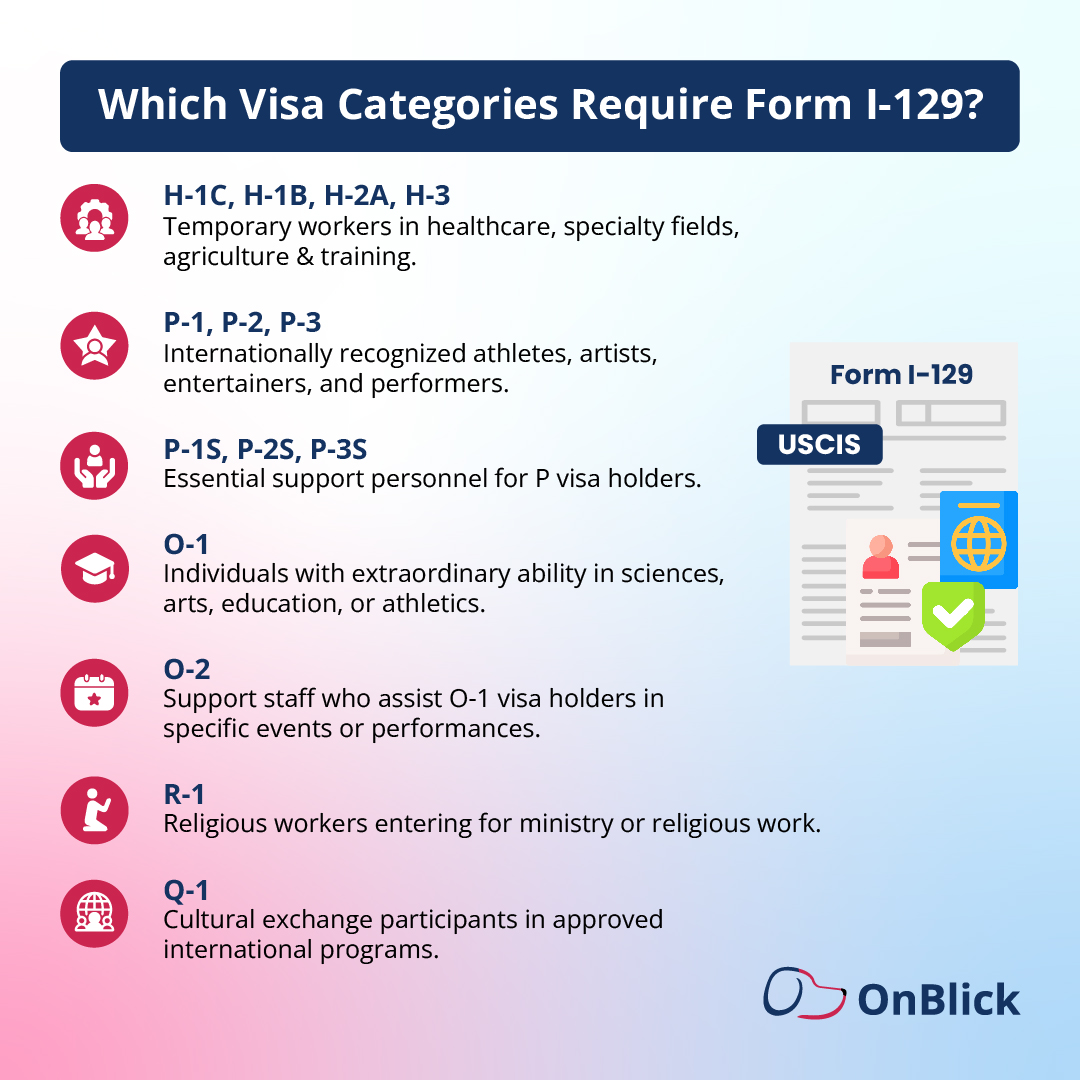
Form I-129 is the primary petition used by U.S. employers to sponsor foreign nationals for temporary work visas. It covers several nonimmigrant classifications, including:
- H-1B for specialty occupations
- L-1 for intracompany transferees
- O-1 for individuals with extraordinary ability
- TN for professionals under United States-Mexico-Canada Agreement (USMCA)
- E-3 for Australian professionals
For most employment-based immigration processes, this form is the starting point. It establishes the employer-employee relationship, job role, wage level, and eligibility for the requested classification.
Due to its central role, even small changes to Form i129 can have a direct impact on filing accuracy, processing timelines, and approval outcomes.
Key Filing Deadlines and Transition Rules
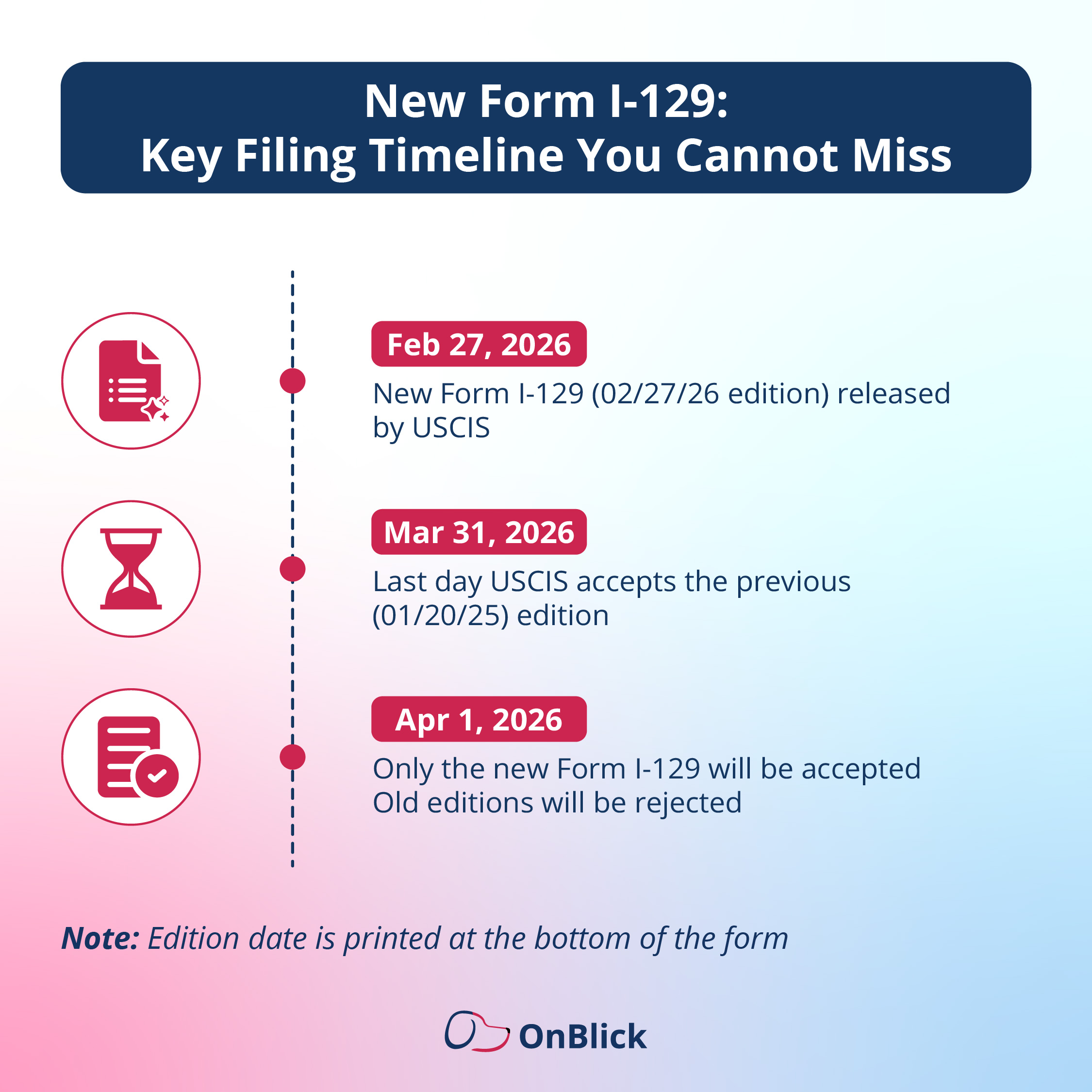
USCIS has clearly defined the transition timeline:
- The new edition (02/27/26) is already available for use
- The old edition (01/20/25) will be accepted only until March 31, 2026
- Starting April 1, 2026, only the new edition will be accepted
- Any outdated form received on or after April 1 will be rejected
This timing matters even more for H-1B employers because April 1 is also the earliest date selected FY 2027 cap-subject petitions may be filed. That means employers preparing petitions during cap season need to confirm the correct i-129 edition date before submitting anything.
Note: Even a correct petition can be rejected if submitted on an outdated version.
What Has Changed in the New Form I-129
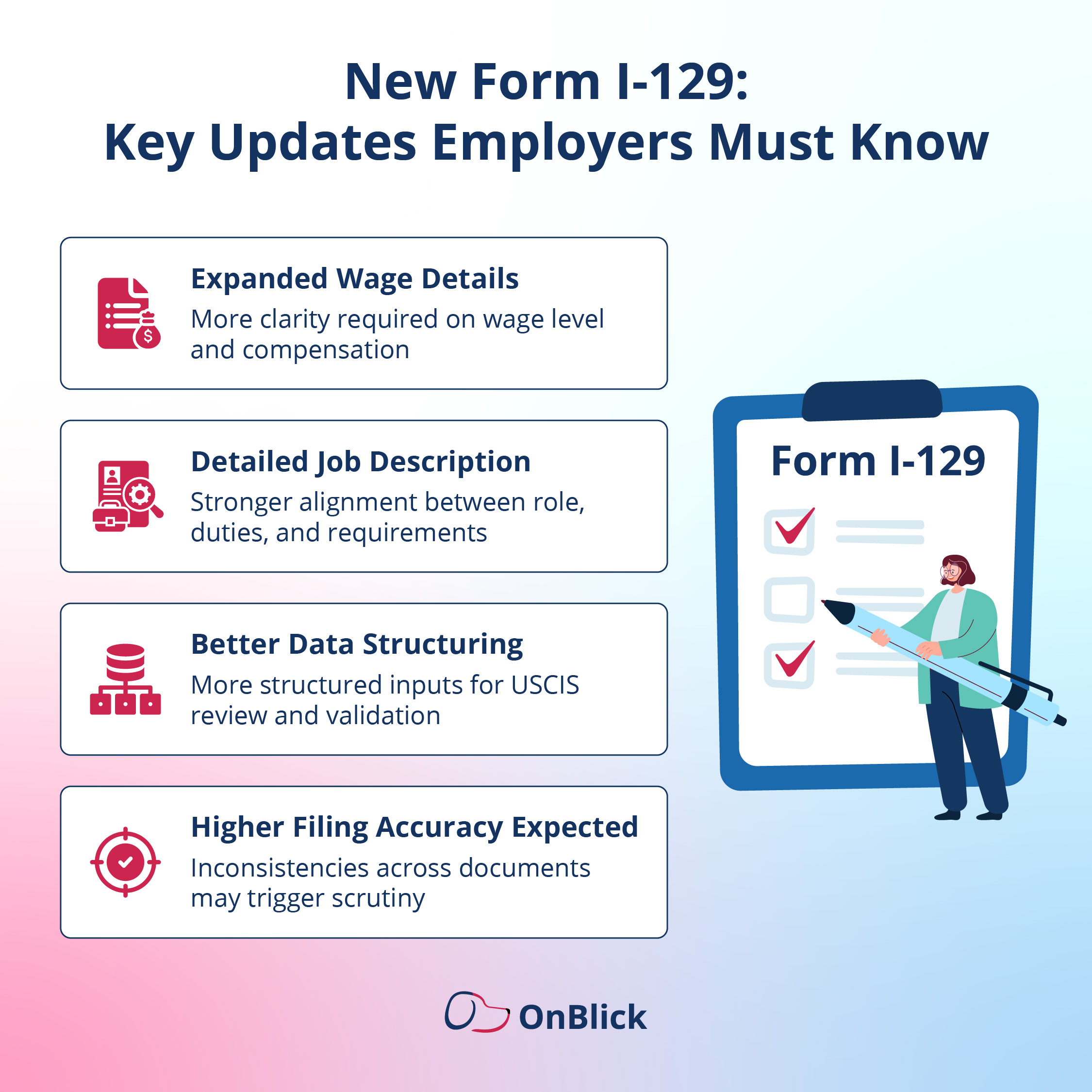
USCIS has not described this as a complete us h-1b visa overhaul, but the revised form includes updates that can materially affect petition preparation and review.
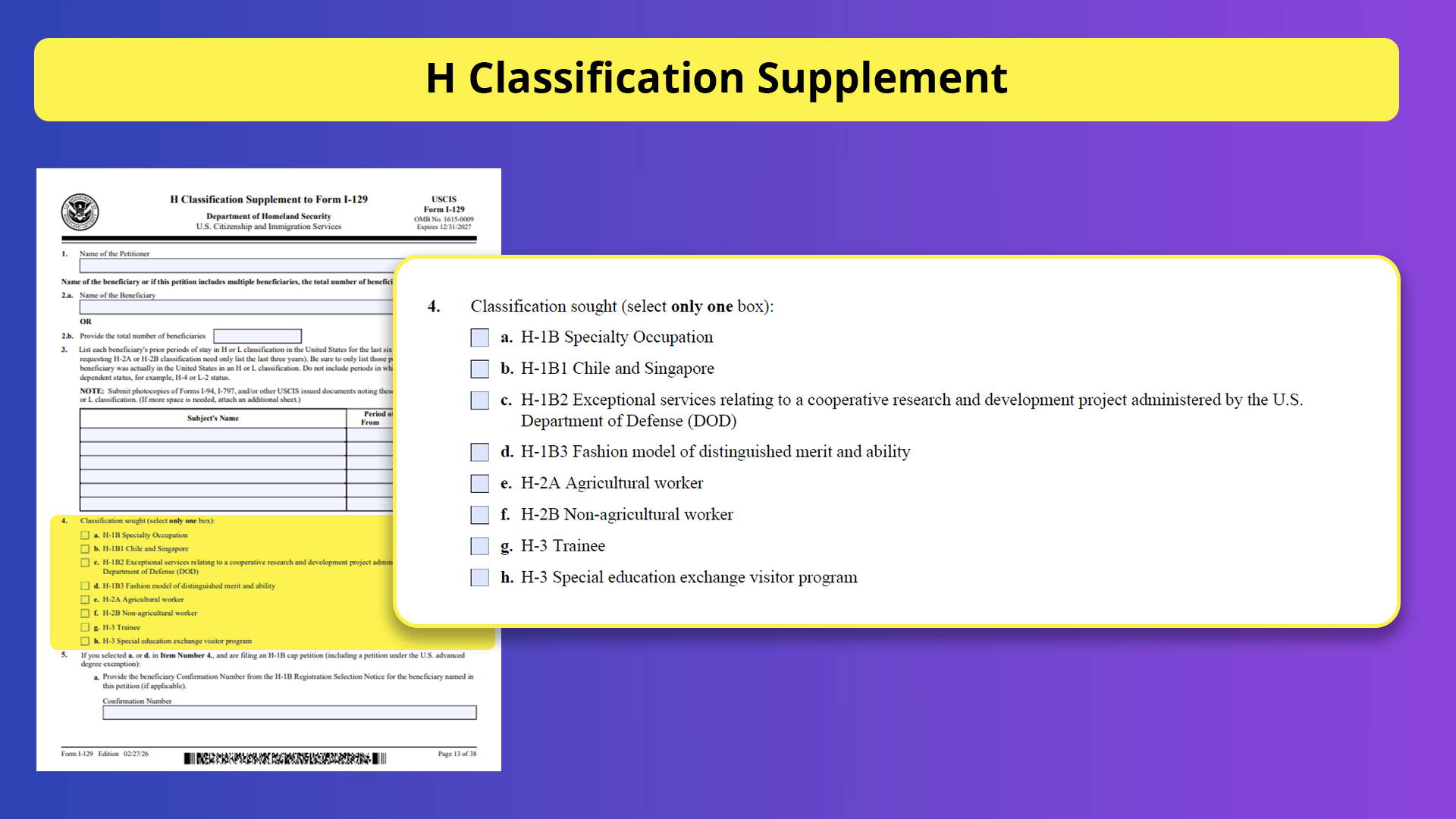
The new Form I-129 is marked with the edition date 02/27/26.

Employers should verify the edition date before filing and ensure all internal templates and teams are updated to avoid last-minute errors.
1. Expanded Wage-Level and Compensation Questions
The updated form introduces more detailed questions around wage levels and compensation. Employers may now need to:
- provide clearer support for the wage level selected
- align job duties more closely with prevailing wage data
- make sure the Labor Condition Application and the petition match
This reflects a continued focus on wage compliance and filing consistency. It also ties closely to the current h-1b visas rule change environment, where wage selection and role credibility are receiving closer attention.
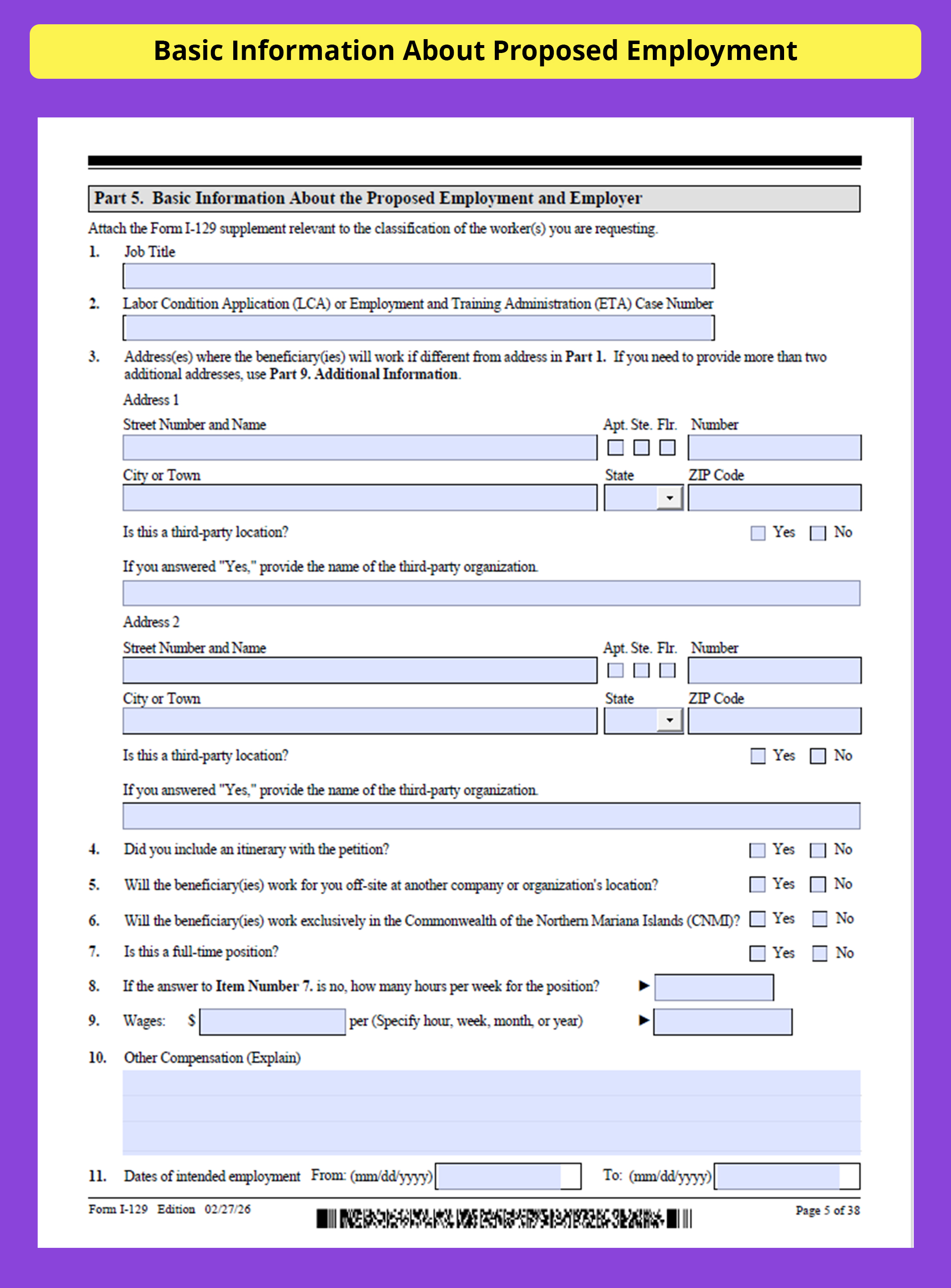

The updated form strengthens the link between wage level, job duties, and LCA details. USCIS can now more easily identify inconsistencies across these elements during review. Employers should verify that wage selection is justified and consistent across all filing components.
2. Stronger Emphasis on Job Role Accuracy
The new form requires more precise information about:
- job duties
- work location
- reporting structure
Generic or vague descriptions may lead to more scrutiny or requests for evidence. USCIS appears to be reinforcing the expectation that petitions reflect actual day-to-day job responsibilities.
The form now expects detailed and role-specific job descriptions rather than high-level summaries. This allows USCIS to better evaluate whether the role qualifies under the selected visa category. Employers should ensure job duties clearly reflect actual responsibilities and align with wage level and SOC code.
3. Additional Data Points for Compliance Monitoring
The new edition collects more structured information that can support:
- compliance tracking
- pattern analysis across filings
- identification of inconsistencies across employers, roles, or locations
This suggests that USCIS is improving its ability to review filings at scale and flag anomalies more quickly.
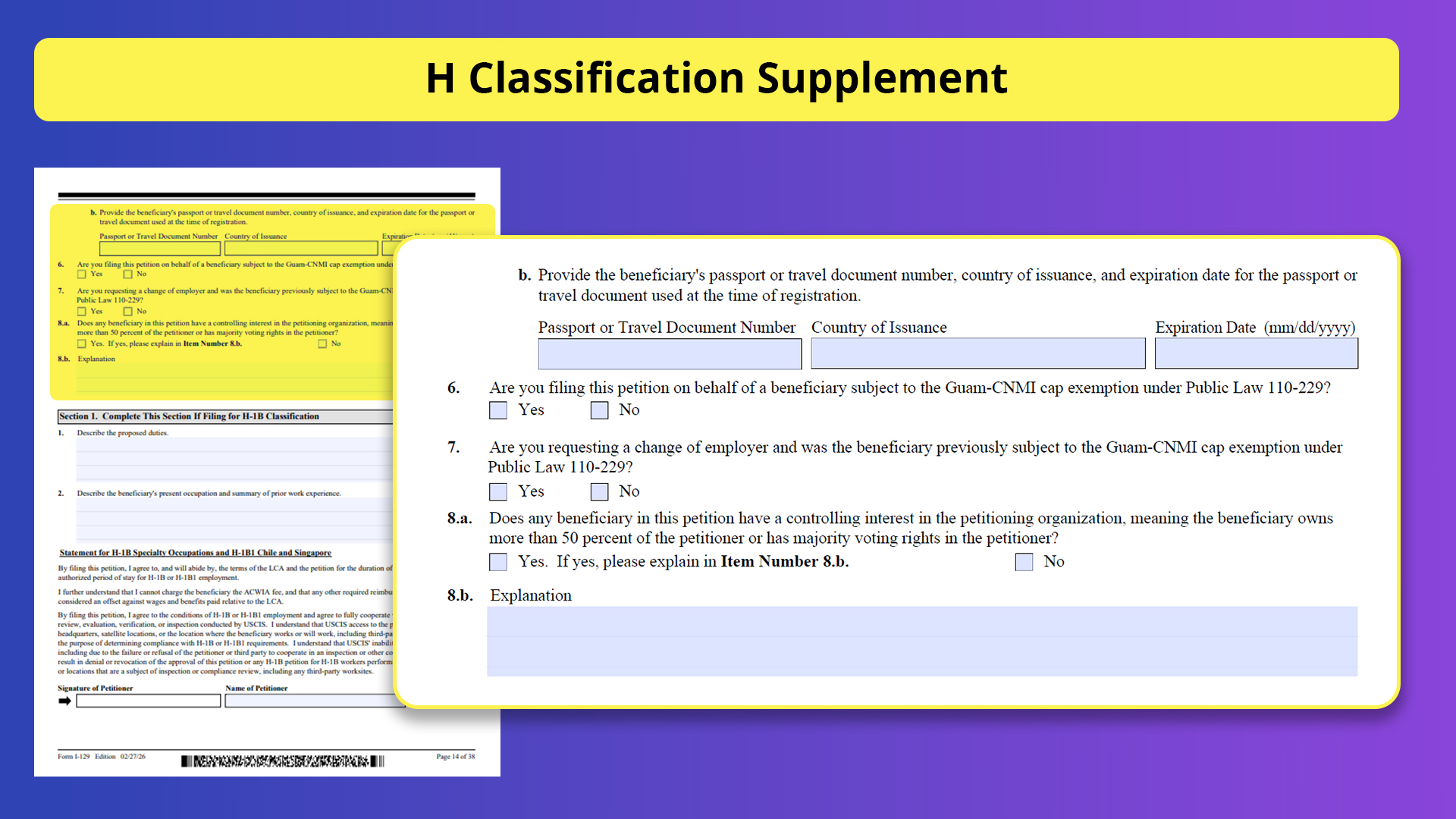
The H-1B supplement now captures more detailed inputs on education, experience, and role expectations. This enables a deeper review of whether the position meets specialty occupation criteria. Employers should ensure these details are clearly documented and supported across all related filings.
4. Alignment With Broader Enforcement Trends
The changes reflect several broader trends that employers have already been seeing in h-1b news and policy updates:
- Closer review of employment legitimacy
- Increased focus on wage compliance
- Stronger alignment between petitions and actual work conditions
Form I-129 is now more closely tied to these enforcement priorities.
New Form I-129: Impact on H-1B Visa Filings
The new Form I-129 has a direct impact on H-1B employers, especially during the cap season and ongoing employment lifecycle.
1. Higher Documentation Expectations
Employers will need stronger supporting documentation to justify:
- Wage level selection
- Specialty occupation classification
- Job complexity and requirements
Weak or inconsistent filings may lead to delays or denials.
2. Increased Risk of Requests for Evidence (RFEs)
With more detailed questions built into the form, USCIS officers have additional data points to evaluate. This may result in:
- More RFEs related to job duties and wage alignment
- Requests for clarification on work location or supervision
- Additional scrutiny for Level 1 wage filings
3. Greater Importance of LCA Consistency
Any mismatch between the LCA and Form I-129 can now be more easily identified. Employers must ensure:
- Wage levels match across documents
- Work locations are consistent
- Job descriptions align fully
Even small inconsistencies can slow down processing.
4. Filing Timeline Sensitivity
Since the new form becomes mandatory on April 1, employers filing H-1B cap petitions must be careful about:
- Using the correct form version
- Avoiding last-minute submissions with outdated forms
- Coordinating with legal teams to prevent rejection risks

New Form I-129: Impact on Other Visa Categories
While H-1B filings are most affected, other classifications using Form I-129 will also see changes.
- L-1 Petitions
Employers must clearly establish the relationship between entities and the employee’s role within the organization.
- O-1 Petitions
Documentation must continue to support extraordinary ability, but job role clarity will still be reviewed closely.
- TN and E-3 Petitions
Although generally simpler, these filings may still require more structured job descriptions and consistency.
Across all categories, the trend is the same: greater accuracy and stronger documentation are expected.
Why H-1B Wage Levels Matter More in the New Form I-129
The updated Form I-129 places stronger emphasis on how employers define and justify wage levels in H-1B petitions. Wage level selection is no longer just a compliance step, it is closely tied to how USCIS evaluates the credibility of the role, job requirements, and overall petition accuracy.
Under H-1B rules, employers must pay the higher of the prevailing wage or the actual wage for the position. This ensures that foreign workers are not underpaid compared to U.S. workers in similar roles.

With the new Form I-129, USCIS now requires clearer alignment between:
- Wage level selected in the LCA
- Job duties and complexity
- Required education and experience
- SOC code classification
Any mismatch across these elements can lead to Requests for Evidence or delays.
H-1B Wage Levels
The Department of Labor uses a four-level wage system based on role complexity and experience:
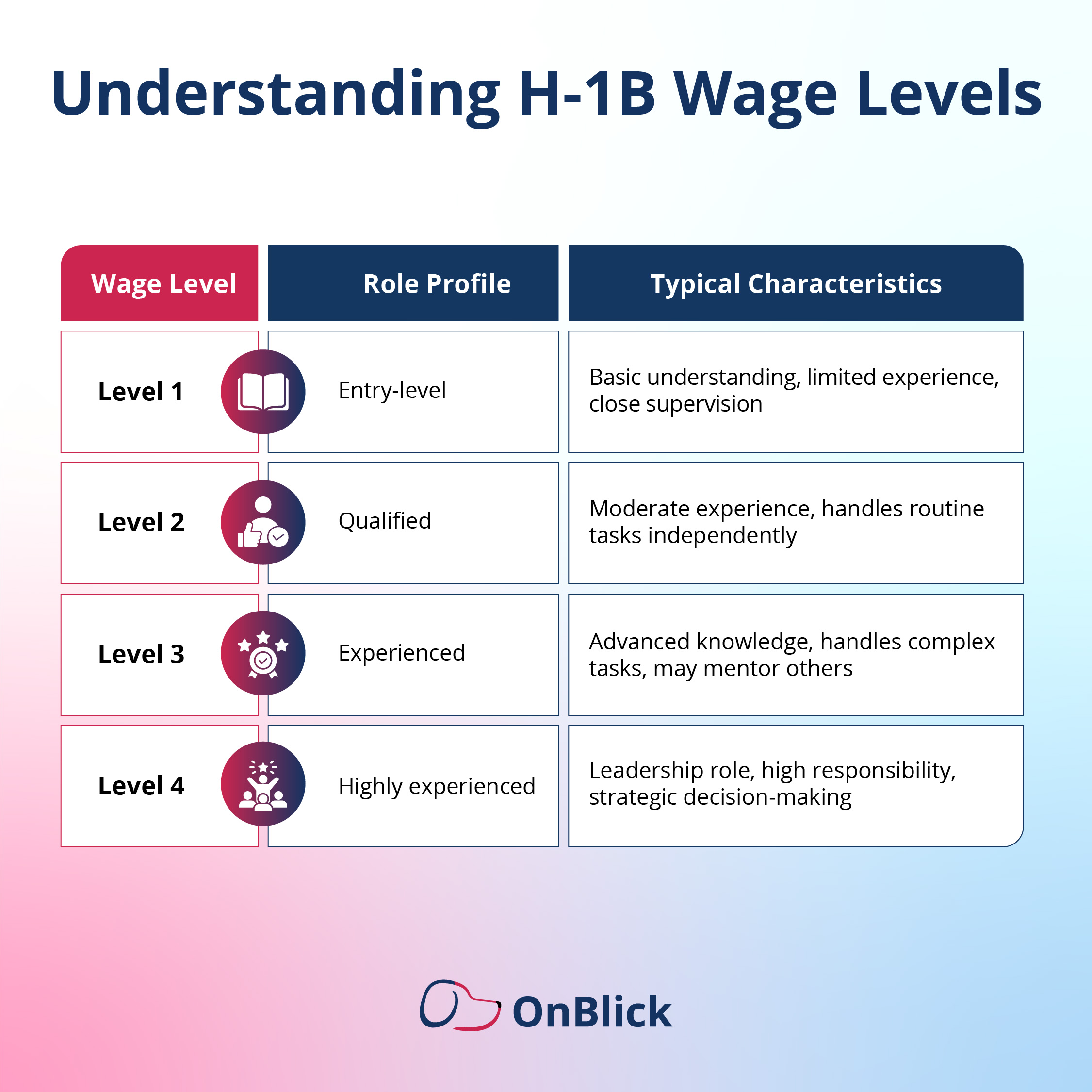
These levels are derived from market wage data and are designed to reflect increasing skill and responsibility within a role.
What Has Changed with the New Form I-129
The new edition introduces more detailed wage-related disclosures. Employers may now need to:
- Clearly indicate the wage level used in the LCA
- Ensure the wage level matches the job requirements described in the petition
- Provide detailed job descriptions that justify the selected wage tier
- Maintain consistency between registration, LCA, and petition
USCIS can now more easily identify inconsistencies, making wage selection a key review factor.
Key Risks H-1B Employers Should Watch
- Selecting a lower wage level for a role that requires advanced skills
- Mismatch between wage level and job duties
- Inconsistent details between LCA and Form I-129
- Using generic job descriptions that do not support the wage level
Even minor inconsistencies can trigger additional scrutiny.
New Form I-129: Recommended Steps for Employers
To prepare for the transition, employers should:
- Switch to the new form immediately instead of waiting until April
- Review internal templates and job descriptions for accuracy
- Train HR and legal teams on updated requirements
- Audit ongoing and upcoming filings for consistency
- Coordinate early for H-1B cap filings to avoid last-minute issues
Proactive preparation will reduce the risk of rejection and improve filing outcomes.
New Form I-129: Implications for SOC Codes
While the new Form I-129 does not introduce direct changes to SOC (Standard Occupational Classification) codes, the expanded focus on wage levels and job descriptions makes SOC accuracy more important than before.
SOC codes are used to determine the prevailing wage for a role. Any mismatch between the selected SOC code, job duties, and wage level can now be more easily identified during petition review.
With the updated form requiring more detailed job information, employers should:
- Ensure the selected SOC code closely matches the actual job duties
- Align wage levels with the correct SOC classification and role complexity
- Avoid using broad or generic SOC categories that do not accurately reflect the position
- Review LCA and Form I-129 entries together to confirm consistency
Incorrect SOC selection can lead to additional scrutiny, Requests for Evidence, or even petition denial. Employers should treat SOC classification as a critical part of the filing process, not a routine step.
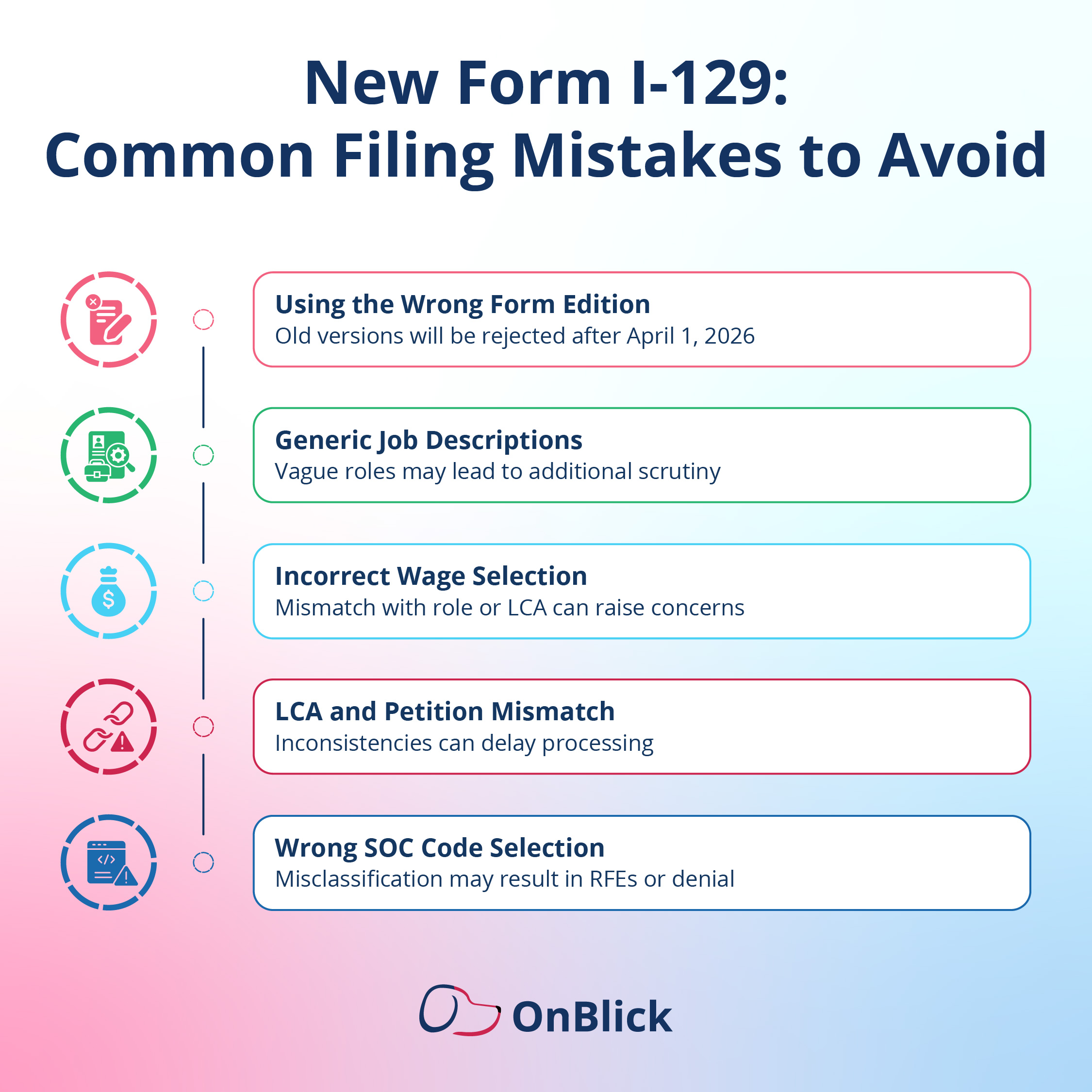
New Form I-129: Mistakes Employers Should Avoid
With the new form in place, employers should watch for:
- Submitting outdated versions after April 1, 2026
- Using generic job descriptions
- Selecting incorrect wage levels without justification
- Inconsistencies between LCA and petition details
- Rushed filings during high-volume periods
These issues can lead to rejections, delays, or additional scrutiny.
Summing Up
The release of the new Form I-129 signals a continued shift toward stricter oversight in employment-based immigration. While the changes may appear incremental, their impact on documentation quality, wage justification, and filing accuracy is significant.
Employers who treat this as a routine form update may face avoidable delays. Those who adjust their processes early and ensure alignment across all filing components will be better positioned to manage compliance and maintain continuity for their workforce.
How does OnBlick help?
OnBlick continuously tracks USCIS updates and helps organizations adapt their immigration workflows to meet new filing requirements. Our platform supports accurate documentation, consistent data management, and compliance monitoring across employment-based petitions.
If you’d like to strengthen your filing process and reduce compliance risks, book a free OnBlick demo today.
Frequently Asked Questions
What is an i-129 form?
Form I-129, Petition for a Nonimmigrant Worker, is filed by U.S. employers to request authorization for a foreign national to work temporarily in the United States under visa categories such as H-1B, L-1, O-1, TN, and others.
What is the new Form i129?
USCIS published a new edition of Form I-129 dated 02/27/26. Employers filing nonimmigrant worker petitions should begin using this version now, because only this edition will be accepted starting April 1, 2026.
Where to file i 129?
Form I-129 must be filed with USCIS at the designated filing location based on the visa category and employer location. Filing addresses and instructions are provided on the USCIS website and in the form instructions. Some petitions may also be filed electronically, depending on eligibility.
What is evidence of approved i 129?
Evidence of an approved Form I-129 is typically the Form I-797, Notice of Action, issued by USCIS. This approval notice confirms that the petition has been approved and includes key details such as validity dates and petition classification.
What happens after form i-129 is approved?
After approval, the beneficiary can proceed with the next steps depending on their location. If they are outside the U.S., they may apply for a visa at a U.S. consulate. If they are already in the U.S., they may begin or continue employment based on the approved petition, subject to the validity period.
What is an immigration petition?
An immigration petition is a formal request submitted to USCIS by an employer or individual to classify a foreign national for a specific immigration benefit, such as a work visa or permanent residence. Form I-129 is an example of an employment-based immigration petition.
When is the new Form I-129 mandatory?
The new Form I-129 is mandatory from April 1, 2026. USCIS will reject the older 01/20/25 edition if it is received on or after that date.
Why does the new Form I-129 matter for H-1B?
The updated form adds more scrutiny around wage levels, job duties, and related compliance details. H-1B employers should pay close attention to consistency across the form, the Labor Condition Application, and supporting evidence.
What is the Form I-129 filing fees?
For an H-1B visa petition, the base Form I-129 filing fee is $780. Additional fees may also apply, including the Asylum Program Fee of $600 for most employers or $300 for small employers, the ACWIA fee of $750 or $1,500 depending on employer size, and the $500 Fraud Prevention and Detection fee for certain H-1B filings. Some petitioners must also pay the $4,000 Public Law 114-113 fee. If premium processing is requested, the premium processing fee for H-1B is $2,805. Employers should confirm the final fee combination based on petition type and eligibility before filing.
What changed in the new Form I-129?
The new edition includes more detailed questions tied to wages, job structure, and petition details. These updates make accuracy more important and may increase scrutiny where filings are vague or inconsistent.
Why do SOC codes matter in Form I-129 filings?
SOC codes help determine the prevailing wage and job classification for a petition. If the SOC code does not match the role and wage level, it can trigger delays, Requests for Evidence, or denials.
How to change your address with uscis?
Individuals can update their address with USCIS by filing Form AR-11 (Alien’s Change of Address) online or by mail. It is important to update the address promptly to ensure receipt of official notices and correspondence.