
.gif)


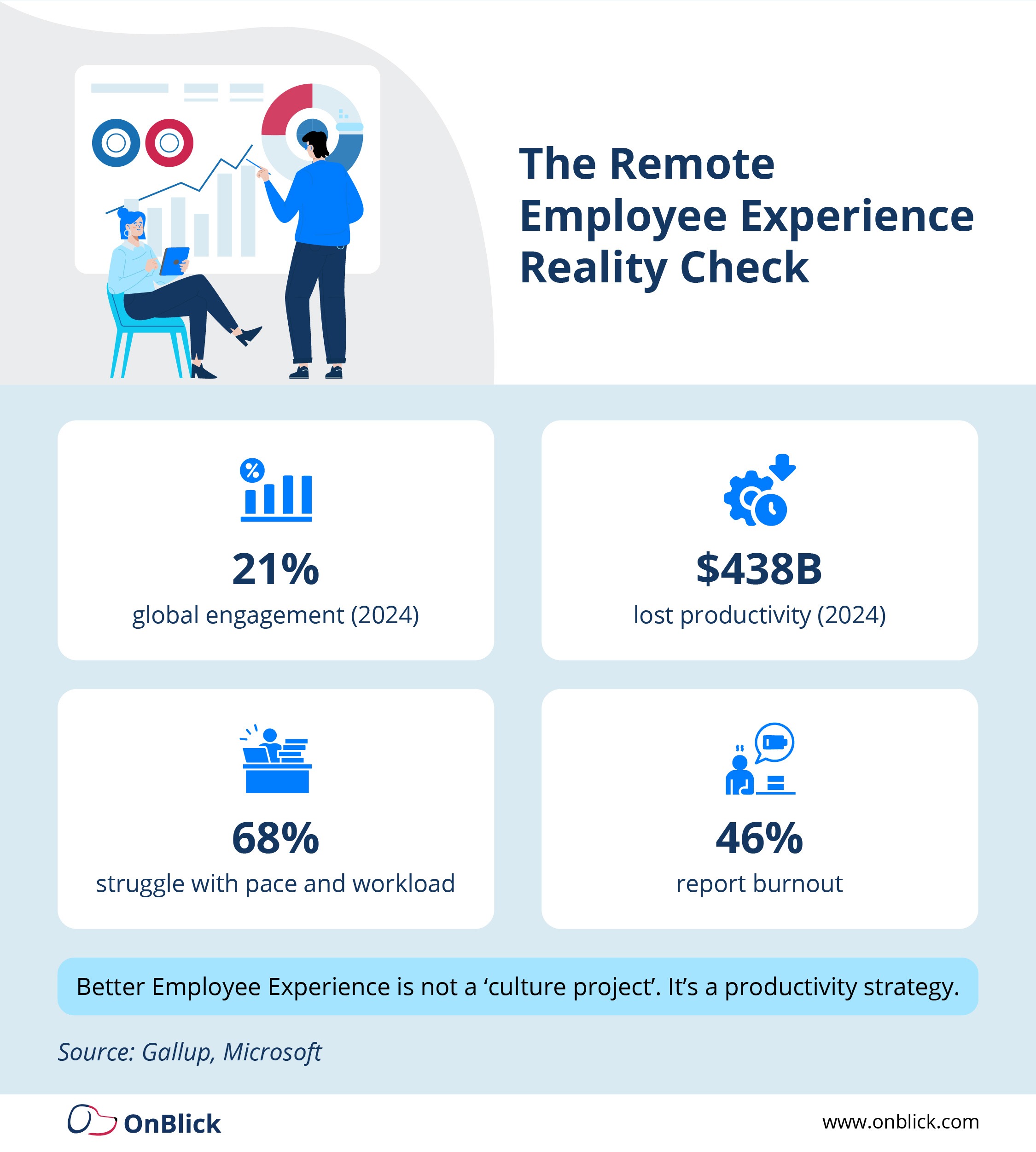
Remote work did not “break” employee experience, but it exposed something important: EX is not perks. It’s the day-to-day friction (or ease) employees feel while trying to do good work. When people are distributed, the small gaps become big quickly, unclear expectations, slow support, too many meetings, and a lack of connection.
OnBlick’s blog on remote employee experience highlights a simple truth: organizations that intentionally design the remote work environment create stronger engagement, retention, and performance outcomes.
Define the Concept
Employee experience is the way employees interact with their environment and the organization, and how those interactions influence performance, productivity, innovation, and ultimately customer experience.
Gartner describes EX as how an organization delivers on its employee value proposition (EVP) to engage and retain talent and drive business outcomes.
What Changes in Remote and Hybrid EX
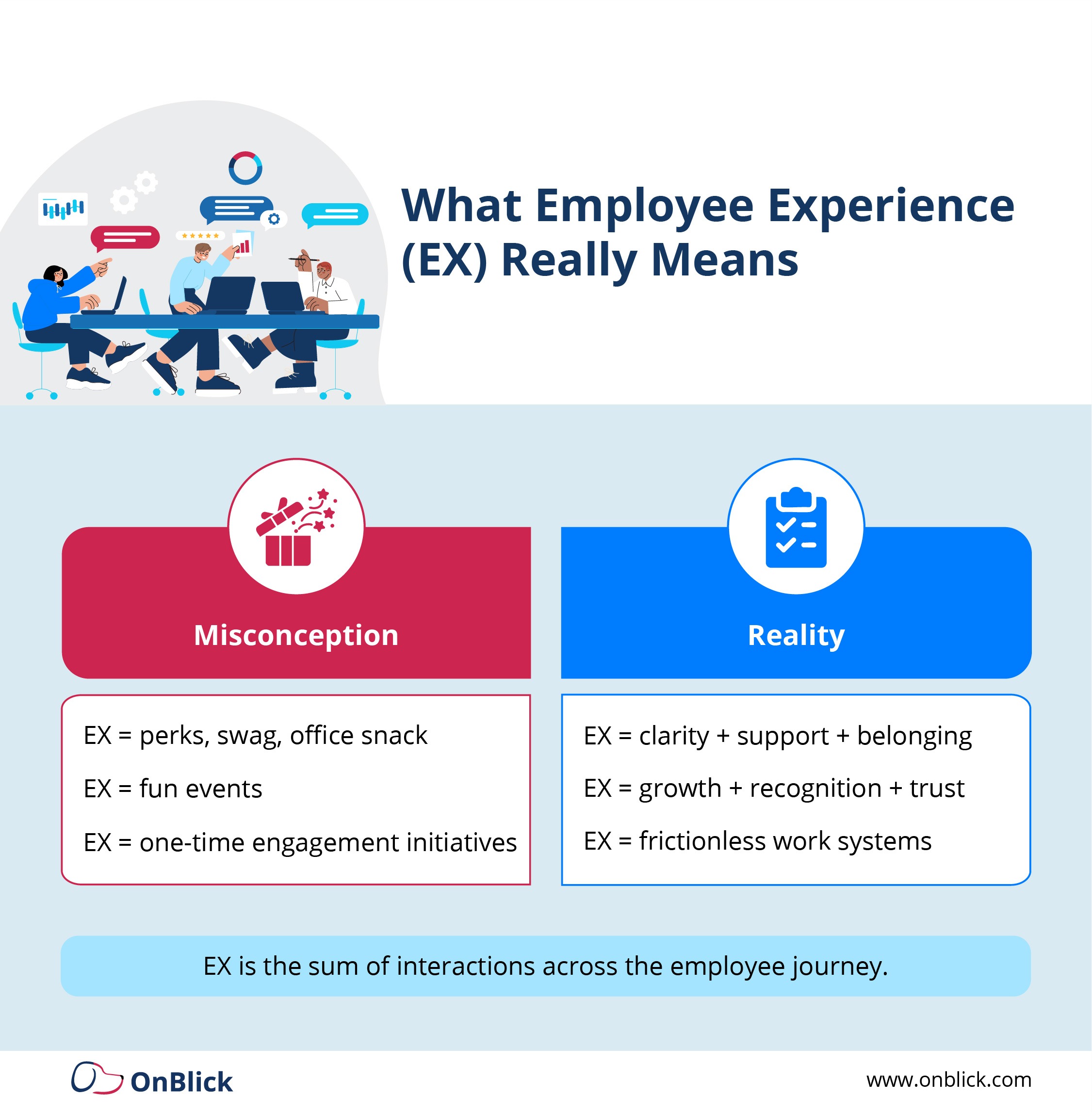
In-office work naturally creates “ambient support” (quick help, informal coaching, social glue). Remote work removes that. So the experience depends heavily on systems HR and leaders build.
Common remote EX breakdowns HR teams see:
- Onboarding feels isolating and employees take longer to feel confident
- Communication becomes meeting-heavy but still lacks clarity
- Work-life boundaries blur because routines are not explicit
- Learning feels slower without peer coaching and visibility
- Creativity drops when employees do not feel safe to share ideas
Show the Data
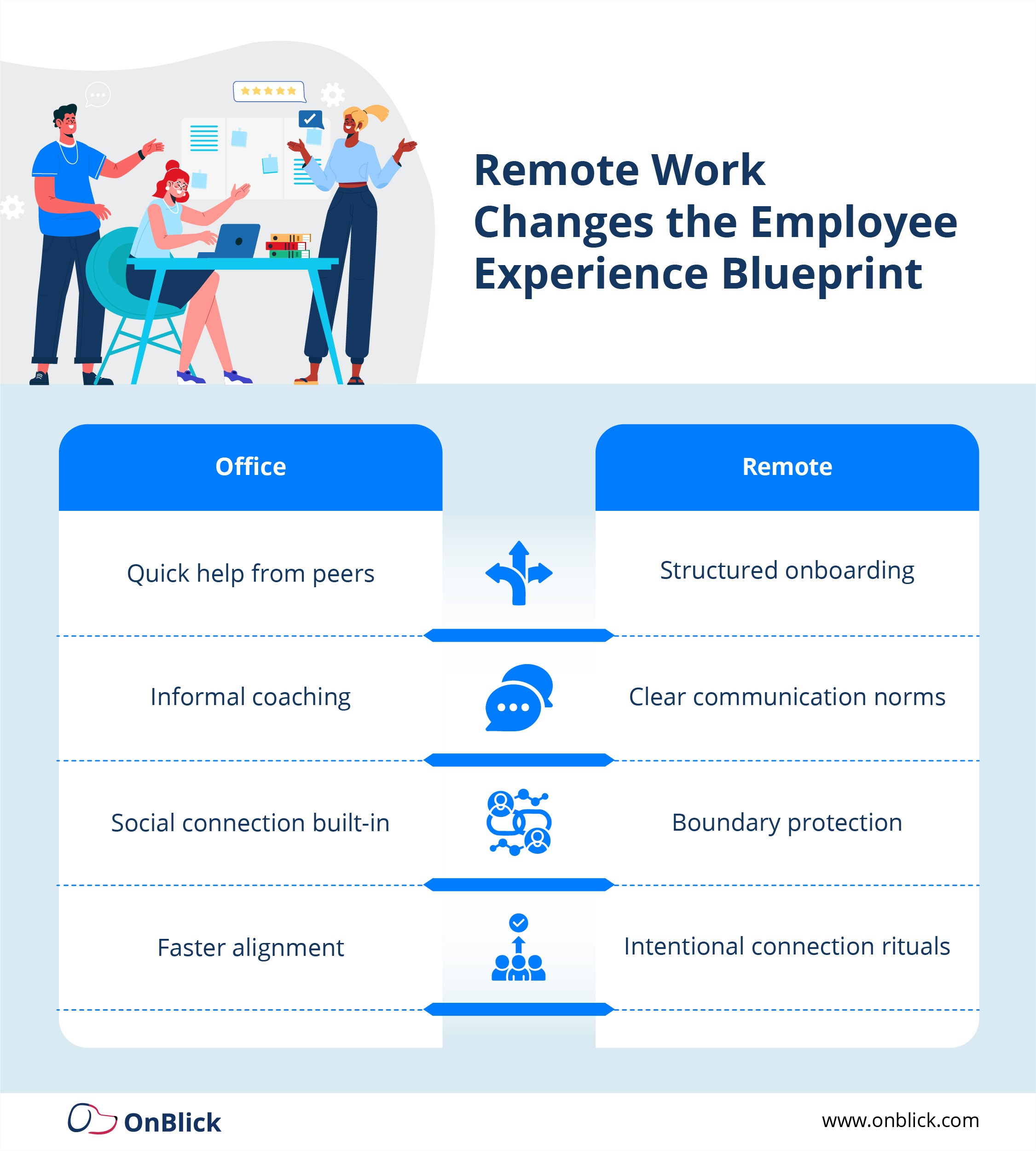
The numbers make one thing clear: if remote work is the new normal, EX must be managed like a business system, not a morale initiative.
- Gallup reports global engagement fell to 21% in 2024, with $438B in lost productivity tied to disengagement.
- Microsoft’s Work Trend Index found 68% of people struggle with the pace and volume of work, and 46% report burnout.
- Manager engagement is also slipping, which matters because managers shape day-to-day EX more than any policy.
The Deeper Insight
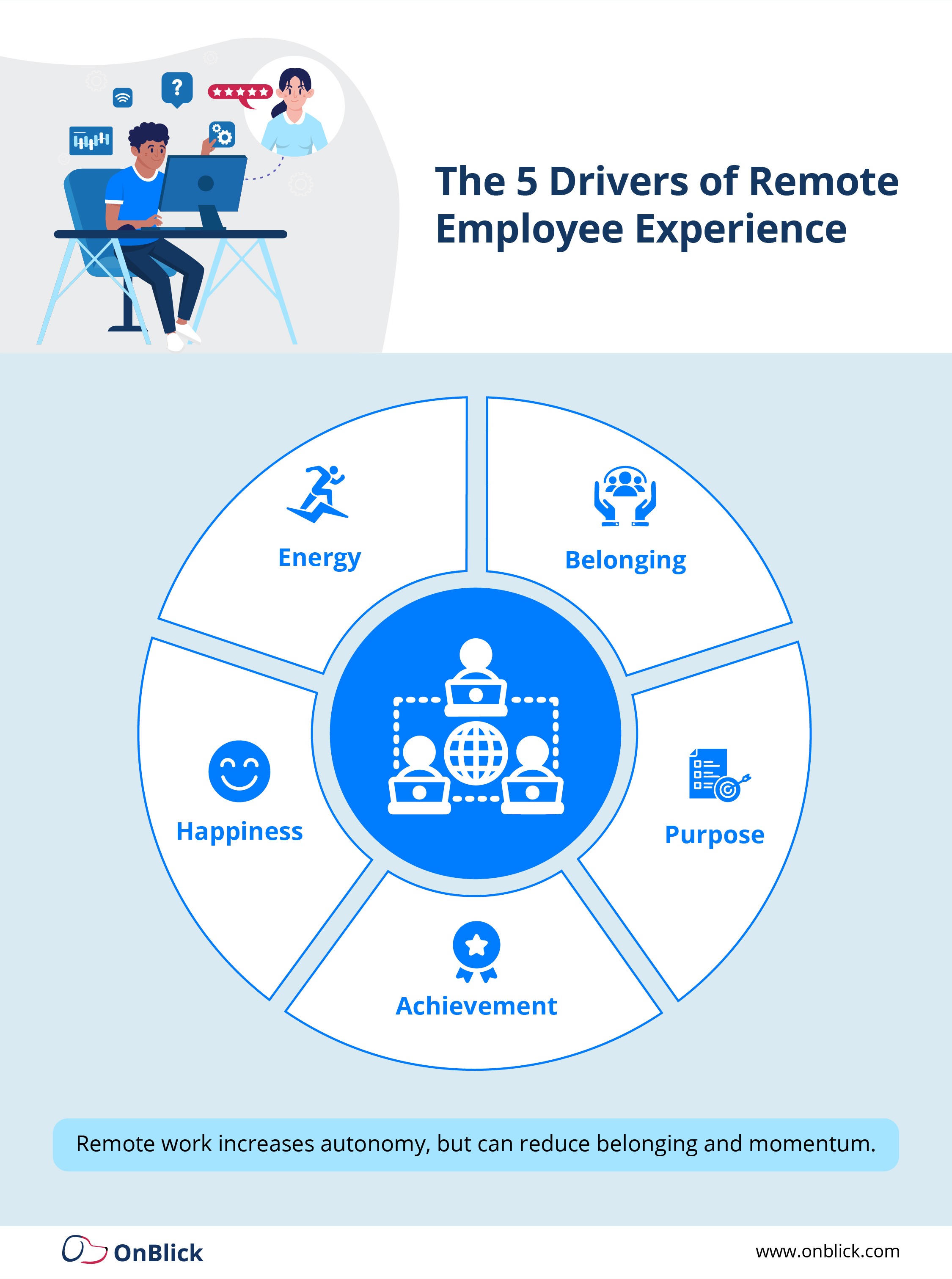
OnBlick’s blog points out that EX is personal and varies by individual needs, but studies consistently tie strong EX to five core drivers: belongingness, purpose, achievement, happiness, and vigor (energy).
Here’s the strategic insight for HR: remote work often increases autonomy, but it can decrease belonging and momentum. The goal is not to recreate office life online. The goal is to reduce friction and increase connection at the moments that matter: onboarding, feedback, collaboration, growth, and recognition.
Spotting the Signs Early
Use these signals as a lightweight EX health check:
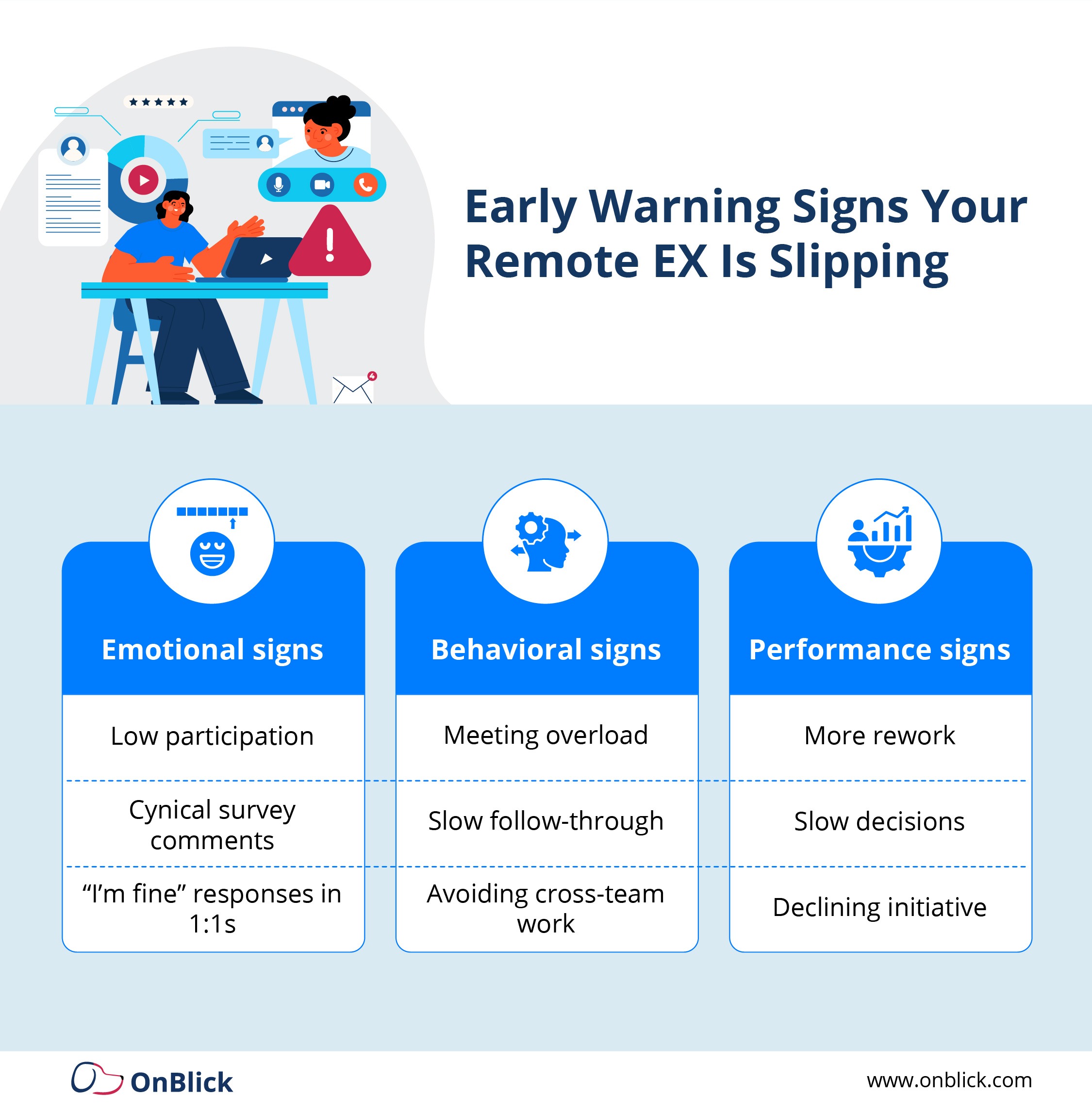
Emotional signals
- Employees stop sharing opinions or concerns
- Survey comments become vague, short, or cynical
Behavioral signals
- “Always on” meeting calendars and slow follow-through
- People avoid cross-team work because coordination feels hard
Performance signals
- Rework increases, decisions slow down
- Output remains steady but initiative declines
Actionable Strategies
7 upgrades HR can implement (without a full org redesign)
- Standardize remote tech readiness Create a “Day 1 Ready” checklist: access, tools, permissions, security, and a live support path. OnBlick notes that technology is foundational for remote EX.
- Make communication consistent and human Shift from “more meetings” to “more clarity.” Encourage weekly 1:1s focused on blockers, well-being, and priorities, not just status.
- Run an onboarding experience, not an orientation Assign a buddy, set 30-60-90 day milestones, and build structured introductions across teams. A welcoming onboarding experience is strongly linked to retention.
- Build routines that protect boundaries Define core hours, meeting-free blocks, and response-time norms. Routines help employees manage household demands while staying productive.
- Rebuild learning through peer support OnBlick highlights that employees often prefer peer learning over formal education during remote work. Create monthly skill circles, shadow sessions, and short “teach-back” moments.
- Design inclusive brainstorming Use async idea boards, rotating facilitators, and equal airtime norms so quieter voices are not lost. Creativity increases when people feel seen and safe.
- Measure friction, not just engagement Add 3 quick pulse questions monthly:
- “What slowed you down last week?”
- “What felt unclear?”
- “Where did you need help but could not get it fast?”
Executive Framing
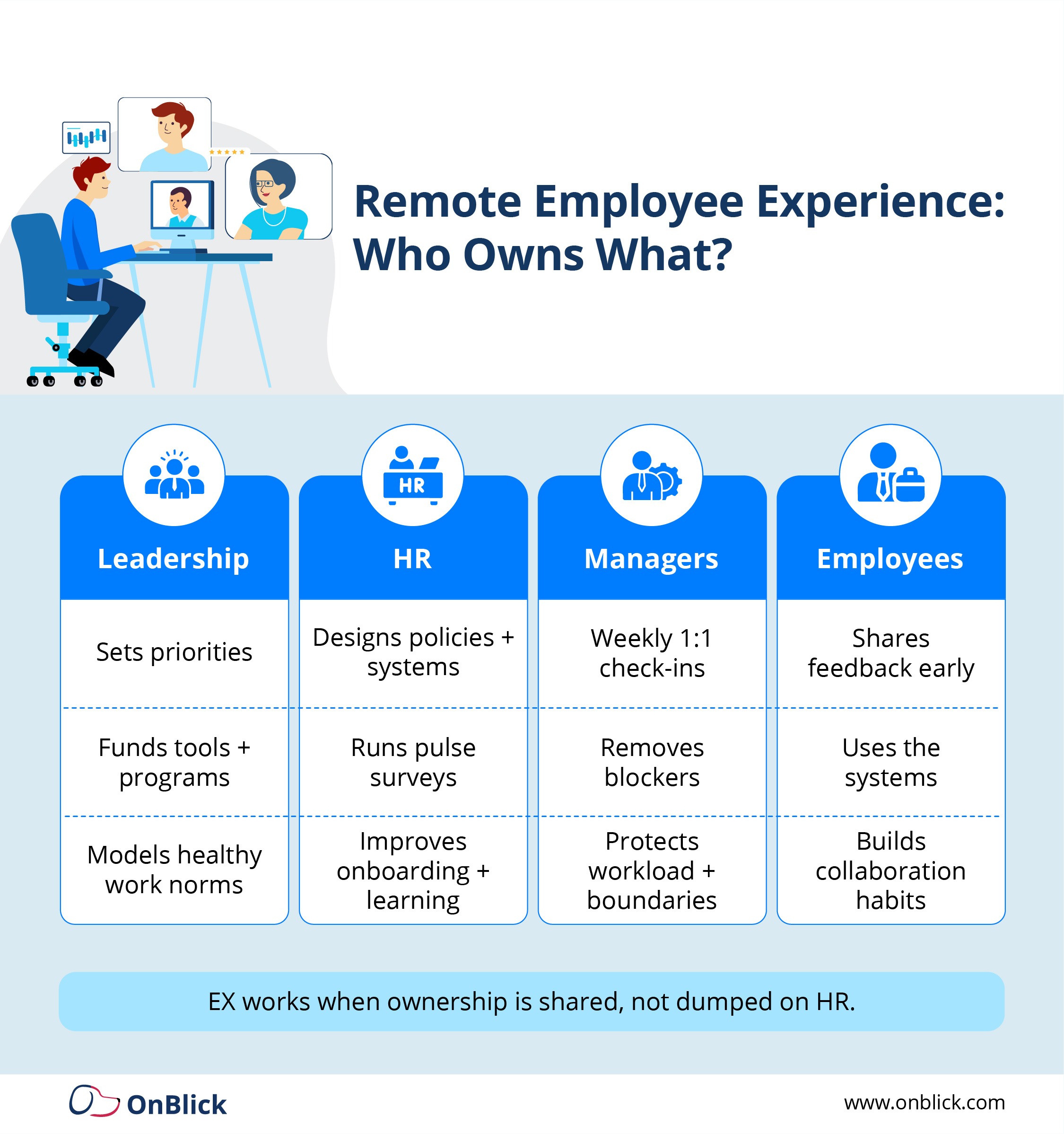
For leaders, remote EX should be framed as a performance and retention lever. If engagement is dropping and burnout is rising, the response cannot be more meetings or more tools. It must be better systems and better manager enablement.
This is also where modern HR tech matters. When employees can access personal and work information through an employee self-service (ESS) experience, routine tasks become easier and support becomes faster, which reduces friction. OnBlick supports HR teams with workflows across HR processes, workforce documentation, and compliance so EX is smoother, especially when teams are distributed.
Closing
Remote work is not a temporary phase anymore. The advantage will go to organizations that treat employee experience like product design: reduce friction, improve clarity, and build connection into the workflow.

.png)
.png)


